▶ VIDEO — youtube.com/embed/lXkmB-dqitY?feature=oembed
▶ VIDEO — youtu.be/lXkmB-dqitY
Quantity Over Quality in Street Photography
What’s popping, people? It’s Dante.
Going for a nice stroll here. Hopped out of my yoga class thinking today about quantity versus quality in photography.
And specifically, I mean, we could talk about all genres of photography, but if you want to dive deep into street photography, I believe that quantity is much more important than being decisive and waiting for something of quality when it comes to your photography.
And what that means is:
Shoot more fucking pictures.
I think that a lot of street photographers, specifically, have this hesitation where they’re only looking to photograph something with sensation or something with an emotional quality that is gripping.
But if you don’t start chipping and sketching and photographing and clicking the fucking button, well, you’re not going to see anything in your progress.
Quantity Is Objective. Quality Is Subjective.
And so basically, at the end of the day, quality is subjective.
Quantity is an objective metric that anybody can measure.
He who photographs more shall win.
You know, it’s really simple.
The more that you walk, the more that you see.
The more that you see, the more that you photograph.
And the more that you photograph, the more curious you become, which is fulfilling the goal of photography within itself.
Increasing your curiosity to then propel your physical body out into the open world to continue photographing.
And so the goal is to be in the perpetual flow state of pressing the shutter and making more pictures.
Debating on whether you should go left or right, or whether you should photograph in color or black and white, or tell a particular story, or extract something of particular quality is a complete farce.
If you want to get better at photography, you’re going to have to move your physical body more.
And I think that’s the simplest way that I frame whether or not I am improving my photography.
Measure What You Can Control
You know, if I’m shooting more, if I’m increasing the clicks of the shutter more, if I’m out in the world more, if I always have my camera with me, well, then I know that it’s inevitable that I’m going to improve my photography.
And that’s an actual metric that I can measure.
I can measure how many days I walk with my camera.
I can measure how many photographs I make on that particular day.
I can then look at my catalog after a month and see my progress through the quantity that I have practiced with my photography.
The amount of great photographs, the amount of keeper images, the amount of gems that I extract, frankly, is out of my control.
Because the world, life itself, is out of my control.
I’m not in control of whether or not I’m going to see something interesting, or whether or not the light is striking, or whether or not I’m going to stumble into something that has this emotional resonance in my photography.
I’m in control of moving my body and photographing.
And so focus more on what’s in your control, which is clicking the shutter more, which is moving more.
Stop getting caught up in the outcome, which is out of your control, which is whether or not you make a great photograph.
And anyways, this is a subjective metric.
I could say that a photograph is great if it resonates with me emotionally.
Another person could say that the photograph is great because it resonates with them compositionally, or there’s something about the geometry or the shape and the form and the way that these things come together in the photograph that make it successful.
But I believe that photography generally is subjective.
What is objective that you can measure as the photographer is how often you’re working, how frequently you’re photographing, how much you are moving and seeing.
And yeah, maybe I’m just beating a dead horse at this point, but don’t get caught up with the outcome.
Don’t get caught up with these basic notions of quality.
Embrace Imperfection in Photography
And when you think about quality in photography, you might think of even the resolution of the image, the megapixel count, or whether or not you’re photographing with 35mm film or 120.
You know, the quality of the frame, the quality of the print, the quality of the imagery.
I think the opposite is more interesting.
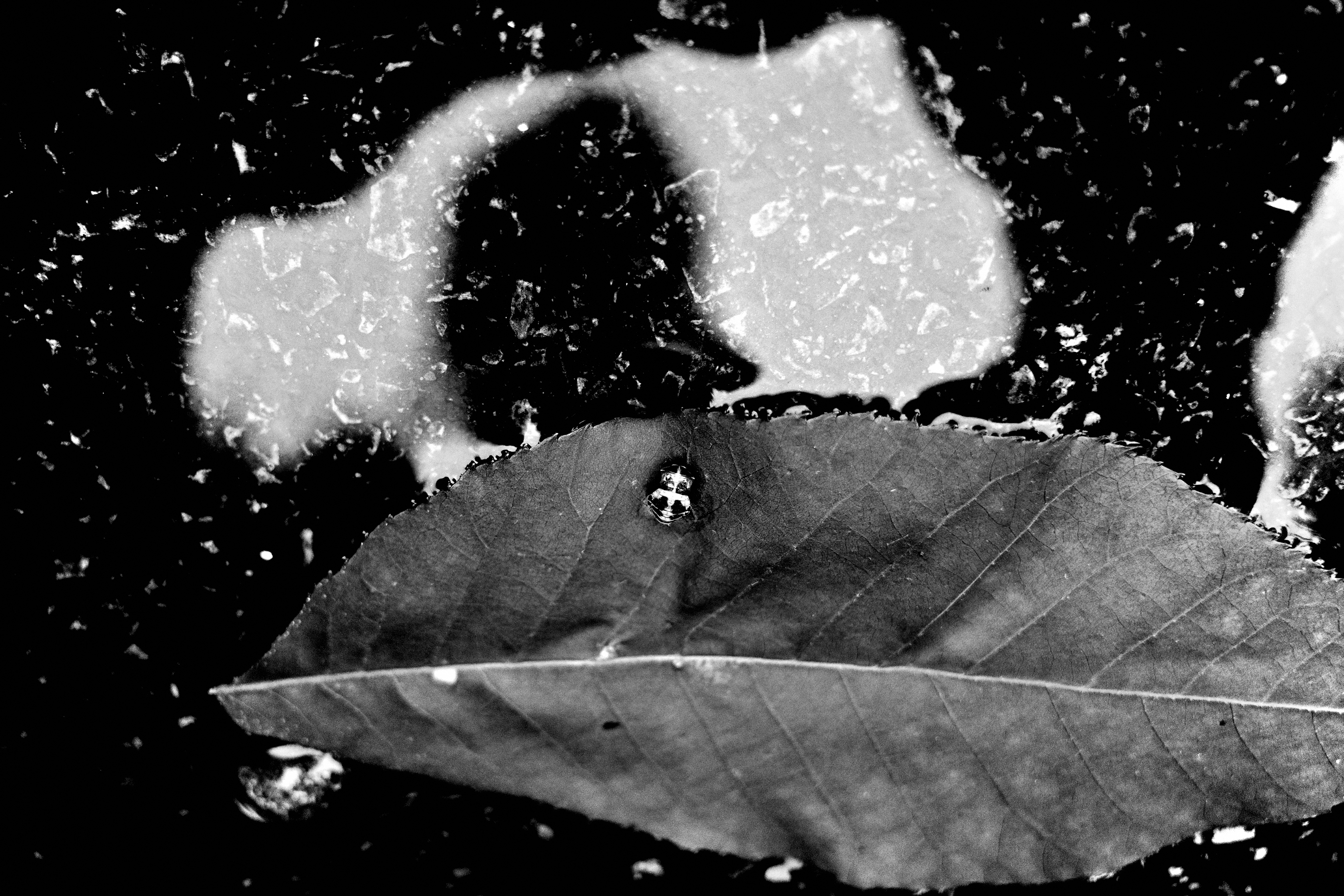
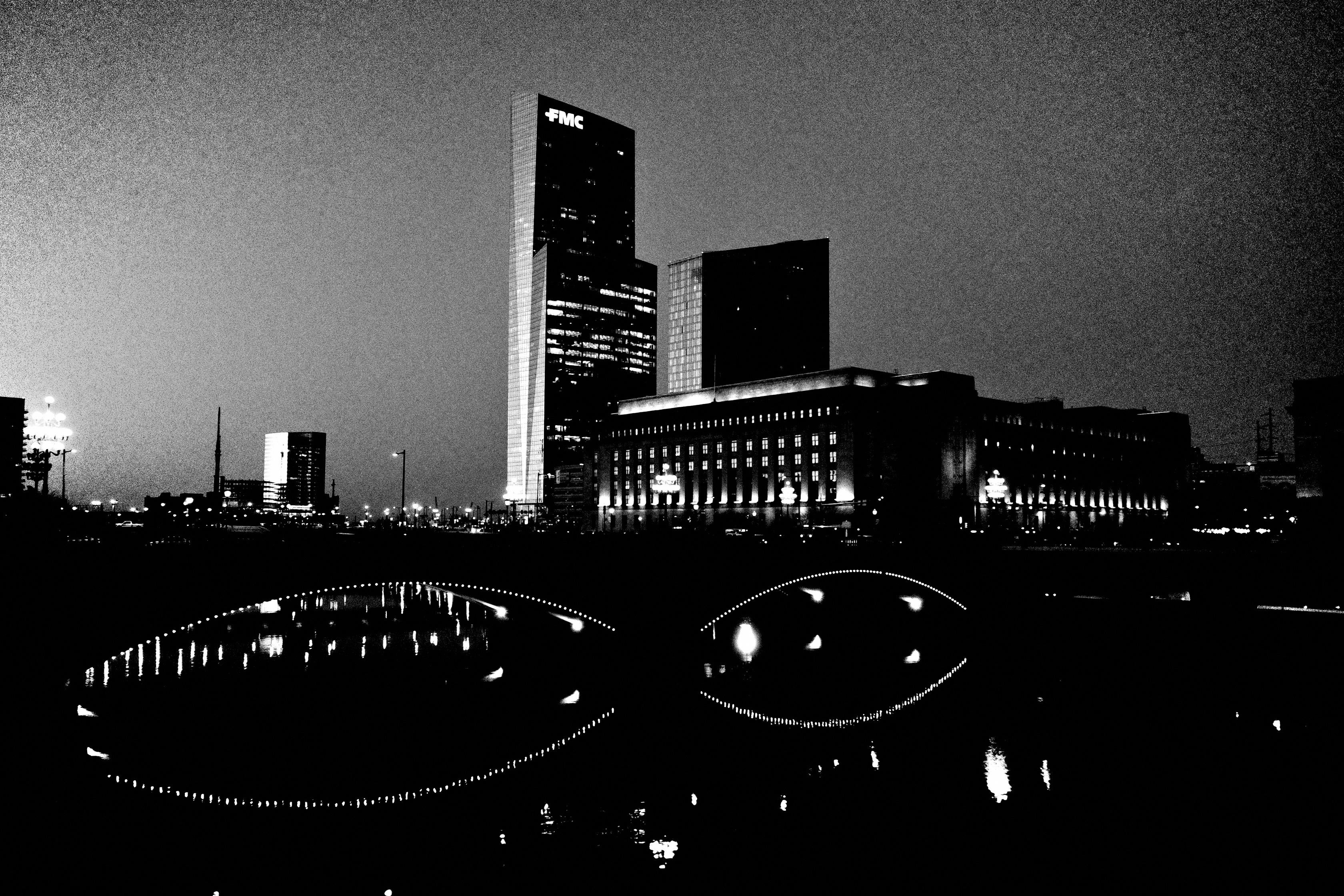
When you actually embrace imperfection with your photography, when you embrace the grain, when you embrace the grit, when you embrace cheap materials and even just printing work out on stickers or computer paper, or anything that would not be deemed to be of a quote-unquote high quality, can still be of quality.
Because it’s ultimately the impact of the imagery.
It’s not the resolution of the frame.
It’s not how great your camera or lens is.
It’s not anything about that.
But the impact that the photograph has can, I believe, live on multiple levels.
Strong Images Versus Weak Images
And if we want to discuss what I believe, I believe that there is strong imagery and weak imagery.
I don’t like these notions of good or bad.
I don’t believe there’s any such thing as a good or a bad photograph.
But I believe that there are strong images and there are weak images.
And I believe that a strong image in photography typically synthesizes the emotional quality of the imagery, whether it’s the gesture or the humanity or even just the feeling that a photograph makes for you as the viewer, in combination with the formalities of composition, lighting, the timing, the form, and the shape.
And if you can synthesize these two elements, if you can synthesize the content with the form and make something impactful by combining these two elements, well, then you can maybe create something that’s strong.
And that strength in the photograph isn’t something that’s easy to achieve.
And that’s why it requires you to continuously be working, to continuously be photographing and mining and chipping away each day.
Because those diamonds that you find are far and few between.
But as you continue photographing with quantity, it’s inevitable that you will then be ready when something of quality arises.
Always Have Your Camera With You
And so you really just need to be out there in the world.
You really just need to be receptive.
You need to be sensitive and heightened and aware of what’s around you and simply be in the perpetual state where you’re ready to respond to your instincts.
And so always have the camera with you.
You know, there really is no excuse.
You can pick up a compact digital camera, slip it in your front right pocket, come out of your yoga class, go on your commute to work, and make work.
You don’t have to limit yourself and your photography to particular time slots in your week.
Like, oh, I’m going to only go out and photograph on a Sunday at 1 PM to 3 PM.
No.
You can be in a perpetual flow state of photographing throughout the entirety of the day when you integrate it with your everyday life seamlessly.
And then I believe photography becomes effortless and easy.
And it’s pretty much effortless for me to photograph with quantity.
And so that’s how I think about this thing.
Quantity over quality. Absolutely.
You really just have to start photographing.
DANTE SISOFO · · dantesisofo.com/quantity-over-quality-the-secret-to-getting-better-at-street-photography/