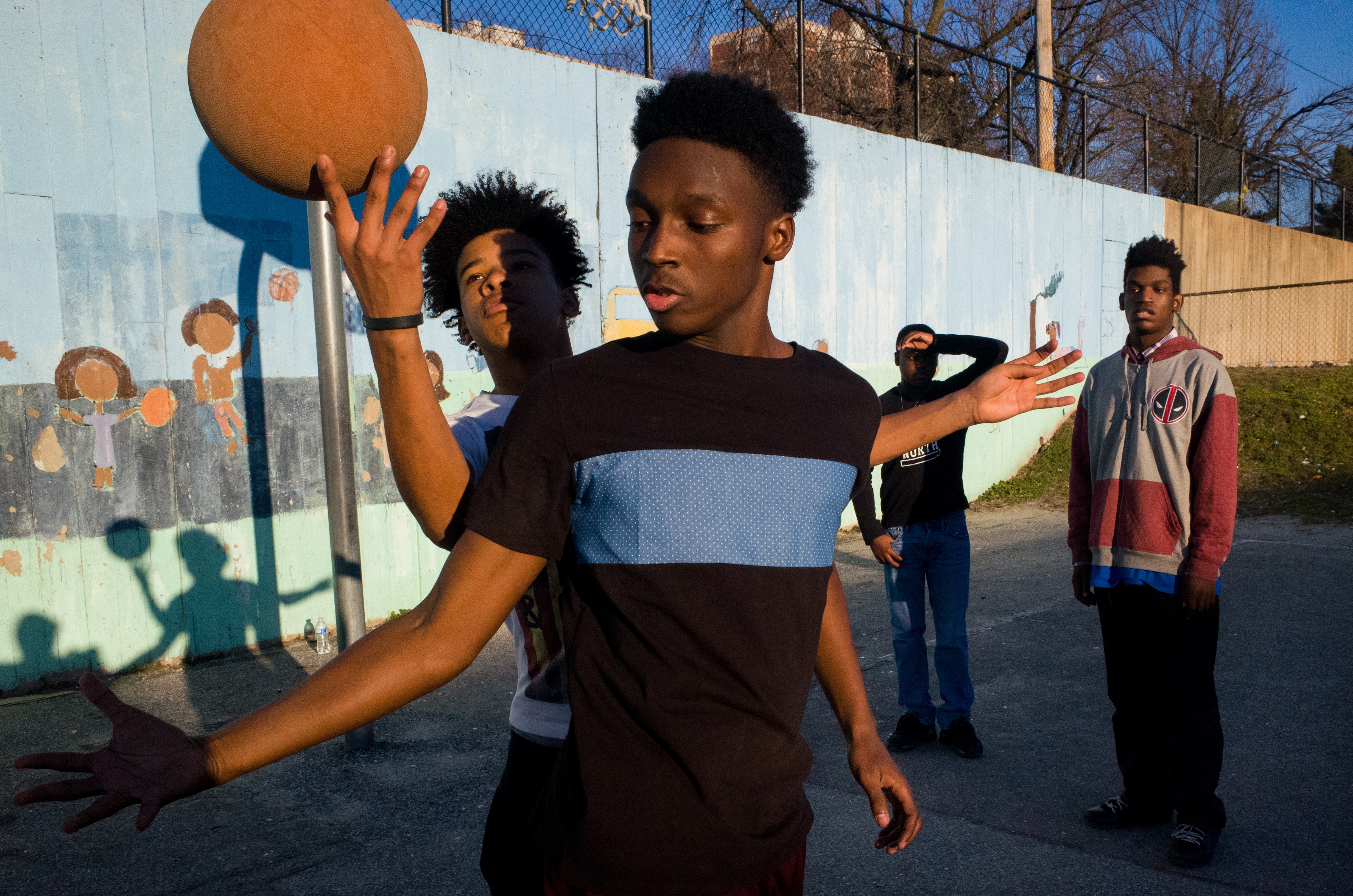
Without love, there is no freedom.

- Without honesty, there is no joy
- Without humility, there is no wisdom.
- Without courage, there is no forgiveness
Street photography is about more than just capturing a single decisive moment—it’s about developing a sharp instinct for recognizing patterns, anticipating movement, and positioning yourself at the right place at the right time. Repetition is what builds that instinct.

“The more you repeat the same pattern, the more opportunities you create for something extraordinary to happen.”
The streets are unpredictable, but by walking the same routes, revisiting locations, and shooting consistently, you start to see how the city breathes. This rhythm allows you to be in sync with the movement of people, the changes in light, and the hidden moments that would otherwise go unnoticed.

Street photography thrives on patterns and predictability. The more you frequent the same locations, the more attuned you become to the daily rituals and behaviors unfolding around you.
By embedding yourself in these environments, you start noticing the subtle shifts in daily life—the way people gather, the flow of traffic, or the interactions between strangers. These patterns provide you with a deeper understanding of your surroundings, helping you anticipate moments before they happen.
The unpredictable nature of the street means that you can’t control everything—but you can control how prepared you are.

“The street and life are out of our control. We are only responsible for where we position ourselves with the camera and when we press the shutter.”
This means:
For weeks, I photographed the pigeons interacting with the William Penn statue atop City Hall. I noticed how they moved at different times of the day and how light changed their appearance. One day, I saw a perfect alignment—the pigeons in flight, the beam of light, and the silhouette of Penn.
This moment didn’t happen by accident—it happened through repetition, patience, and observation.


Repetition doesn’t just help you recognize patterns—it strengthens your ability to trust your gut.
Your gut feeling—the instinct to press the shutter at the right time—is something that only gets sharper through repetition.
Think of photography like weight training:
“The more you walk, the more you see. The more you see, the more you photograph. The more you photograph, the more you learn. The cycle repeats.”
Even if you have just 30 minutes on your lunch break or while commuting, bring your camera and shoot. The key is to be consistent. Just like going to the gym, progress is made by showing up every day—even on the days when you don’t feel inspired.
Repetition isn’t monotony—it’s an invitation to dig deeper. By consistently showing up, you increase your chances of capturing something remarkable. Every street photographer knows: luck favors the persistent.

In Philadelphia, I made bus stops my training ground for layering techniques. I studied when people arrived, where they stood, and how they moved. Over time, I learned the perfect angles and compositions, using the waiting passengers as key subjects.
By going back again and again, I could anticipate moments before they happened, creating more dynamic and structured photographs.
Photography isn’t just about being in the right place at the right time—it’s about training your eye for composition. Through repetition, you start to instinctively:
There’s something powerful about speaking a photograph into existence.
When I set out to capture a rainbow in Logan Square, I affirmed my vision out loud. I told myself: “I’m going to photograph the rainbow, and I’m going to capture someone leaping in front of it.” I walked the scene for hours, observing how people interacted with the space.

And then—it happened. Someone jumped at the perfect moment, and I got the shot I envisioned.
Repetition is the foundation of great street photography. It:
The more you shoot, the better you become. The more time you spend walking, observing, and clicking the shutter, the more success you’ll have. Photography is a lifelong pursuit, and the path to mastery is paved with repetition.
So go out there. Walk the same streets. Press the shutter. Again. And again. And again.
Your best photograph is always the next one.
free downloads, feel free to take my photo, print it out, hang them on walls in your classrooms, do whatever you want with them! I’ll make sure to get my archive available with full res downloads soon

Your name, Dante Sisofo, in Italian pronunciation would be:
DAHN-teh SEE-so-fo
• Dante is pronounced “DAHN-teh” (with a short, crisp “teh” sound at the end, not “day” or “dee”).
• Sisofo is pronounced “SEE-so-fo” (each syllable is clear and distinct).If you want it to sound authentically Italian, make sure to keep the vowels pure and avoid anglicizing it.


If all the land in the world has been conquered, all the roads are paved, and there are no good reasons to go to battle, maybe we should just conquer ourselves.
Our thoughts shape our reality.
If we tell ourselves that we’ve seen it all, done it all, and learned it all, then what more is there to life after all? I feel like because we have the Internet, iPhones, and unlimited information, entertainment, and technology, we like to think that we’ve seen it all or just know it all. I can tell you that this is not how I think.
I seek to forever be a student of life, an adult with a childlike spirit and an open heart and mind. Honestly, my main goal in life is to just never miss another sunrise again.
Why?
I believe being eager for the sunrise goes hand in hand with curiosity. Each day, when the sun rises above the horizon, I remind myself how infinite the possibilities in life are. I think about all of the questions I have, how much there is left to do, to explore, and to understand. There’s not enough time in the day to figure it all out, but I know that when I’m awake in the morning with my eyes wide open, and the sun is coming up, I have another chance—another opportunity to try to figure some stuff out.
Everything I’m working on is simply a work in progress. I think a lot of artists seek to create the perfect masterpiece, to get things to the point where they no longer need to work on it or finish a project. The thing is, nothing is ever complete, nothing will ever be perfect or finished how you want it to be. I think recognizing this idea is very empowering and will help any artist out there who ever feels burnt out.
For instance, I’m currently going through years and years and years of photographs, and it’s very daunting. I could never finish this project if I didn’t allow myself the idea that it will never be finished. I could put the photos in a book, sequence it how I desire, and even then, I’ll always look back at it as imperfect or incomplete, as there will always be something I could tweak to make it better or improve it.
Because of this, perhaps embracing this notion that everything is a work in progress is empowering. This idea gives me the freedom to continue pushing, to continue doing and creating, because I know that I can always come back and refine things. Nothing will ever be complete. Nothing will ever be perfect. Everything in flux!
Freedom is the elimination of choice.
For instance, when I walk along the Schuylkill River Trail here in Philadelphia, there’s only one path: onward. All the decisions to make have been removed because, when you think about it, you can only go forward or backward. This is where I thrive—on a path like this, moving my body onward, endlessly. If I move to the left, I’ll freeze to death after I fall into the river. If I move to the right, I’ll get hit by a car and die in a tragic accident.
Eliminating the decision of whether or not I want to go left or right, I feel free to continue moving, upward, and onward toward the cliffside behind the Philadelphia Museum of Art, where I can stand on top of the city, look out toward the horizon with a panopticon view of my surroundings, feeling abundance and power. When I look out at the skyline and the river, I have this childlike spirit that just wants to come out and play, and embrace the day with curiosity.
When you wake up in the morning with this child spirit and you’re just eager to go out there and explore and create and do and think and tinker with life, it can become overwhelming as an artist, knowing the amount of possibilities and choices you can take each day. Because of this, I like to stick to a very disciplined lifestyle. For instance, waking up in the morning and deciding what you want to wear and what kind of coffee you want is a choice. This choice is something I completely eliminate the night before I go to sleep.
The night before I wake up, I already have my clothes laid out for the day, so that when I get out of the shower in the morning, I can slip right into what I need and go straight out my door. Actually, before I go to bed, I even pre-prepare four espresso shots and leave them in my fridge so that when I wake up, I can take four shots and just move on with my day. Even though making espresso is really fast, especially when you have a machine, it’s actually taking up way too much time in my morning. I just want to get that energy boost and move on.
For me, the goal is simple: to get myself outside, to get under the sunrise, and to start moving right away.
When I arrive at work, I go to a corner in the greenhouse where I do some yoga stretching and align my body for the day. This is one of the most important parts of my day, especially when it comes to stretching my legs, as I’m always on my feet and moving throughout the day. Because of this, I prioritize this immediately. While I’m working, I’ll listen to lectures from the Peterson Academy, which is absolutely fantastic, and I highly recommend. I’m currently taking the courses on biology.
On my break, and during my lunch, I always make sure that I go for a 30-minute walk around the trails in the woods to read a book. When I read, I prefer to read while walking outside, and I will sometimes even read out loud to myself.
Eliminating breakfast and lunch is another choice that simplifies my life. By fasting throughout the day, I’m not thinking about what I need to eat or what I desire to eat. The night before, I simply have my meat thawed, ready to go in my fridge for when I come home to cook on the stove, throw in the oven, or slow cook. The carnivore diet is an elimination diet, removing all carbs, sugars, vegetables, etc. It has simplified my life so that I know all I need before I go to sleep is a few pieces of meat and I’m good to go. I treat food like fuel, and it sure as hell does the job.
One huge and very big decision that I’m very proud of, and I encourage you to do as well if you’re interested, is to stop going to grocery stores. Just go to a local farmer and buy meat in bulk. I’ve been buying from an Amish farmer recently, and I store all of my meat in a deep freezer at home. The meat tastes 1,000 times better and it’s just a much better way to go about this thing. Just think—you only ever have to go out there and buy food maybe four times per year. Eliminating all of these very small decisions to make when it comes to the food I eat, I feel so much more free and light.
Another choice that I eliminated is car ownership. I don’t desire or want to own a car. Living in the city, there’s really no need to own one. I can walk, take the bus, or Uber if I really want to go somewhere. I just love having the option and the freedom of movement that comes with not owning a car. My goal is to actually own as little as possible. A car is just a headache and something that will suck up your money.
In terms of investments and money, it seems foolish to diversify. When you figure out that the best place in the universe to store your time and energy is Bitcoin, why would you even store your money in a bank account? Fiat currency will lose its purchasing power each year, and it’s probably most wise to store money in hard money, digital gold, digital capital—in Bitcoin—that outperforms every other asset. Once you figure out what Bitcoin is, there’s no going back. You just go all in, eliminating all decisions to make when it comes to investing and saving money.
As photographers, we often get caught up with the point of photography—why we photograph, or what we’re photographing, and what it all means. We think about what the project or theme and topic should be. But what if I were to say that you just need to go out there and make more photographs?
What if your ultimate aim and goal was to simply archive your town, and to have documents that show proof and existence of your town in the future? My goal is to make an archive, to continue pushing the boundaries, and to continue photographing in an artistic way that not only makes the photographs that showcase where I was and where I am, but also how I feel about where I was and how I perceived where I am. I believe that the archive is a much more open-ended and liberating goal to strive toward because it’s simply endless.
Think of Eugène Atget and his documents of Paris and how he photographed a number of different subjects. He didn’t just pigeonhole himself to one way of photographing, but he photographed the entirety of Paris and left these documents behind that, to me, evoke the essence of street photography. This is where I get my direct inspiration. Not to mention, Paris and Philadelphia have a very interesting connection and are practically the same city in terms of layout, architecture, etc.
I like to think of a photograph as a thought. A thought is something that comes to you very suddenly, spontaneously, and is also something that is forever fleeting. However, when a thought arises, you might seek to write it down, to remember that idea, to come back to it on a later date.
A photograph is similar in this way. As I’m walking and moving and recognizing life, a spontaneous moment might arise that I photograph. That photograph is like a thought, an idea, something that comes quickly, something that comes randomly, but I make sure to take a note of it and come back to it later.
I’m starting to really understand the power of mindset and how it can fuel you on your everyday journey of life.
Every morning, I’ve been starting the day off with a simple prayer, and a moment of gratitude for the day. By uplifting my spirit with these positive thoughts, and considering the things that I’m most grateful for in life, like the simple fact that I have another day to wake up and catch the sunrise, and move my two legs and stand upright, have clean water and a piece of meat before I go to sleep, listening to the sound of birds chirping, and observing the chaos of city life, I’m fueled with abundance and this mindset that sets me up for success each day.
There’s a famous quote from the Book of Matthew where Jesus is giving his sermon on the mount:
“Seek, and you shall find. Knock, and it shall be opened to you.”
When you approach the day with gratitude and prayer and this divine connection to God, you are on the path to seeking truth. When you are open to divine guidance, when you are open to God entering your life, when you knock at the door of prayer, you are seeking intentionally through the pursuit of growth, knowledge, and curiosity. By setting the day up this way with prayer, I lead the day with purpose, reminding myself that the answers I’m looking for will come through faith.
The notion of faith is much more interesting to me than hope, as hope is something that you can maybe just brush off or use as an excuse that you’re hoping or wishing for something more. But having faith is having conviction, and is a much more powerful mindset.
Nothing can break my spirit with a camera in hand.
The power of photography lies in the ability for the individual to give their life deeper meaning. When you make a photograph, you are affirming life. When you go out there, and you make more photographs, you’re conquering yourself through the act of creation.
Creating a flow state of walking and observing life’s patterns and complexities is an experience that becomes very meditative. When you slow down and you let life come toward you, and you just keep moving your body onward, endlessly, life will deliver you beautiful gifts. These beautiful gifts will be everlasting memories that you cherish in the photographs you make.
If you’re out there in the world, and you have no direction, turn to your camera as a compass. For the camera and curiosity will lead you, guide you in life, and find yourself in situations that you can only dream of. It’s like a key that unlocks the door, and all you need to do is pick it up and start knocking. Chip away each day, and photograph in the spirit of play. Recognize the power you possess as a creator, wielding light as your medium, creating upon the world—our canvas—and making more photographs in this open, honest, and joyful spirit.


Teresa of Ávila’s The Interior Castle is a profound work of Christian mysticism, illustrating the soul’s journey toward divine union. She envisions the soul as a magnificent crystal castle with seven mansions, each representing a stage of spiritual development. This guide breaks down each level of the castle, helping to internalize Teresa’s vision of spiritual transformation.
The Interior Castle is not just a roadmap of mystical theology but a call to a transformed life. Teresa urges readers to pursue holiness through humility, perseverance in prayer, and complete surrender to God. The journey is not about seeking experiences but about allowing God to shape the soul into a dwelling place for Him.

After experiencing my first sleep paralysis episode as a teenager, I was terrified. I felt a ghostly presence choking me, and the experience profoundly changed my life. Until that moment, I despised science—chemistry, physics, math, and biology bored me. But after that night, I was consumed with questions about the brain and the mind.
I found myself spending more time in the library than in the streets, reading everything I could about psychology, memory, and neuroscience. My perspective on life shifted. Instead of simply existing, I began questioning the nature of reality itself. Why am I here? Why now? Why me? These existential questions led me down a path I never expected—one of scientific discovery and intellectual curiosity.
Each night, we cycle through different stages of sleep multiple times. Understanding these stages is crucial to understanding dreams:
Interestingly, early in the night, we experience more deep sleep, which is crucial for physical recovery. Toward morning, REM sleep dominates, which plays a significant role in emotional processing and memory formation.
Dreams feel real while we are in them, yet we rarely recognize that we are dreaming. This happens because the dorsolateral prefrontal cortex (DLPFC)—responsible for logic and reality-checking—is deactivated during REM sleep. This explains why dreams often seem bizarre, blending impossible scenarios seamlessly.
Key neurotransmitters in dreams:
Dreams are not just random hallucinations; they serve important cognitive and emotional functions, allowing us to process experiences, emotions, and memories in novel ways.
Dreams provide a form of emotional therapy. Negative encounters, such as being chased or trapped, are common themes because they simulate real-life stressors, helping us prepare for potential dangers. This idea aligns with the threat simulation theory, which suggests that dreams evolved to help humans rehearse survival strategies.
Additionally, dreams enable us to form creative connections between ideas. Many scientific breakthroughs and artistic inspirations have come from dreams. The famous mathematician Ramanujan claimed his equations came to him in dreams. Edison used a technique where he would fall asleep holding a metal object, waking up just before entering deep sleep to capture creative insights.
Lucid dreams occur when we become aware that we are dreaming. This happens when the prefrontal cortex partially reactivates, giving us control over the dream’s direction. Studies show that during lucid dreaming, the brain exhibits activity between wakefulness and REM sleep, creating a unique state of consciousness.
Lucid dreaming may serve an evolutionary purpose by allowing us to simulate real-world problem-solving scenarios and boost creativity. It provides a safe space to experiment without real-world consequences.
Sleep paralysis occurs when wakefulness and REM sleep overlap. The pons and medulla in the brainstem release inhibitory neurotransmitters glycine and GABA, keeping the body paralyzed during REM sleep. However, if the mind wakes up while the body remains immobilized, the experience can be terrifying.
Common features of sleep paralysis:
Many cultures have interpreted sleep paralysis as supernatural—ghosts, demons, or alien abductions. This can be explained by the brain’s tendency to create narratives to resolve contradictions in experience. The brain is a master storyteller, filling in gaps with familiar cultural themes.
Near-death experiences (NDEs) share striking similarities with REM sleep phenomena. People report floating above their bodies, seeing a bright tunnel of light, and experiencing profound spiritual revelations. These experiences may result from oxygen deprivation and endorphin release, creating a euphoric state.
Some researchers propose testing NDEs by placing hidden messages on hospital ceilings. If patients truly “leave their bodies,” they should be able to report these messages upon revival. However, the results remain inconclusive.
Through my journey, I discovered ways to enhance cognitive function and creativity. Here are some key takeaways:
Statistically, our very existence is improbable. Had any small event in history unfolded differently—had any ancestor of ours coughed at the wrong moment—none of us would be here today. Recognizing this randomness and rarity makes life more valuable.
In the end, neuroscience helps us understand the mechanics of the brain, but the mystery of consciousness remains. Science and spirituality need not be at odds; rather, they offer different lenses through which we explore the unknown.
Dreams, sleep, and the mind’s vast complexity continue to fascinate and challenge our understanding of reality. Whether we explore the neurochemical underpinnings of REM sleep or ponder the philosophical implications of near-death experiences, one thing remains clear: the brain is the most enigmatic and powerful organ we possess.
Understanding the science of sleep and dreams not only enhances our cognitive abilities but also deepens our appreciation for the mysteries of existence. So tonight, as you drift into sleep, remember—you are stepping into the realm of infinite possibilities.

Sleep is a mysterious yet essential function of the human body, occupying one-third of our lives. Despite its biological importance, the reasons behind sleep and dreams remain elusive. This lecture explores the different stages of sleep, the neurological processes involved, and how sleep impacts reality.
Despite its association with deep rest, REM sleep is a highly active state where the brain consumes 20% more glucose than during wakefulness. The heart rate increases, breathing becomes irregular, and the body’s voluntary muscles become paralyzed. This paradoxical state is crucial for cognitive processing, creativity, and problem-solving.
Sleep is not merely a passive state but an active and essential process that shapes our emotions, memories, and cognitive functions. While REM sleep remains one of the most mysterious states of consciousness, its role in creativity, memory processing, and emotional well-being is undeniable. The more we understand sleep and dreams, the better we can harness their power for improving our lives.

One of the most intriguing questions in neuroscience is: Why do some people freeze in the face of danger? Imagine a scenario where someone runs at you with a knife in a park. Logically, you should run or fight, yet many people freeze.
This reaction is rooted in evolution. In the wild, when an animal attacks, movement often triggers a predator’s instincts. Freezing can be a survival mechanism, making the victim appear dead or unthreatening.
Neurologically, this is controlled by the hypothalamus, which regulates hormones and can shut down outputs when the amygdala signals extreme fear. This results in the body entering a “playing dead” state, which explains why some victims of assault or trauma describe feeling detached from their own experiences.
People who undergo extreme trauma, such as assault or wartime experiences, often report an out-of-body experience. This can be linked to the temporoparietal junction (TPJ), which, when disrupted, creates the sensation of floating outside one’s body. This phenomenon is commonly observed in victims of sexual assault who describe depersonalization as a defense mechanism.
Sleep paralysis often mimics traumatic experiences. During an episode, people feel unable to move, experience fear, and sometimes hallucinate malevolent entities. Many cultures interpret this as supernatural, but neuroscience suggests that REM sleep is responsible. The emotional response to sleep paralysis is amplified by prior cultural beliefs, much like trauma victims experiencing depersonalization.
A study divided participants into two groups:
After five days, brain scans revealed that both groups showed similar motor cortex activity, proving that imagination alone can physically change the brain.
Another experiment had one group perform actual finger exercises for a month, resulting in a 30% increase in muscle strength. A second group simply imagined doing the same exercises—and their muscles strengthened by 22%. This highlights the mind-body connection and the brain’s ability to create physical change through thought alone.
Studies show that chronic stress and emotions impact physical health:
Some people experience Capgras delusion, in which they believe loved ones have been replaced by imposters. This occurs due to:
Opposite to Capgras, Fregoli syndrome causes a person to believe that multiple people are actually the same individual in disguise. This occurs due to excess connectivity between the fusiform gyrus (face recognition) and the amygdala.
Our beliefs, emotions, and thoughts directly influence our bodies, health, and perception of reality. Neuroscience continuously uncovers the power of the brain to shape our experiences—whether through memory, trauma, meditation, or even imagination. As we explore further, we will delve into dreams and their role in neuroplasticity in the next discussion.


This structured overview highlights the essential principles from the lecture on learning and memory while ensuring readability and clarity. Let me know if you’d like any refinements!


In the 1980s, a peculiar phenomenon occurred where people started reporting that the pages in books looked red. The text and spaces between them appeared tinted, even though they were purely black and white. Strangely, this phenomenon only happened in the 1980s and did not occur before or after. To understand this, we must step back 2,400 years to Aristotle’s observation of a horse stuck in a river.
Aristotle observed that after watching the river’s movement for a while, when he looked at the stationary riverbanks, they seemed to move in the opposite direction. This was the first recorded illusion, now known as the motion aftereffect. A modern example of this is staring at a waterfall for a prolonged period and then shifting focus to nearby rocks, which will appear to move upward.
The prevailing hypothesis is that our brain has neurons dedicated to detecting upward and downward motion. These competing populations of neurons inhibit each other to maintain a balanced perception of movement. However, if one set of neurons is overstimulated—such as prolonged exposure to downward motion—then the balance shifts, and once the stimulus is removed, the opposite effect is perceived.
The traditional view was that the neurons detecting downward motion simply became fatigued. However, an experiment revealed that even after hours of closing one’s eyes following motion exposure, the aftereffect remained. This suggests that the illusion is not due to neural exhaustion but rather active recalibration—an adjustment of the brain’s baseline expectation to match prolonged stimuli.
If you run on a treadmill and then step off, the ground seems to move beneath you. This happens because, under normal circumstances, leg movement corresponds with optic flow. On a treadmill, the legs move but the surrounding world does not. The brain adapts by recalibrating this association, causing the illusion of movement when returning to a normal walking environment.
The McCollough effect is a striking example of recalibration where staring at red vertical lines and green horizontal lines for several minutes causes subsequent black-and-white stripes to appear tinted. This illusion can last for months, further proving that the effect is not due to simple fatigue but rather a long-term adjustment in perception.
This also explains why people in the 1980s, accustomed to green monochrome computer screens with horizontal lines, reported that book pages appeared reddish—they were experiencing a prolonged McCollough effect.
When staring at a featureless red field for a long period, the color fades, appearing gray or neutral. This occurs because the brain assumes that the world has not suddenly become uniformly red and actively cancels the constant input to remain sensitive to changes. This effect is commonly observed when wearing tinted sunglasses, where the tint initially distorts color perception but later appears neutral.
The world does not become Troxler-like (i.e., fade into uniformity) because our eyes are in constant motion. The brain prevents objects from disappearing by executing saccades (rapid eye movements occurring three times per second) and microsaccades (tiny, jittery movements). These ensure that even stationary images are refreshed in the brain, preventing them from fading from view.
We are unaware of our own retinal blood vessels because they are fixed in our visual field. The brain expects them to be there and ignores them entirely, just as it ignores the triangle you might draw on a contact lens. This adaptation allows us to focus on changes rather than static features.
The brain is a prediction machine. It constantly updates an internal model of the world, striving to match its expectations to reality. When the world aligns with expectations, minimal energy is used. When the world deviates, attention is directed toward the unexpected to refine predictions.
If a person is trained to associate a bell with cheese and later a light is introduced alongside the bell, the brain does not learn that the light also predicts cheese. The brain blocks the second association because it already has a strong predictive model. This is why only violations of expectation lead to meaningful learning.
When a drug is taken repeatedly, the brain begins expecting its presence and modifies receptor levels accordingly. This leads to tolerance, where more of the drug is required to achieve the same effect. When the drug is removed, withdrawal symptoms emerge as the brain struggles to recalibrate to the absence of an expected stimulus.
Social connections function similarly. The presence of loved ones forms expectations in our brain. When someone leaves—through breakup, death, or separation—the brain experiences withdrawal, just as it does with a drug. This results in emotional pain akin to physical withdrawal, as the brain must recalibrate to a new reality.
Just as plants exhibit phototropism (moving towards light) and bacteria exhibit chemotropism (moving towards food), the brain exhibits infotropism—the drive to maximize relevant information intake. Neural circuits continuously adapt to enhance sensitivity to important new data while discarding expected information.
The brain builds an internal model of reality and refines it by integrating new information. Predictability conserves energy, and violations of expectation drive learning. This is why unfamiliar environments, such as traveling to a new country, feel stimulating and mentally exhausting—our prediction errors are high, forcing active learning and neural adaptation.
The brain constantly refines its expectations, and surprise is the key driver of neuroplasticity. Whether through motion illusions, sensory recalibration, or learning new skills, the brain actively reshapes itself to become maximally efficient at interpreting the world. Understanding these mechanisms opens pathways for better education, cognitive training, and personal growth.
In the next lecture, we will explore how plasticity changes over time, especially between childhood and adulthood, and whether we can pharmacologically enhance learning potential.