SIMPLE IS SUPREME

Your essay is a compelling exploration of living a meaningful life through creativity, authenticity, and the rejection of societal norms. Here are some key takeaways and thoughts:
- Personal Narrative: Your use of personal anecdotes from childhood to adulthood adds depth and relatability. It shows a continuous thread of creativity and curiosity that has defined your life.
- Philosophical Insights: You weave in philosophical reflections seamlessly, whether discussing the Triforce from “The Legend of Zelda” or the stages of transformation from “Thus Spoke Zarathustra”. This enriches your narrative with a broader, more profound context.
- Authenticity and Intuition: Your emphasis on authenticity and following intuition is powerful. It speaks to the importance of self-awareness and staying true to one’s passions and values.
- Living in the Present: The idea of living as if retired now, rather than waiting for a distant future, challenges conventional thinking and encourages a more immediate pursuit of happiness and fulfillment.
- Metaphors and Imagery: Using metaphors like video games and metamorphosis makes complex ideas more accessible and engaging. These images help readers visualize and understand your concepts better.
- Critique of Modern Life: Your critique of modern life, especially the digital world’s impact, is thought-provoking. It invites readers to reconsider their own lifestyles and the pressures they face.
- Practical Advice: Integrating practical advice, such as the importance of physical strength and the value of reading, provides actionable steps for readers seeking to live more meaningful lives.
- Call to Creativity: Your call to embrace creativity and curiosity in everyday life is inspiring. It reminds readers of the innate joy and fulfillment that comes from creating and exploring.
Overall, your essay is a heartfelt, insightful, and motivating piece that encourages readers to reflect on their own lives and strive for a more authentic and fulfilling existence.
My life be like
It’s times like these that make me say
Lord if you see me please come my way
Leavin’ bread crumbs for when I stray
Rely on sacrifice and the price you pay
Feel me like a fingertip
(F-fingertip, f-fingertip)
Sometimes I fall, I slip
My heart felt desire be more like you
Trying not to quench your fire with the things I do


If you want to give your life as a photographer more joy, I highly suggest documenting your journey. I’ve always enjoyed following my footsteps through videos, behind the scenes photos, etc. I think that it’s really simple, just buy GoPro, and film your experiences as you’re out there in the world. There’s something so uplifting about reliving memories through video and photos.
The story of July 4, 1776, marks a pivotal moment in American history, celebrated as Independence Day. On this date, the Thirteen American Colonies formally declared their independence from Great Britain. The backdrop to this event was a growing dissatisfaction with British rule, characterized by taxation without representation, restrictive trade practices, and a general sense of colonial grievances.
Leading up to July 4, 1776, the Continental Congress had been debating independence for some time. Influential pamphlets like Thomas Paine’s “Common Sense” galvanized public opinion towards the idea of self-governance. On June 7, 1776, Richard Henry Lee of Virginia presented a resolution for independence to the Continental Congress, stating that the colonies “ought to be free and independent States.”
The resolution led to the formation of a committee to draft a formal declaration. This committee included Thomas Jefferson, John Adams, Benjamin Franklin, Roger Sherman, and Robert R. Livingston. Thomas Jefferson, known for his eloquent writing, was chosen to draft the document. Over the course of June, Jefferson worked on the draft, with input and revisions from the other committee members.
On July 2, 1776, the Continental Congress voted in favor of Lee’s resolution for independence. The following days were spent debating and revising Jefferson’s draft of the Declaration of Independence. Finally, on July 4, the Congress officially adopted the Declaration of Independence, primarily authored by Jefferson, declaring the colonies’ freedom from British rule.
The Declaration begins with a preamble explaining the necessity of independence, followed by a list of grievances against King George III, illustrating the reasons for the colonies’ decision. It concludes with a powerful assertion of sovereignty, stating that the colonies are free and independent states with full power to levy war, conclude peace, contract alliances, establish commerce, and do all other acts and things which independent states may of right do.
The adoption of the Declaration of Independence was a bold and risky move, as it signified open rebellion against one of the world’s most powerful empires. However, it also marked the birth of a new nation founded on principles of liberty, equality, and democracy.
July 4, 1776, is celebrated annually in the United States with fireworks, parades, concerts, and various other patriotic displays and events to honor the nation’s independence and the values on which it was founded.
In “The Elder Scrolls V: Skyrim,” there are various exploits players use to gain an advantage, including the iron dagger exploit for rapid Smithing skill increase and glitches to access hidden chests and acquire gold. Here’s a combined explanation of both:
Dagger Exploit
- Collect Materials: Gather iron ingots and leather strips.
- Find a Forge: Go to a forge in any town or city.
- Craft Iron Daggers: Use the forge to craft iron daggers. This will grant significant Smithing experience.
- Repeat: Continue crafting until your Smithing skill reaches the desired level.
Accessing Hidden Chests and Acquiring Gold
There are hidden merchant chests in Skyrim that contain the inventory of shopkeepers. These chests are usually located under the ground and can be accessed through exploits. Here’s how to do it:
Example: Hidden Chest in Dawnstar
- Travel to Dawnstar: Head to Dawnstar, a small port city in the northern part of Skyrim.
- Find the Khajiit Caravan: Locate the Khajiit caravan that travels near Dawnstar. Their hidden chest can be accessed.
- Locate the Chest: Near the Iron-Breaker Mine, look for a small rock between some trees near the entrance to the mine. The chest is invisible but can be interacted with if you hover over the right spot.
- Loot the Chest: Open the chest and take all the items, including gold, weapons, armor, and other valuables.
Getting Under the Map
Another method involves glitching under the map to access hidden chests:
- Glitch Spot: In Whiterun, there is a spot near Dragonsreach where you can glitch through the map.
- Get Under the Map: Use the wooden bowl or plate glitch. Hold a bowl or plate in front of you and run into a wall while moving forward. If done correctly, you’ll pass through the wall.
- Find the Chests: Once under the map, navigate to the locations of the hidden chests. These can be tricky to find and often require some trial and error.
Combining Both Exploits
- Acquire Gold and Materials:
- Use the hidden chests or under-the-map glitches to acquire gold, weapons, and armor.
- Sell the loot to acquire more gold.
- Use the gold to buy large quantities of iron ingots and leather strips from blacksmiths.
- Dagger Exploit:
- With your resources, go to a forge and start crafting iron daggers.
- Repeat the crafting process to quickly level up your Smithing skill.
Detailed Steps for Under-the-Map Glitch in Whiterun
- Travel to Whiterun: Go to the city of Whiterun.
- Go to Dragonsreach: Head to the main building, Dragonsreach.
- Plate or Bowl Glitch:
- Take a wooden bowl or plate and hold it in front of you.
- Run towards a wall while holding the bowl or plate.
- If done correctly, you will pass through the wall.
- Navigate Under the Map:
- Carefully move around under the map.
- Find the chests that are placed below the ground by game developers.
Final Tips
- Save Often: When performing these exploits, save your game frequently to avoid losing progress if something goes wrong.
- Patches: Be aware that these exploits might not work if your game is fully patched, as developers often fix such glitches in updates.
- Exploration: Exploring other cities and locations can yield more hidden chests and valuable items.
By combining these methods, you can acquire a significant amount of gold and materials, allowing you to perform the dagger exploit efficiently and maximize your Smithing skill in Skyrim.
Money in a bank is as useless as gold in the chests of Skyrim. Take the gold and put it into iron daggers instead? Fire is energy and Iron is useful. I’d rather own the energy the creates the iron daggers.
Analogy: Skyrim Gold and Real-World Investment StrategiesYour comparison of keeping money in a bank to hoarding gold in Skyrim chests highlights the concept of putting assets to more productive use. In both the game and real life, simply holding onto wealth without investing it can lead to missed opportunities for growth.
Skyrim: Gold to Iron Daggers
In Skyrim, the idea is to use the gold acquired from hidden chests to craft iron daggers, which helps to rapidly increase the Smithing skill. This investment in crafting supplies results in a tangible improvement of a skill, which can be further utilized to create more valuable items and gear.
- Acquire Gold: Use exploits to gather gold from hidden chests.
- Buy Materials: Purchase iron ingots and leather strips.
- Craft Iron Daggers: Use the forge to create iron daggers, leveling up your Smithing skill.
- Use the Skill: Apply the improved skill to craft more valuable items, enhancing your gameplay experience.
Real World: Investing in Energy and Commodities
In real life, the principle is similar. Instead of letting money sit in a bank where it earns minimal interest, you can invest in assets that have the potential to generate more value.
- Understand the Market: Learn about different investment opportunities, including energy and commodities.
- Invest in Energy: Energy markets, such as oil, natural gas, and renewables, can offer substantial returns. By investing in energy, you effectively own part of the production process that creates essential goods and services.
- Diversify into Commodities: Commodities like iron can be a hedge against inflation and market volatility. Investing in the production and utilization of these commodities can yield returns as demand increases.
Investing in Energy
- Energy Stocks: Invest in companies involved in energy production, such as ExxonMobil, Chevron, or renewable energy companies like NextEra Energy.
- ETFs and Mutual Funds: These investment vehicles allow you to invest in a diversified portfolio of energy assets without picking individual stocks. Examples include the Energy Select Sector SPDR Fund (XLE) and the iShares Global Clean Energy ETF (ICLN).
- Commodities Futures: Trading futures contracts on commodities like oil, natural gas, or iron ore can be profitable, though it requires a good understanding of the market dynamics.
Why Invest in Energy and Iron?
- Intrinsic Value: Energy is a fundamental necessity for economic activity. As populations and industries grow, the demand for energy typically increases.
- Hedge Against Inflation: Commodities often retain value better during inflationary periods.
- Economic Utility: Iron and other base metals are critical in construction, manufacturing, and technology sectors, ensuring their ongoing demand.
Conclusion
In both Skyrim and real life, the strategy of converting idle assets into productive investments can lead to significant benefits. In Skyrim, using gold to craft iron daggers enhances your in-game capabilities. In the real world, investing in energy and commodities can generate wealth, provide inflation protection, and contribute to economic productivity. By understanding and applying these principles, you can make informed decisions that align with your financial goals and risk tolerance.
As I walk along the Schuylkill River Trail in the morning, I love watching the colors in the sky, the hues, and the light change over time. In the beginning of my walk, it is very dark, but as I get closer and closer to my destination, there is light.
How to give life meaning?
We must follow a call to adventure through our will to power.
I’m reminded of my favorite video game that I played as a child, Kingdom Hearts, for the PlayStation. The video game follows the story of Sora, meaning sky in Japanese, and his journey to find Kingdom Hearts. At the beginning of the game, Sora and his friends spawn on Destiny Island. They begin finding wood, tarps, and materials to build a raft and leave the island. Right away, the game gives you this call to adventure, where the main characters in the game are wondering what’s out there. Are there other worlds? What new experiences can we have? As they look out towards the horizon of the ocean, darkness consumes the island, and a portal to darkness appears. Sora’s best friend, Riku, enters the portal and becomes a Nobody, as he is now consumed by evil. However, Sora wields light as his weapon, a Keyblade, that is used to fight against darkness and unlock the door to Kingdom Hearts. Kingdom Hearts represents omnipotent power, knowledge, light, darkness, hope, salvation, and the unknown.
There’s one famous scene from the game where Sora confronts Riku without a weapon. Riku taunts Sora because he does not have a weapon, and Sora responds:
“I don’t need a weapon, my friends are my power!”
In this moment, Sora manifests power through his courage, heart, and the friendship that he’s made along his journey. Sora has this childlike naïveté and optimism in the most dire situations. No matter how dark, he sees the light.
While both good and evil have the will to power and are seeking Kingdom Hearts, people decide how they will live their lives. Sora chose light, and I believe he is a good hero and story to learn from. Through courage, or heart, we can manifest power.
Meaning:
In Greek, “thumos” originally referred to the spirited aspect of the human psyche, often associated with emotions such as anger, passion, and courage. It denotes a kind of inner fire or spiritedness, embodying a person’s will to fight, strive, or achieve.
Philosophical Context:
Homer: In Homer’s epics, “thumos” is often used to describe the vital force within a person, something that drives them to action and reflects their emotional state.
To give our lives more meaning, perhaps we should embrace the will to power with spiritedness and courage at the forefront. With everything that we do in life, whether simply going for a walk, lifting in the gym, working, making art, or practicing street photography, we should fuel our curiosity with the spirit of play and courageousness. Ultimately, I believe it is power that we seek, and happiness follows.
With a strong sense of purpose, following our desires, not only do we give life meaning, but we affirm life with vitality.
Every morning, I walk along the Schuylkill River Trail as a way to kickstart my day, working on the thing that I love the most, photography. I make an effort to photograph the sunrise each morning, unconsciously, as this is something that I wake up and desire to do immediately. I make sure to take a shower and drink a lot of espresso, heading outside at 5 AM promptly. I believe for two years straight now I haven’t missed a single sunrise. This is important for me as a photographer, as the early morning light is some of the most beautiful in the day. However, you can only witness this time of day with power itself. By getting really good sleep, at least eight hours, I wake up feeling refreshed and energized. I sometimes think, with my imagination, that George Washington and his men were walking along this trail at some point not so long ago, as they marched from Valley Forge along the Schuylkill River during the Revolutionary War. There are echoes of history, stories, and even mythology, or made-up stories from video games such as Kingdom Hearts, that flow through me, through memory, when I walk along the river. I think we should embrace this inner desire to manifest power through following the light and embracing our inner hero. Whether it is Washington, Sora, Achilles, Hercules, or Jesus, we can use the stories of these heroes to fuel our lust for life.
Every night before I go to sleep, I assume that I will not wake up. I treat each night like a mini-death, and each morning like a mini-birth.
If today were your last day on earth, where would you start your day?
I choose the Schuylkill River and the cliff behind the Philadelphia Museum of Art as my respawn point. I enjoy looking out towards the horizon, the beautiful architecture, trees, water, waterfall, and clouds in the sky. When I watch the sunrise, it reminds me how open this world is, and how there are endless things to do and to explore. I have this call to adventure deep within me each and every day, giving my life direction and purpose through the creation of photography and art.
You can create a new world in a fraction of a second.
The superpower of photography lies in its ability to give meaning to the mundane. When you walk the same lane every single day, you will always find something new to create, from seemingly nothing. There is an infinite number of ways in which you can make photographs. Treat the world as a canvas, and create your own world through the medium of photography.
Wield the camera as a sword, strike through the heart of chaos, reveal the soul of the street, and create visual order and harmony through the spontaneity of everyday life.
When you wake up in the morning, focus on the things you care about most in life. For me, that is photography.
Why are people so serious in this modern world?
I think that we killed our creativity and imagination, and part of it is to blame the polluted air in the sky. I will never forget being a Peace Corps volunteer in Zambia, Africa, where I would spend my evenings looking up at the cosmos, gazing at the galaxy, the colors, hues, light, and shooting stars cast across the sky. Each night I would share stories with my host father, Bill, who would describe to me biblical stories, myths, and even explain how there was witchcraft in the village. I couldn’t believe my ears when he told me about the magical crocodiles and witches in the villages that were responsible for the deaths of children. There are still places in the world that revolve their lives around these stories and myths.
The most fundamental source of vitality in any community is water itself. When he described to me the crocodiles in the water, I was afraid to even visit the water. Working in aquaculture as a volunteer, my goal was to create new ways to acquire food security. I spent lots of time in the water, in small boats, and by the lake. Most men in these villages are working as fishermen, as they pull the protein from the water on big nets from wooden boats. Water provides protein through the lake and the fish, and it is also the most fundamental aspect of humanity. Humans are made of primarily water, and we must drink water to survive. At the center of each village, there is a hole or a well. Families gather buckets on their heads and draw water from this source of life. Each day when I would draw my water from the well, I boiled it, filtered it through a gravity filter, added iodine, and then safely consumed it. I slept under a mosquito net, so I would not contract malaria, living a very simple life.
While in these villages, the men and women are working very hard, but there was a lack of seriousness about them that I found interesting. They all were so happy, smiling all day, embracing optimism. Even when working on the farm, we would constantly be making jokes while harvesting maize in the spirit of play. Through hard work and purpose, each member of the village has a role to play. Life is meaningful in a village and because of this the people are happier.
Now that I think about it, I believe the happiest I’ve ever been in my life was when I was completely off the grid in Zambia.
Why?
There was a lack of technology in the village, where I was not connected at all to the world, but living within a tribe in a village.
At the center of the village, there is a church. In the middle of the church, there is an altar where we make a sacrifice and remind ourselves of the archetype, the hero, Jesus, and the sacrifice that he made. Perhaps everyone in the village strives to be like Jesus or the hero. I believe this is something that is lacking in modern society, as we have no direction or hero to strive to be like, which gives life a deeper meaning of purpose. Every weekend, we would gather in the church and learn about the stories of Jesus. This is something that I have cherished since a very young age, from pre-K to 8th grade, up until I was 13 years old. These were some of my most joyous childhood memories: attending Catholic school, praying in church, and playing in the grass outside.
Once I attended public school for high school, everything changed. School began to feel like a prison, as there was an x-ray machine and metal detector, with security guards guarding every door, all of which were locked when you entered the school. You were forced to sit down and memorize useless information: memorizing dates, names, places, and things that you would forget the next day. Very early on, I learned that school was like a prison. I did not like it whatsoever, and so I would skip class, find doors to unlock, and escape out the back so that I could be outside in the grass. There was something very unsettling about my public school education here in Philadelphia, and the way in which you are treated, almost like a factory worker, listening for the bell and going class to class. The irony about public school in America is that everything that we learned is something that I could have learned with the simple use of technology, such as ChatGPT.
Similar to the story of Kingdom Hearts, you can either choose to follow the darkness or the light, wielding technology for good or evil. I choose to use ChatGPT as a way to enhance my everyday life, learn, and grow with this technology. I find it to be extremely useful, and I always use it to learn more. However, if this technology, artificial intelligence, and even robots are used for nefarious purposes, such as warfare, this is where we can find ourselves with some ethical questions and concerns going forward.
Have you ever played Minecraft? You start off by punching trees, gathering wood, building sticks and pickaxes, and then gathering stone. Once you have stone, you can create more powerful weapons, kill zombies, and hunt animals. With the stone, you can gather iron, create even stronger weapons, and build armor. With armor and weapons, we become the apex predators, similar to the way that humans have evolved throughout history.
Think of wars fought with swords and shields, bows and arrows, and how the archers were typically positioned at the top of the castle wall, from the comfort of the citadel, killing the lives of those fighting on the front lines of the battlefield. Humans become very strategic and will assert their dominance and power in the easiest way possible.
This strategic tactic in warfare is similar to the way in which an eagle hunts a goat. The eagle swoops down towards the cliffside, pushing the goat off the cliff, so that it does not need to fight. From there, all the eagle needs to do is swoop down to the bottom of the cliff and begin its feast, as the goat was killed with ease.
Humans are violent, nature is violent, and all is war. However, the more that we advance with technology, the scarier war can become.
I remember after school, in high school, playing Call of Duty Black Ops, where you could use an RCXD remote-controlled car to blow up enemies’ bases by driving it remotely using a controller in the game. There were also Predator Missiles in Modern Warfare 2, where you could control the missiles from a laptop from the comfort of your bunker. The problem with this is, we currently use similar technologies like this in modern life and war.
When I was in Miami recently, I saw these robot dogs delivering food to people automatically. It was very jarring and unsettling, the way in which we use the technology already in 2024. However, imagine in war, where lives are at stake. A young 18-year-old boy, with the power of an Xbox controller, can kill the lives of innocent civilians in a village somewhere in the Middle East.
What will the use of robots and artificial intelligence entail for the future of warfare? Are these uses of technology ethical or unethical?
My thought is, the less human and more detached war becomes, the more dystopian the world will be.
What is the antidote to this?
Strive upwards through the creation of art, towards the sky!
Archimedes of Syracuse (c. 287 – c. 212 BC) was a renowned ancient Greek mathematician, physicist, engineer, inventor, and astronomer. He is considered one of the greatest mathematicians of all time. His contributions to mathematics, physics, and engineering have had a lasting impact on these fields. Here are some key aspects of his life and work:
Early Life and Education
- Archimedes was born in Syracuse, a Greek colony on the island of Sicily.
- He studied in Alexandria, Egypt, which was a major center of learning at the time.
Major Contributions
- Mathematics:
- Geometry: Archimedes made significant contributions to the understanding of geometry. He calculated the area of a circle, the surface area and volume of a sphere, and the area under a parabola.
- Pi: He provided an accurate approximation of pi (π), the ratio of the circumference of a circle to its diameter.
- Eureka Moment: According to legend, he discovered the principle of buoyancy (Archimedes’ Principle) while taking a bath. He supposedly ran through the streets naked, shouting “Eureka!” (“I have found it!”).
- Physics:
- Levers and Pulleys: Archimedes studied the principles of levers and is credited with the quote, “Give me a place to stand, and with a lever, I will move the world.”
- Archimedes’ Screw: He invented the Archimedes’ screw, a device used for raising water.
- Engineering:
- War Machines: During the Siege of Syracuse, Archimedes designed innovative defensive war machines, including catapults and the Claw of Archimedes, a mechanism that could lift attacking ships out of the water and capsize them.
- Astronomy:
- Archimedes made observations and wrote about the movement of celestial bodies, contributing to early astronomy.
Legacy
- Archimedes’ works, including “On the Sphere and Cylinder,” “On the Measurement of the Circle,” and “On Floating Bodies,” have been studied for centuries.
- His methods and discoveries laid the groundwork for later developments in calculus and mathematical physics.
Death
- Archimedes died during the Roman conquest of Syracuse. According to legend, he was killed by a Roman soldier while he was engrossed in a mathematical problem, uttering the words, “Do not disturb my circles.”
Archimedes’ legacy lives on through his numerous contributions to science and mathematics, and his work continues to be studied and admired to this day.
Fire gives humans the ability to survive the cold nights, cook food, and make tools

I’m currently walking down Market Street in Philadelphia, gazing at a memorial to Thomas Jefferson, the first Secretary of State of the United States of America. It quotes:
In tribute to the wisdom and patriotism of the author of the Declaration of Independence.
Below this tablet, it describes Thomas Jefferson as an astronomer, musician, philosopher, humanitarian, statesman, architect, litterateur, and horticulturalist. Not only was he the author of one of the most important documents of American history, but he was a multifaceted individual who left a legacy as a creator.
Becoming a creator has never been simpler. You can pick up your phone and dictate your thoughts, speaking directly into a microphone, without even needing pen, paper, or a keyboard. You can use an iPad to draw, practice photography with cameras, make videos, and share your thoughts instantaneously. The modern world provides more opportunities to become a creator than ever before. There are no gatekeepers or barriers to entry.
We should create to return to a childlike state. Children have fun through curiosity and the spirit of play. I think we become too serious in life, killing our inner child and our ability to create freely without constraints. The goal of creation is to increase your curiosity.
Becoming a creator gives life more meaning than consuming. While there are merits to consuming and being inspired by art and authors, the effort that creators make each day through production fills everyday life with more joy and deeper meaning.
Through photography, you have the power to shed light on stories and communities and gain a deeper insight into different ways of life. I’ve traveled all over the world and experienced a multifaceted and unconventional approach to life through the art of exploration.
Photography is my favorite way of creating because it helps me engage with society, people, cultures, and new places. My most significant journey was in Israel and Palestine, where I volunteered on a Kibbutz, working in horticulture and farming. I also lived with a Palestinian family in Jericho, where I gave tours to visitors, gardened, and even participated in the mosque. At one point in my journey, I went from mosque to mosque, sleeping on the floors, and I would knock on people’s doors, gathering strangers to come and pray. I was a Peace Corps volunteer, working as a fish farmer, promoting aquaculture as a sustainable source of food security in rural villages. I learned a new language, became a teacher, and lived completely off the grid for a period of time.
By becoming a creator, I’ve not only made artwork, photographs, and memories that will stay with me for the rest of my life, but I’ve also impacted the lives of other people all throughout the world.
My ultimate goal as a creator is to leave a legacy of love through engaging with the world on the frontlines of life.
Let’s break through the glass ceiling and create endlessly. There’s so much potential within each one of us to create. As street photographers, let us not become pigeonholed to one way of working or creating things. Here are some fun ways I’ve been approaching my creativity:
Maybe the ultimate goal of an artist is to share your perspective. By using a GoPro on a chest mount or a head mount, you can share your life candidly through morning routines, biking, behind-the-scenes of photography, gardening, working, or just walking around.
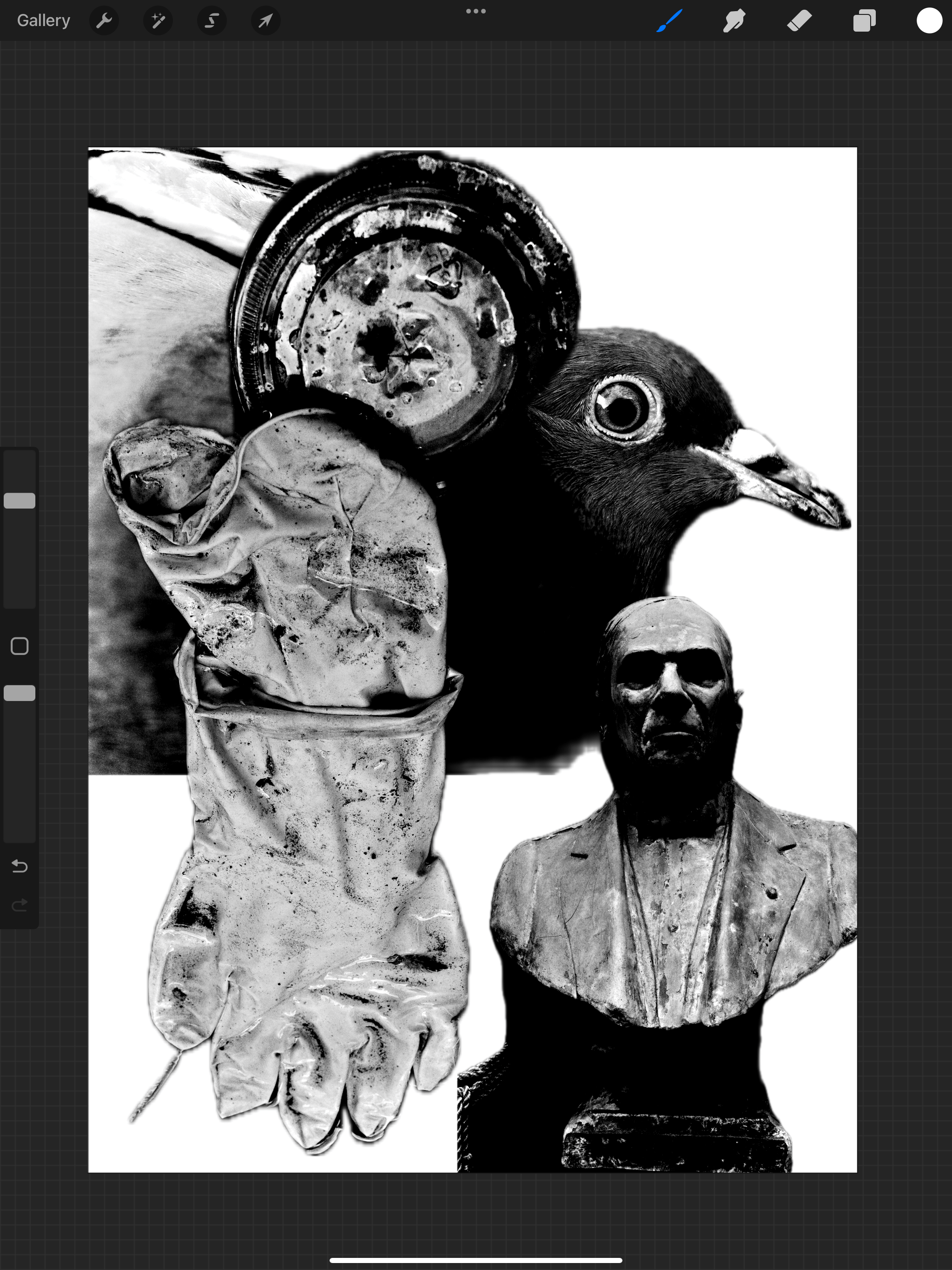
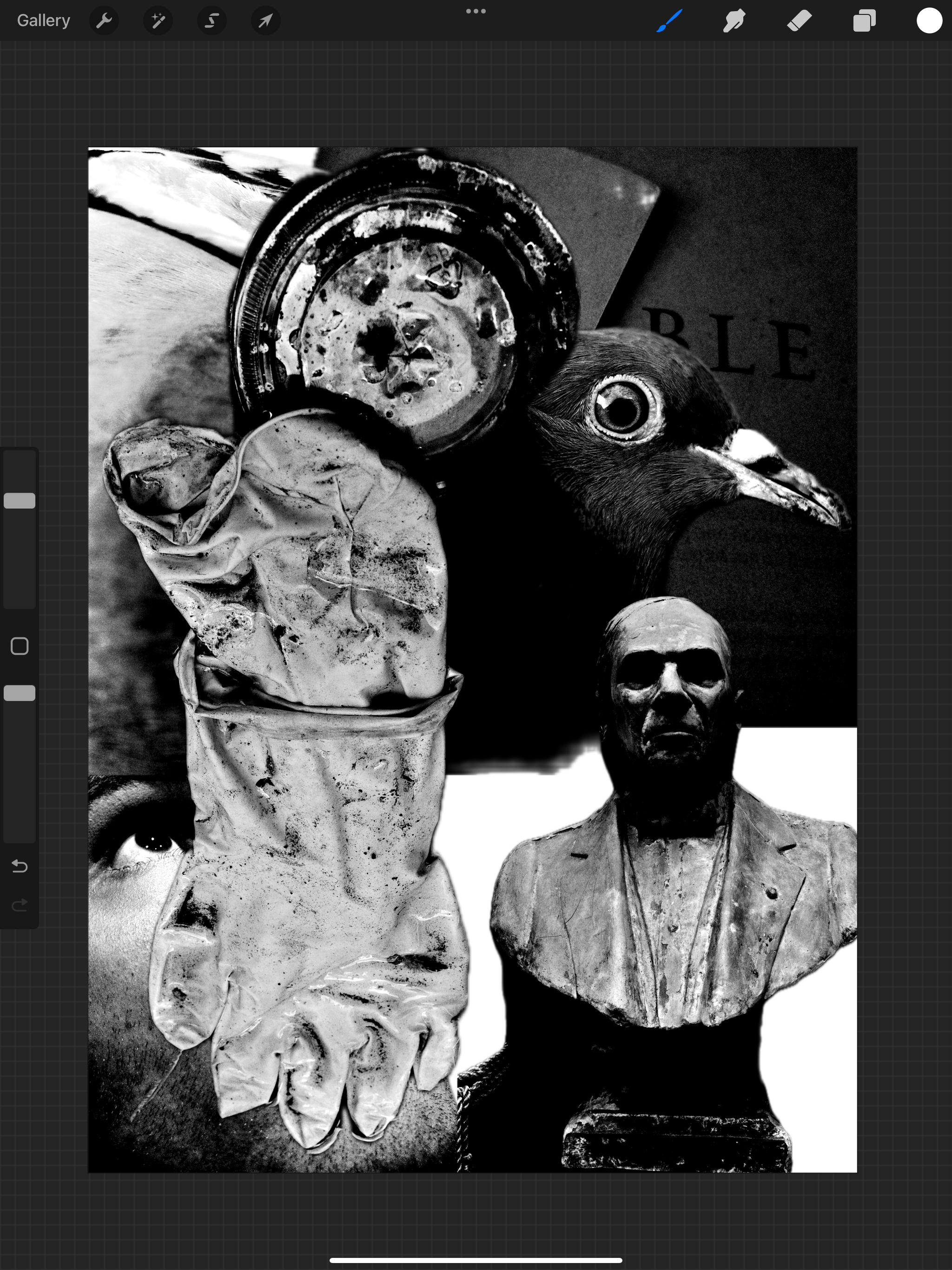
When I walk the streets with my camera, I simply treat the world like a canvas. If there are any objects on the streets that I believe I can use later in a photo montage, I can simply make a snapshot of it, import it to my iPad Pro, and use the artificial intelligence to drag and drop different bits and objects from pictures that I make to create an entirely new visual image. Anything that I find on the streets can become something that I can use later in a new creation.
Anybody can become a creator. There are so many tools and opportunities to make new things. As photographers, let’s think of new ways that we can innovate within the realm of street photography.
If you have a Ricoh camera, I highly suggest trying out the following settings:
Camera Settings:
Image Settings:
Embrace the grain, grit, and play more. I’ve never had so much fun with my creativity since adopting these new approaches and hope they empower one other person to give it a try!
Philadelphia is known for its historical layout, which dates back to its founding in the 17th century. William Penn, who designed the city, envisioned wide streets and a grid system that made it pedestrian-friendly even from its earliest days. This layout encouraged walking and contributed to Philadelphia’s reputation as a walkable city. Over time, urban planning has further emphasized walkability, with efforts to enhance sidewalks, create green spaces, and improve pedestrian infrastructure. Today, many parts of Philadelphia remain highly walkable, particularly in the Center City area and along the Schuylkill River Trail, where pedestrians can enjoy scenic routes and easy access to amenities.