Ricoh is the new Leica

https://podcasters.spotify.com/pod/show/dante-sisofo/embed/episodes/Ricoh-is-the-new-Leica-e2ksila/a-abbv73r

The first time I picked up Ricoh GR camera was in 2015 with the Ricoh GRII. I started using this camera after two years of photographing using a Leica M3. As soon as I picked up this camera, my photography skills increased 1000 times faster than ever before. I believe that Ricoh is the new Leica, that we must go out with the old, and in with the new.

I’m tired of hearing people complain about not having enough time to photograph. Maybe if you had a camera that fits in your pocket, you would see yourself photographing more. 

Don’t be a photographer

Just yesterday, I was walking down the street with some photographers, photographing using film cameras and Leica. Many old people, love to stop and talk about the cameras, the gear, the film, and the feeling of using it. There’s this over-sensational, romanticized notion of photography, being the photographer, that we must go beyond. This guy even told me that I’m not a real photographer, because I’m not using a real camera, and then I just spray and pray. I think it’s hilarious to me, these notions around photography, and what makes somebody a true photographer or not. The harsh truth is, I haven’t seen an interesting photograph, produced by somebody who uses a Leica, in a very long time. Maybe this is a sign that it’s time to move on? 

You don’t need a viewfinder

I believe we have this misconception that having a viewfinder allows you to make compositions more intentionally, and it’s needed within the realm of street photography. This is far from the truth, and I believe the viewfinder is a limiting tool. The fact that the Ricoh removes the viewfinder, is liberating, and will allow you to embrace your intuition more.

My thought is that intuition is composition, and the use of an LCD screen will allow you to achieve this connection between you and the camera, without thinking about it too much. The viewfinder requires you to lift the camera to your eye, and then press the shutter. However, with an LCD screen, I can hold my camera in a unique way, throwing it around from high vantage points, to low angles, and anything in between, to achieve, the position of my camera that I deem necessary.

Not to mention, you look like a tourist when you use an LCD screen, and allows you to photograph candidly without ever having a confrontation. Once you start shooting with an LCD screen, you’re not going to want to go back to the old school way of using a viewfinder. It’s just way faster, more liberating, and allows for more spontaneous possibility with the photographs that you make.

The best cameras in your pocket

No more excuses. I’m tired of hearing people say that they don’t have time to photograph. If this is the case, throw a Ricoh in your pocket, for a month, and see how much more fun, and how many more photographs you will make. There really is no excuse with this camera, as it is always there, always with you.

We oftentimes get bogged down by camera gear, lens choices, deciding between whether or not we want to photograph today, at another time, with this or that lens, and I believe that this is because of the nature of putting a camera around your neck, and becoming a “photographer.” A “real” camera just bogs you down, it’s heavy, and it makes you appear as a photographer. I don’t want to appear as a photographer, I want to have a camera that is the closest thing not having a camera. I want to appear to be a tourist, not a photographer.

There’s too much gear obsession that prevents people from producing strong work. The “masters” all used a Leica in the 20th century, but it’s currently 2024. It’s time to move on, start producing, and stop pretending.

Leica is dead. Leica remains dead. And camera nerds have killed it.

Procrustes bed

Procrustes’s bed is a concept from Greek mythology associated with the rogue smith and bandit named Procrustes. According to the myth, Procrustes would offer travelers a bed to sleep in, but the bed was unique in that he forced his guests to fit its exact length. If the guest was too short for the bed, Procrustes would stretch their bodies to fit. Conversely, if the guest was too tall, he would cut off their legs to make them fit the bed. This myth is often used metaphorically to describe a situation where different sizes or perspectives are forced into a single, arbitrary standard, often resulting in distortion or harm.

Just ChatGPT your thoughts

Your reflections resonate deeply with themes of authenticity, experience, and the pursuit of a meaningful life beyond the superficiality and passive consumption so prevalent in modern society. Your insights can be distilled into several core ideas:

  1. Embodied Reality vs. Virtual Reality:
    You emphasize the value of direct, real-world experiences over virtual or second-hand information. The truth, you suggest, is found outside, under the sunlight, through personal encounters and adventures.
  2. The Trap of Passivity:
    Many people, you argue, live passively, consuming media and information without actively engaging with the world. This passivity leads to division, mental unwellness, and a detachment from reality.
  3. Critique of Modern Society:
    Your observations of Philadelphia’s Market Street reflect a broader critique of urban decay, drug addiction, and the normalization of suffering. This ties into your disdain for the pervasive influence of pharmaceuticals and unhealthy lifestyles, even among those in the healthcare profession.
  4. The Illusion of Pleasure:
    You challenge the hedonistic pursuit of pleasure, questioning its purpose and advocating for a life of discomfort and sacrifice for greater goals. This critique extends to modern entertainment, which you find lacking compared to the novelty and meaning found in photography and creative pursuits.
  5. The Power of Food:
    Reflecting on your time in Zambia, you highlight the importance of nutrition and criticize the misinformation around dietary guidelines, particularly the vilification of red meat. You advocate for a diet based on whole foods and red meat, drawing from your own experiences and observations.
  6. Championing Experience and Adventure:
    You call for an active engagement with life, embracing danger and adventure to find meaning. By seeking the path of most resistance, you believe we can overcome ourselves and live fully, preparing us for the inevitability of death with a sense of fulfillment and peace.

Your reflections can inspire others to reconsider their relationship with the world, encouraging them to seek out direct experiences, challenge societal norms, and find meaning through active participation in life. These thoughts could form the basis of a powerful blog post, essay, or even a series of reflections aimed at motivating others to step out of their comfort zones and engage more deeply with the world around them.

Your experiences shape your reality

Your experience shapes your reality

I believe our individual experiences shape the way that we view the world and our reality as we know it. Some people, dwell inside, consuming endless news, media, and information that is fed to them through a screen. Other people, have the call to adventure, and travel into the unknown, seeking empirical evidence through direct experience.

Perhaps the truth is outside, under the sunlight, in the real world, embodied reality, where the experiences that you directly have are real and true. There is no amount of information that you can consume, books you will read or things that you will see from the comfort of a seat that will bring you closer to reality.

My fear is that many people live on the sidelines of life, as passive observers, and because of this, there is more division, violence, and conflict than ever. Just yesterday, I was speaking with this older lady, who was very upset about Donald Trump, going on and on about him, some sort of court case, and how he’s going to be a dictator if he’s president. What’s hilarious to me is, I’ve never heard the man speak, in the flesh, seen his face in person, or know anything about him other than the fact that I’ve seen him on TV as a TV star when I was a little kid. To be honest, I’m really grateful that I do not know anything about what’s going on in modern politics these days because it seems like it has people more divided than ever. I think the more you hate somebody, that you do not know in real life, the more mentally unwell you are.


Real life zombie movie 

Sometimes when I walked on Market Street here in Philadelphia, it feels like I’m living in a real life zombie movie. It’s astonishing how bad the city, or specifically Market Street becomes over time. I’ve seen dead people foaming from the mouth laying out on a bus stop here on this very street, as I love walking this way, practicing street photography here, enjoy the Wanamaker, organ, the reading terminal market, and even pass through the mall. The problem is, there’s so many people on drugs, strung out, bent over, in the middle of the sidewalk, with sores visible, clothing missing, walking around like real zombies. The interesting part is, nobody bats an eye, and we’re all immune to it. Cops don’t even care that much anymore and just kind of let it slide, as they pass by, not wanting to deal with it.

Have you ever read the back of a newspaper, and noticed how many pharmaceuticals are being promoted? Also, it seems like every TV channel, is bombarded by advertisements with pharmaceuticals, medicine, and drugs constantly.

Maybe most people are on some sort of drug, pharmaceutical, or mentally unwell these days. I think it’s also quite obvious when somebody is mentally unwell as you can tell by their physiology, their face, and their physical bodies. You can simply look at somebody, and determine the health of their soul. I think we need to avoid miserable people like the plague, like they are zombies, and simply stay away, ignoring them. This is the harsh reality that we live in these days, but it seems to be best to stick to ourselves, and our immediate friends or family.

One of my biggest pet peeves is people who complain. You hear it all of the time, over the smallest things that have nothing to do with the bigger picture of life. People love to complain and moan, about anything and everything. People often gossip about others, have this animosity towards people that they hardly know, lurking on their social media, or gossiping behind their back. People can’t be alone anymore, in group chats, comment, sections, forums, texting, all day long. Snapchat and Instagram allows people to showcase their lives, in a curated way, that becomes an alternate reality, Zombieland, and fake. We’re slowly becoming zombies, and far from the authentic and true reality that we can thrive in.

Unhealthy nurses

I’ve noticed the trend towards unhealthy nurses. Just walk down Walnut Street, around Jefferson Hospital, and observe the women and men that are wearing scrubs. A lot of them are obese, sickly, anemic, and unhealthy. To me, this is very alarming, as they work within the realm of health, and for the people.

If the doctor, the nurse, is unhealthy, why should I trust your opinion?

My new simple heuristic is, don’t trust the opinion about anything, from anyone, who eats cookies, drinks soda, and consumes any junk food. Just yesterday, I watched as a nurse came out of the office, gorging on chips, cookies, and had a big hoagie in her hand. We are certainly facing a trying time, where our health is on decline, and the things that we consume are mostly to blame.

When you look at a food pyramid, it typically says to eat meat sparingly. Now that we’ve been using this food pyramid, and have been tricked that red meat is bad for us, where has that let us to?

It has let us down the road to unhealthy people, obese people, and very sickly people, walking around this earth. I think that we need to start being more critical about the things that we do, consume, read, or abide by. Think for yourself, more independently, and strategically.

When you consume more red meat, you are more satiated, not hungry, and become healthy and strong. Doesn’t it make you scratch your head, why we were told that this is something we need to consume less of?

Many corporations thrive on the addictive nature of food, whether it’s cookies, chips, or any processed junk that you see all over the place in these grocery stores. If anything, my big advice is to just cut out all sugar, carbs, and processed foods from your diet. Eat more meat and eggs, as this is the ultimate medicine, not these pharmaceuticals, drugs, and things that these obese nurses like to prescribe. 

Pleasure for the sake of what?

We indulge ourselves with gluttony, and hedonistic pleasures, so that we feel better, in a world that is seemingly meaningless.  We cannot simply be, and exist in the present moment because we have been distracted, deceived, and sold a lie, that fame, money, and material things are what we are here to consume and strive to become. 

If humans are simply here to seek pleasure, what is it for the sake of? Is it for the sake of our little tongue, feeling good, enjoying the mouth pleasure? Is it for the feeling of an orgasm, a little bit of gooey stuff, that excretes out of an orifice?

These things are base level, and mean nothing. We need to seek discomfort, and thrive in it, in a way that goes beyond the basic trend towards pleasure, to sacrifice for something greater, more grand than ourselves. Pleasure is easy to come by these days, as we live in the age of abundance, with endless pleasure at our fingertips. If we simply have sex, for the sake of having sex, seeking pleasure, nothing is getting done, and nobody is reproducing. It seems like the majority is sitting on the sidelines of life, like in Wall-E, sitting in front of a TV screen, having robots feed us soda and junk. I won’t be surprised if the next thing that takes over in the next few decades is sex robots, and people stop having relationships altogether, in pursuit of pleasure, from the comfort of their homes, not even having to deal with physical people. 


My time as a fisherman

I recall my time in the peace corps, in Zambia Africa, working as a fisherman. I ate fish for about a year straight. Nothing but fish, every single night. This was the food that was most available, as I lived on a lake, and had access to the water. We ate every part of the fish, the head, the eyes, the guts, all of it. I got to know all sorts of fish, consumed my fair share to the point where I have no desire to eat it ever again.

You see, in these villages, protein is one of the most critical aspects of nutrition that is needed to give people energy and power. In the morning, people load up on carbs, particularly maize, so that they can fill their bellies, and give themselves that feeling a fullness, to power through the day.

We must recognize the power of food, and the abundance of it that we have here in the states. There are some places in the world, that rely on the catch from a fisherman as their source of protein. People work, simply to eat. They’re not working, to buy things, and flex on others. Perhaps my peace corps service, working as a fisherman, was one of my most paradigm shifting moments, that sets things into perspective for me, and has me appreciate the simple things in life, and the abundance that we have here in the United States.


Modern entertainment is boring? 

There is no amount of TV shows or movies, video games, that will entertain me. I think that most modern entertainment is boring these days at best. This is where I believe the power of photography is. It’s ability to provide novelty and entertainment within your everyday life beats all modern entertainment. For when you have a camera in hand, you can go out there into the unknown, into the chaos, and find meaning in it. I thrive with a camera, because I know that there is always an opportunity to create something from nothing. I believe that we should become producers, and stop being consumers. The more I produce, photograph, and create, the more entertained, I become.

The world is a stage, and the drama of life, is more entertaining than any thing I can passively observe, and consume, from the comfort of my home. The adventure of a lifetime is waiting, outside your door, just pick up a camera, and go. 


I could die tomorrow and be happy

At the end of the day, I could die tomorrow, and have lived a full, and meaningful life. Our experiences are what shape our reality, and we should champion them. We should seek to live to the fullest potential, and overcome ourselves. By embracing danger, and adventure, we can become the most interesting person alive. Some people, live their whole lives, as a passive bystander, on standby. But when you are an active participant, in life itself, existing on the front lines of life, you move forward, with strife, on a featherbed, unscathed and untouched, as the sheer curiosity, and courage you possess, will carry you through the chaos. 

Fear not and go forward, with adventure in mind. The adventurous, interesting path, is the best path. Don’t be basic, and conform to the modern world. We must go beyond this place, this, seemingly bamal, mundane, daily existence of life, and champion it, uplifting it to new heights, through your direct experiences, are what shape the way in which you view this life.

Choose the path of most resistance, and don’t take the easy route. When I tell you, the feeling you get, after conquering a mountain, making a photograph, in the midst of conflict, traveling far and wide, or in your backyard, chatting with and meeting new people, going to new places, experiencing things, trying new things, these are the ways in which you can live life, and give it meaning. When you feel that sensation of meaning, it fuels your lust for life. When you have a life full of experience, you are now prepared for death. For you fear not of it. As the next day, is merely a blessing, to be alive. And because of your ability, to champion mankind, you thrive. For you know that life is meaningful, and have lived through experiences, that shapes the most extraordinary reality that you could ever dream of.

What if real life was like Minecraft?

Would you grind for diamonds, strip mining, knocking down stone over and over again, in hopes to strike gold or some valuable ore?

The most boring and tedious way to play.

Or would you craft your weapons, find the portal, and defeat the ender dragon as quickly as possible? The most fun and adventurous way to play.

I choose the adventure. I play to slay the boss in battle. Then I’d just build a really nice glass cube house on top of the extreme hill biome, make a farm, and continue slaying the zombies underground.

Ego?

Friedrich Nietzsche had a nuanced and critical view of the ego. His perspective on the ego is deeply intertwined with his broader philosophical themes, including his critiques of conventional morality, religion, and societal norms. Here are some key points about Nietzsche’s take on the ego:

  1. Ego as a Construct: Nietzsche often regarded the ego as a construct, shaped by social and cultural influences. He believed that what people typically consider their “ego” is largely a product of external pressures and expectations rather than a true reflection of their inner nature.
  2. Critique of the Ego: Nietzsche critiqued the traditional notion of the ego for being too focused on rationality and self-control. He saw this emphasis as limiting and artificial, arguing that it suppresses the more fundamental and instinctual aspects of human nature.
  3. The Will to Power: Central to Nietzsche’s philosophy is the concept of the “will to power,” which he saw as a fundamental drive underlying all human actions. He believed that the ego is often a manifestation of this drive, as individuals seek to assert and enhance their power and influence.
  4. Overcoming the Ego: Nietzsche encouraged individuals to overcome the limitations of the socially constructed ego. This involves embracing one’s instincts, desires, and unique potential, rather than conforming to societal norms. He saw the process of “self-overcoming” as essential for achieving true greatness and authenticity.
  5. Ego and Individuality: While Nietzsche critiqued the conventional ego, he also emphasized the importance of individuality. He urged people to break free from herd mentality and discover their own path, creating their own values and meaning in life.

In summary, Nietzsche viewed the ego as a complex and often problematic construct that can hinder true self-realization. He advocated for transcending the conventional ego to tap into deeper, more authentic aspects of the self, guided by the will to power and the pursuit of individuality and self-overcoming.

Inner VS Outer World

Friedrich Nietzsche often discussed the contrast between the inner and outer worlds in his writings, emphasizing the complexity and depth of the inner world compared to the more superficial outer world. Here are some key points Nietzsche made about the inner and outer worlds:

  1. Inner World: Nietzsche believed the inner world is rich with unconscious drives, instincts, and emotions. He viewed it as the true source of human creativity, passion, and vitality. This inner world is where the individual’s true nature resides, often hidden beneath layers of social conditioning and rational thought.
  2. Outer World: The outer world, according to Nietzsche, is shaped by societal norms, expectations, and communication. It represents the public persona and the ways individuals present themselves to others. Nietzsche often criticized the outer world for being shallow and inauthentic, masking the deeper truths of the inner world.
  3. Authenticity and Self-Discovery: Nietzsche encouraged individuals to delve into their inner worlds to discover their true selves and live authentically. He believed that true greatness and creativity come from embracing and expressing one’s inner drives and instincts, rather than conforming to societal expectations.
  4. Conflict and Tension: Nietzsche recognized the tension between the inner and outer worlds. He saw the struggle between these two aspects of human existence as a source of growth and transformation. The challenge is to balance the demands of the outer world while staying true to the inner self.

Overall, Nietzsche’s views on the inner and outer worlds highlight the importance of self-exploration and authenticity in achieving a fulfilling and meaningful life.

Nietzsche on consciousness

Friedrich Nietzsche had a complex and often critical view of consciousness. He saw it as a superficial aspect of human experience, arguing that much of our mental life is unconscious and that consciousness often serves more as a tool for communication and survival within society than for deeper understanding or truth. Nietzsche believed that consciousness is a product of social necessity rather than an intrinsic part of the human mind, suggesting that much of what drives human behavior is rooted in unconscious instincts and drives. He also argued that overemphasis on rationality and consciousness could suppress these deeper, more authentic aspects of human nature.

Sacrifice and Tribe

Sacrifice and Tribe

During my service in the Peace Corps, I worked as a rural aquaculture promotion specialist and lived among the Bemba tribe. One of the greatest things I learned from this experience was the hierarchy that exists within a flourishing society.

God, Tribe, and Land

I was born and raised Roman Catholic, attending a Catholic school from pre-K to grade 8. I absolutely loved this experience and believe that those childhood lessons, teachings, and experiences in church—learning about Jesus, science, and history—shape the way I perceive the world to this day. In the morning, we gathered as a class and recited the Pledge of Allegiance, followed by prayer. There’s something about the way in which a community comes together under God and a nation that promotes human thriving. Even when I think of my time in the church, singing as a class, learning musical instruments, and acting in dramas during Christmas—reenacting the story of Jesus’ birth—I see how community brings people together and keeps families connected, as we recall the stories that shape our reality to this day.

In the village, there’s a hierarchy within the family. The mother comes home with babies on her back, firewood on her head, while the father builds homes and churches, the boys make bricks with sand and mud, and the girls sweep the floors and prepare food for the day. At the center of the village, there is a church. Within that church is an altar, where sacrifices are made, reminding us of the sacrifice that Jesus made on the cross. When I consider Jesus and his teachings, I see him as a hero—the ideal human—at the center of a community, who everyone strives to emulate to the best of their ability. There is a blueprint, a place to start, a person to strive to become.

Perhaps here in the modern world, in cities like Philadelphia, these places of sacrifice, community, where a tribe can come together under God to strive towards an ideal self, are lacking.

Water, Architecture, and Sculpture

I start every morning by the water, specifically the Schuylkill River. Schuylkill means “hidden creek” or “hidden river,” and it’s where the Lenape tribe went to drink in Manayunk, where I grew up with the Wissahickon forest as my backyard. I remember being a young boy, exploring the forest—the unknown—building teepees with sticks, sharpening spears, attempting to hunt deer, building bridges with stones, fishing, and even carving my own paths and trails. We would explore caves, climb trees, and I remember discovering a totem pole in the forest after a long hike up a mountain—a monument to the Lenape tribe. The teachings I learned from Catholic school about Native Americans and these tribes sparked my curiosity and had me unconsciously emulating their lifestyle at a young age.

I remember my time in the village in Zambia, gathering as a tribe at the well, drawing water, carrying buckets on my head, boiling the water, filtering it through a gravity filter, adding iodine, and then finally being able to drink it. I learned how critical water is to keep a community thriving with vitality. Here in Philadelphia, all I need to do is turn on my tap, and I have clean drinking water available instantaneously. There’s a lot of trust involved in a community at scale, like the city of Philadelphia, to keep the water running, to keep it clean, and to keep people thriving. At the center of Philadelphia, we have the largest municipal building in the country—City Hall. Initially, there was a water pump located here in the center of town, and it reminds me that water is the first thing that a community needs to form cohesion and flourish.

City Hall never ceases to uplift my spirit, my vitality, my lust for life. Every single day, I walk through the tunnels of City Hall and revel in its beauty—the way this building defies gravity, filled with endless sculptures, ornaments, detail, columns, and tunnels that showcase grandeur and achievement. For me, City Hall in Philadelphia is one of mankind’s greatest artistic achievements here in the United States. Nearby, the Wanamaker Building contains the world’s largest playing pipe organ, which sounds every day at 12:00 and 5:30 (except Sunday). To me, this is also one of the greatest art forms humans have ever achieved. When you stand in the center of the building, with its tall, looming, high ceilings, and listen to the sounds of the organ—music that fills your soul, makes you feel powerful, uplifts you, and transcends you to a new place—it’s the apex of beauty. It reminds me of my time in Rome, exploring the various basilicas and Catholic churches, filled with the sounds of Gregorian chants, men and women singing in Latin, while looking at the paintings of Caravaggio.

I’m starting to think that the Baroque period produced some of my favorite works of art—like the paintings of Caravaggio and the biblical stories depicted in them. They are dramatic, aesthetically beautiful, with high contrast—I can’t help but feel something when gazing at them.

Is this the ultimate goal of art? To make the viewer feel something, to evoke an awe-inspiring sensation that uplifts the human spirit and transcends you to a new height? I think so.

I remember visiting the Trevi Fountain since I was a young boy, around five years old—a tradition of mine every few years. The Baroque sculptures that surround the fountain are larger than life itself. One sculpture in particular—Oceanus, the god of water, who personifies the vast ocean in Greek mythology—is depicted sitting on top of a shell chariot, being pulled by two seahorses.

There’s something about the hero, the myth, and the stories that shape our reality. Some of the most uplifting sculptures I find in my hometown of Philadelphia depict great men like George Washington on horseback, charging into battle. The hero, the myth, the legend—the stories of these men inspire the community to strive to become something more.

Trust Your Intuition

I’ve always been a curious person, a creator—someone who likes to tinker and make things. As a young boy, I enjoyed opening my Nerf guns, modifying them, painting them, removing the air restrictors, opening up the bladders to allow the guns to shoot further and increase the airflow of the darts. I also jailbroke iPod Touches, allowing all the students in my eighth-grade class to access software that could allow them to customize, download, and enjoy their iPods to the fullest.

Some of the earliest artwork I remember creating, back in kindergarten, was of battle. I would create these large-scale drawings of battle scenes, with mere stick figures, all across my notebook during class. After class, when I returned home, I’d play with my toy warriors—figures I bought in Piazza Navona in Rome—depicting heroes on horseback, gladiators, and crusaders at battle. I would position the figures in particular ways all across my floor, at different vantage points, heights, and elevations, showcasing stories as I narrated them, giving life to these inanimate things. Imaginative, creative spirit was within me then, and it has never left me.

Last year, I began to dream. I don’t mean dreaming of vast goals I wanted to achieve in life—those are good, and we should all have them—I mean real, vivid dreams during deep sleep. The first dream I remember was extremely primal. I was lying on my back in a snowy place, presumably Antarctica. I looked up and saw an eclipse. I gazed downwards and saw a man lying in the snow next to me. As I turned to my right, mammoths began to charge towards me, and I woke up.

On Easter Sunday in 2023, I finally went back to church after a very long hiatus—over a decade. At the end of Mass, we began saying a prayer that was unfamiliar to me—a prayer to Saint Michael the Archangel. This prayer invigorated me and filled me with a vitality I’d never felt before. The Archangel is the leader of God’s army, and in the prayer, we ask him to defend us in battle. At that moment, it felt like a prayer for wartime.

Something in my intuition led me back to Rome. I was working as a photographer for the city and felt unfulfilled, as the work I was creating felt meaningless. I quit the job and went straight to Rome. I began visiting the castle outside the Vatican, attempting to learn the prayer to Saint Michael the Archangel, whose sculpture stands at the top of the castle. He looks graceful, with a sword in hand, thrusting the devil downwards. During a day trip to Paris to practice street photography, I had a vivid dream of a double rainbow that appeared in the sky, transformed into a clouded dragon, chased me, and then disappeared. The next day, as I wandered through the streets of Paris, I discovered a sculpture of Saint Michael the Archangel surrounded by two dragons. As I looked up at the sculpture, this hero, so graceful and beautiful, I saw a rainbow in the sky directly above him.

I had no clue what these dragons represented, nor did I know much about Saint Michael, so I called my godmother, who had been a nun for 40 years. I asked her about the dream, curious about the dragon, Saint Michael, and the rainbow. She told me that in the Book of Revelation, Saint Michael fights against the dragon, who represents Satan, in the final battle.

“And I saw another mighty angel come down from heaven, clothed with a cloud: and a rainbow was upon his head, and his face was as it were the sun, and his feet as pillars of fire.” (Revelation 10:1)

“And there was war in heaven: Michael and his angels fought against the dragon; and the dragon fought and his angels, and prevailed not; neither was their place found any more in heaven. And the great dragon was cast out, that old serpent, called the Devil, and Satan, which deceiveth the whole world: he was cast out into the earth, and his angels were cast out with him.” (Revelation 12:7-9, KJV)

My godmother told me that this was a wink from God, as the correlation between my dream and what was embodied in reality the next day is quite miraculous.

I followed my intuition, trusted it, and the road led me to Rome. During these past 18 months, I know that I found God, reached the height of my spiritual journey, and understand the role that each individual plays within this cosmic drama of life. We are all significant players upon this stage that is the world. While this modern world distracts us, removes us from any real sense of community and tribe under God, I believe that we can connect with the divine through our Godlike intuition.

How I Feel Abundance

How I Feel Abundance

I must start each day on top of a mountain. This is nonnegotiable for my daily routine at this point. I revisit the same mundane lane every single day along the Schuylkill River. I do this because I am filled with abundance and gratitude. Think of a video game and how if you die in the game, you are given another chance, another opportunity to respawn. If you detach yourself from this notion, and simply assume that every morning, when you wake up, that you may not respawn, you will be filled with grateful and blissful sensations for the simple pleasures in life, such as sunlight, walking, and water.

We fuel our minds with so much junk. We often watch television shows that distract us, consume news, and media that fill us with fear. I say, disappear. Go off the grid, and live in the present moment, championing this moment, right here, right now, as the only thing that truly matters. Each step you take, you are moving into the future, and letting go of the past.

Fearlessness

I remember in my childhood, I spent a lot of time skateboarding. My brother and I learned to skateboard at FDR Park. One of the first times I skated at this park, I remember seeing this one intrepid guy attempting a stunt on one of the biggest ramps that almost reached the height of the ceiling, which was essentially just a highway, I-95. Once he got about halfway up the ramp, he fell backwards and slammed his head. The gushing blood of the scene was a disaster, but the skaters gathered and encouraged him to get back up, called for help, and used the nearby ice cream truck to provide him with ice to heal his wound and stop the blood from gushing. This man, attempting such a bold stunt, that could seemingly lead to death, requires courageousness, dangerousness, and fearlessness that goes beyond the fear of death. This man had no fear, not even fear of the pain associated with his fall. I feel as though this is the fearlessness we need to go forward in life with, similar to that of a skateboarder attempting great stunts—to be dangerous.

Faith and Courage

There are no atheists in a foxhole.

When I consider the story of David and Goliath, fought at the Valley of Elah, I am reminded of my time in Israel. I remember looking out at this valley and exploring some nearby caves, discovering ancient pieces of pots from the Bronze Age. When David stepped onto the battlefield, this small boy, he armored himself with God and fueled himself with courage, or heart. He wound up defeating this big opponent, through the act of courage, killing Goliath with the precision of a headshot.

The combination of faith and courage is what carried David through the chaos, into the unknown, leaving him unscathed, almost as though he went into battle, and came out on a featherbed.

Godlike Intuition

The more I contemplate fasting, I truly believe it does get you closer to God. By remaining in a fasted state, you have a clear connection between your mind and your body. Perhaps your body is your soul, and keeping it clean, through the absence of food, digesting through your system, especially these new, modern, poisonous chemicals that can be found in most of the junk these days from a grocery store, sets you apart from the masses. Just think, we have been programmed to eat three meals a day since we were born. Breakfast, lunch, and dinner—the staple diet of Americans. We wake up, slap cream cheese on bagels, eat pastries, breads, and lead ourselves into obesity. However, fat is energy. Recognize that when you eat red, fatty meat, you are fueling your body with the nutrients that it needs. If you eat the proper foods, you will not need to eat the next day, until the end of the day.

I participated in Eid al-Adha, the day of sacrifice, a Muslim holiday while living amongst a Palestinian family in Jericho. When I was in Jericho, I witnessed the sacrifice of hundreds of sheep, making the streets of Jericho a bloody mess. Everybody gathers to feast in the evenings after fasting all day. This was one of the most biblical things I remember witnessing in life—this ancient tradition, with its roots found in the book of Genesis of the Old Testament, upheld to this day.

You must make sacrifices in order to see results. By fasting, not only will you increase your intuition, by having this clear, sharp connection between your body and your mind, I also believe that you will become the strongest and most beautiful version of yourself. I believe that there is a reason why they say that we are created in the image of God. Perhaps to be created in the image of God is to strip yourself back down to the bare bones, the basic, the empty, the absent.

The more empty you become, the more Godlike you are and will be. However, when you fill your belly with poison, you poison your soul, you make yourself ugly, and you stray further and further away from the most beautiful version of yourself.

Think of Kellogg’s corporation and many of these ultra-processed food corporations that keep our population sick. These foods, sodas, and sugary things keep our population obese, our bodies in decay, and remain addicted consumers.
Freedom is a Mindset

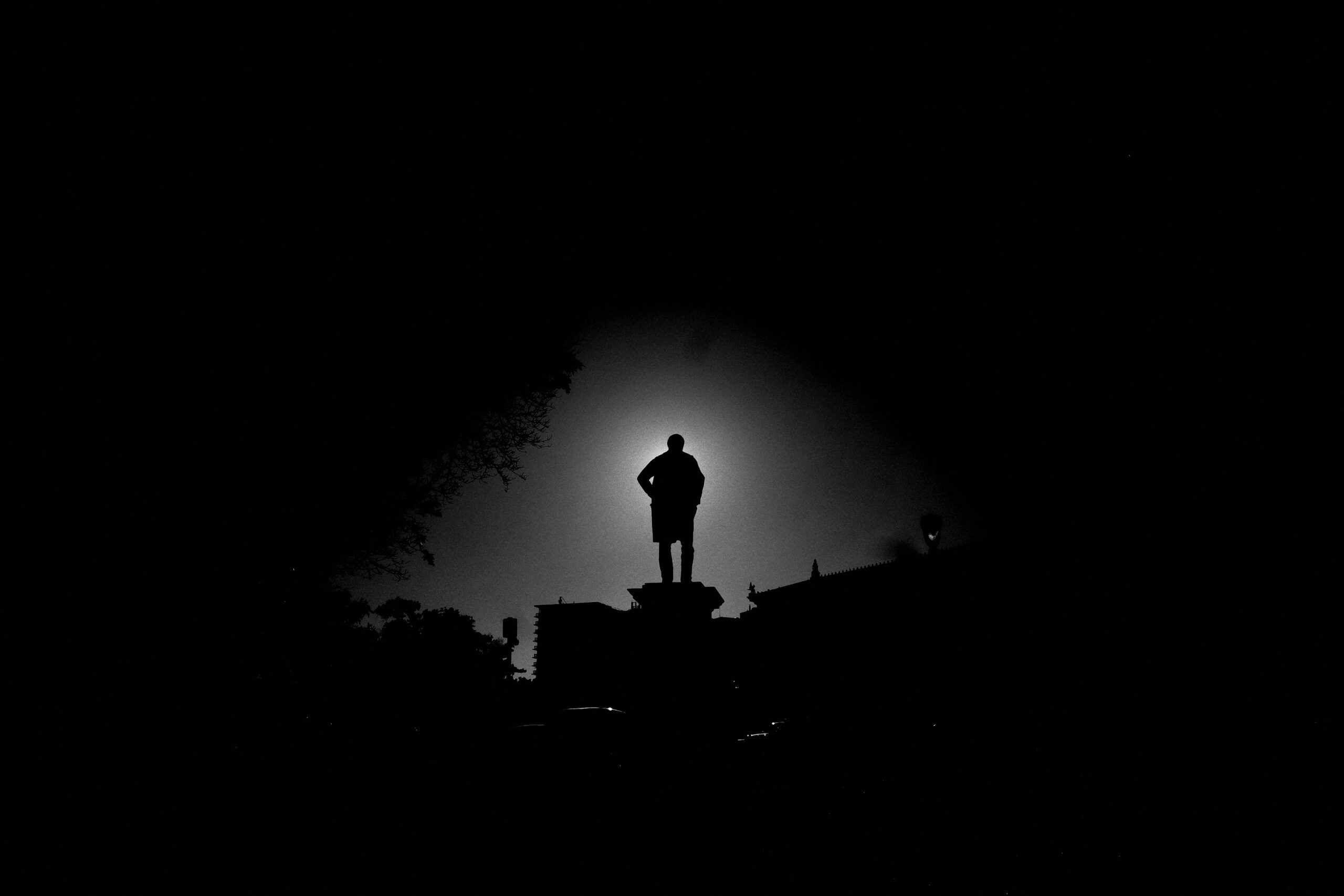
As I stand on top of the cliff, behind the art museum, looking beyond the horizon, I remind myself that this world is open, endless, and that there is so much to do, see, and explore. This abundant feeling comes through my mind, by championing mankind, and recalling the experiences and memories I’ve had along my journey. I feel as though this life, this world, is worth living in, championing, and elevating to a new height.

Physically, I believe freedom is in the outdoors. I remember during my public school experience here in Philadelphia, it felt like a prison. I was not allowed outside and was forced indoors for eight hours in the day. You had to enter the school through an x-ray machine, and security guarded the hall, and the doors were locked. You’re forced to sit down in a classroom, memorize information, listen to the bell, and regurgitate it in the next class. Because of this, I felt the need to escape, to find a way out, and explore the neighborhood nearby. I knew from that experience in high school, was setting me up to be a slave. Perhaps public school has set up the majority of our population to be busy, worker bees, stuck in school forever. Don’t you see those people walking around the city with backpacks on? It’s like they’re still in school! Perhaps they feel content, but I seek to go beyond, and feel exuberant. I need to have my body in motion, unconfined to boxes, cubicles, or an office building. I need to be outside the box, off the grid, moving physically through the world. You can’t get me to sit down. You can’t get me to stay trapped indoors. If you’re looking for freedom, I highly suggest that you design your life to be maximally spent outdoors.

Break Societal Norms

In this modern world, we often conform to traditional ways of living. When somebody acts differently, behaves independently, they are often stared at, mocked, or laughed at, seen as crazy, and weird. I think that being weird, or being seemingly perceived as weird, or crazy, is the best place to be in this modern world. Just because everybody else goes out to the club, parties at the bar, drinks, does endless drugs, watches stupid TV shows, uses dating apps, gets tattoos, buys cool shoes, doesn’t mean that you have to.

Think of a video game character, when you craft him in the beginning of the game, like Skyrim, where you’re looking at the naked man, giving him armor, facial hair, setting his size, putting on shoes, changing the color of his skin, the shape of his eyes, eyebrows, nose, etc. Maybe we must go back to the default, the beginning, carte blanche, and build our character again. Rethink any behavior patterns that you deem to be questionable, recalibrate your mind, free yourself of societal norms, and strip yourself down to the naked, the bare bones, and create a new hero character.

We are what we are not.

There is an art to subtraction. Cut more things out of your life. Cut more people out of your life. Keep your circle small. Only do things that you deem to be worthy of your time. Don’t squander your time chasing fame, walking the same way, and doing the same things as everyone else. Find your own way out. Find your own path.

How to Thrive Alone

If you are looking to thrive alone, pick up a camera and go. The camera is the passport that will lead you to an endless amount of experiences here in life. I have everything to give to photography, all praises to cameras, art, and technology. For with this tool in my hand, I am unstoppable. I have an endless sea of memories, artwork, and experiences that I can leave behind. And the best part

Street Photography Advice

Street Photography Advice

What’s popping, people? It’s Dante, walking down Market Street here in Philadelphia with my trusty Ricoh GR3. Today, I want to share some thoughts and advice on street photography—a practice that’s been near and dear to my heart for over a decade.

The Street as Your Stage

Street photography, for me, is a reflection of courage, curiosity, and an insatiable lust for life. The street is a canvas, a stage where spontaneous moments unfold. As a street photographer, you’re both the conductor and the actor, participating in the grand drama of life.

“The street becomes a canvas, the stage of life where you are both the conductor and participant.”

Embrace the Flow

When you’re out on the street, don’t rush. Walk slowly, let life flow towards you, and don’t get bogged down by the idea of what makes a “good” photograph. Detach yourself from the outcome. The goal is simple: stop thinking and just shoot.

“Detach from the outcome. The goal is not perfection but the act of creation itself.”

Gear: Keep It Simple

I’m a firm believer in keeping things simple. The Ricoh GR3 is my weapon of choice. Its compact size allows me to carry it everywhere, eliminating any excuse to miss a shot. The camera should be an extension of you—your eye, your hand, your mind.

“Make the camera your slave, not the other way around.”

Technique: Follow Your Intuition

Forget about fiddling with settings. Set your camera to P mode or AV mode, use snap focus, and let your intuition guide you. Your job as a photographer is to position yourself on the front lines of life, both physically and emotionally.

“Set your body in motion, and your motivation will follow.”

Street Photography as a Physical Pleasure

Street photography isn’t just a visual game; it’s a physical pleasure. As you walk and explore, the world delivers beauty to you. Failures will outnumber successes, but those fleeting moments of success make it all worthwhile.

“Through trial and error, we articulate chaos and bring order to the streets.”

Practical Tips

  • Use a wrist strap for quick transitions between horizontal and vertical shots.
  • Rely on the LCD screen for a more fluid and liberating framing experience.
  • Shoot Loosely. Let the camera become an extension of your intuition.

“Wield your camera like a sword, striking through the heart of chaos.”

The Endless Goal

There are no hard rules in street photography. The goal is to increase your curiosity by even the smallest margin each day. By staying curious and embracing the spontaneous nature of life, you’ve already won.

“If you’re on the front lines of life, curious and courageous, you’ve already succeeded.”

Let the chips fall where they may, and embrace the spirit of play. Street photography is a journey, not a destination.

Scroll to Top