CREATE YOUR OWN MYTHOS

What’s poppin’, people? It’s Dante.
This morning we’re looking at photographs I’ve made throughout my three-year journey shooting black and white, including new work from Tokyo. We’re using these frames to explore layering — a technique I’ve used for over a decade, in color and in black and white, all around the world.
Layering is simple once you understand the game. In this post, I’m giving you a rapid-fire breakdown of seven photographs and the seven core ideas behind how to make layered images.
Street photography happens in chaos: Shibuya Crossing, Coney Island, Rome, Paris — places where people flow endlessly in and out of the frame.
The photographer’s role is to:
Explore the unknown → Articulate it → Put order to chaos inside the frame.
Photography is:
Layering arranges foreground, middle ground, and background so the viewer’s eye moves through the frame with clarity and intention.
The photographer is responsible only for where they position their physical body in relation to the subject, the background, and when they click the shutter.
Memorize that.
It will carry you in any city in the world.

At Shibuya Crossing — one of the busiest places on Earth — I began with a simple problem:
How do I isolate a subject inside absolute chaos?
This is layering at its simplest:
Background → Subject → Moving figures completing the frame.
Patience + intuition = everything.

When we climbed onto the rocks at sunset, a group of boys emerged from nowhere. Lit by golden light, they felt like mythic heroes.
If I shot from eye level, they’d blend into the ocean.
Foreground rocks → Middle ground heroes → Background sky.
Simple puzzle, solved physically.

A man and woman were dancing unpredictably — spinning, twirling, moving left/right/up/down. This wasn’t a controlled fishing scene.
Foreground dancer → Middle ground partner → Background figure.
Layering doesn’t need complexity — just separation and intention.

In Rome, I returned to a familiar spot because I knew how the light falls at certain hours.
This composition was intentional:
Recognize patterns → Set the stage → Wait.
Light, gesture, and human behavior follow rhythms. A street photographer must read those rhythms.

In Paris for only 48 hours, I knew I wanted a layered frame with the Eiffel Tower.
Same technique as Shibuya, different city.
Once you master layering, you can drop me anywhere — Paris, Rome, Tokyo, Coney Island — and I can build a layered composition.

Basketball on the beach is rare — spontaneous.
Layering doesn’t require a thousand subjects.
It can simply be:
Gesture → Background.
That’s enough.

Here I used the most foundational technique again:
But with a twist:
Tokyo → Tokyo.
Beginning and end tied together through the same principle:
Background → Subject → Physical position → Shutter timing.
Composition isn’t just visual.
It’s physical.
You must:
If you’re trapped in your head, thinking too much about “rules,” you’ll miss the moment.
The body solves the puzzle before the brain does.
If you want to go deeper:
Visit: http://dantesisofo.com → Books tab →
Mastering Layering in Street Photography

Inside that guide:
Color, black and white — the principles carry across all mediums.
I wake up at 3:30–4:30 AM to make these videos before catching the 6:30 AM bus to work.
There’s no time for complicated scripts, but I care about giving you the best information I can.
Layering is simple.
Master it once, and it stays with you forever.
More videos to come.
See you in the next one.
Peace.
What’s poppin’, people? It’s Dante.
This morning I’m out here hiking through the woods with my Ricoh GR III, the Ricoh GF-2 flash mounted on top, shooting in manual mode, experimenting with flash and macro, and just letting curiosity guide me.
I’m looking at the trees, the frost, the dew drops catching the morning light — and I’m asking myself the same question I ask every single day:
What will reality manifest to be in a photograph today?
That question is what keeps me returning to photography with childlike curiosity.
Because when I put four corners around life and click the shutter, I’m not documenting a fact — I’m exploring what life could become through the abstraction of reality.
People assume that shooting high-contrast JPEGs straight out of camera means what you see is what you get.
But in my workflow, it’s the opposite.
What you get is what you didn’t see.
By boosting contrast to the maximum, using grit, grain, shadows, highlight-weighted metering — the camera reveals something my eyes never consciously registered.
I love that surprise. I love when the photograph becomes more extraordinary than the moment itself.
Photography becomes a way of looking beyond the veil of the everyday.
What I’m really interested in is light — the way it casts across surfaces, people, places, things.
Light is always moving, always changing. And because of that:
You cannot make the same photograph twice.
Not only does the light change — you change.
So as photographers, we should aim to become like the light:
That’s where the real magic lives.
The way I shoot these days reminds me of how action painters work.
It’s not about rational thought.
It’s about responding to:
Photography becomes a discovery.
A chance to surprise yourself.
That fine line between order and chaos is where the interesting pictures live.
Experimenting with the Ricoh GF-2 flash in macro mode opens up a whole new dimension.
A simple leaf, a vine, a frost crystal — suddenly becomes its own world.
When the flash carves the subject out of darkness, the background collapses into black, and the photograph becomes ambiguous, otherworldly, mysterious.
Even without the flash, using macro with natural light reveals veins, textures, and tiny surfaces that the naked eye barely perceives.
It’s wild how easy it is to take something from the world and place it into a new world inside the frame.
Through this workflow, I’m not just trying to record nature.
I’m trying to:
The sublime — that overwhelming feeling — is what guides my instinct to shoot.
It’s not rational.
It’s a bodily sensation, something flowing through me.
That’s what keeps me in a flow state for hours.
Often it’s not your eyes or your brain making the photograph.
It’s something deeper:
And through that instinct, the camera gives you something that reality alone could never offer.
The photograph becomes a natural abstraction of reality.
That’s the part I love.
Right now, the frost on the leaves is shimmering.
You can barely see it with the naked eye, you can’t see it on the GoPro, but the Ricoh — with its micro-textures and contrast — will reveal it.
Everything feels animated this morning.
And so the very simple question returns, the question that keeps me clicking:
What will reality manifest to be in a photograph today?
YouTube Playlist of My Photo Book Collection (Full Flip Through Videos)
In 1960, Japan reached a boiling point. Millions took to the streets in what became one of the most decisive political uprisings of the postwar era: the Anpo Protests, a nationwide movement opposing the renewal of the U.S.–Japan Security Treaty.
These protests were not symbolic. They were visceral. Bodies pressed against police shields, voices collided in the air, and for a brief moment it felt as if the entire fate of Japan’s democracy hung in the balance.
Out of this turmoil emerged the photobook The Anger of the Sovereign People (主権者の怒り ― 安保斗争の記録), published on August 15, 1960 by the Japan Journalists Conference (日本ジャーナリスト会議).
It stands as one of the most important collective photographic documents of protest in Japanese history.
Unlike most photobooks of the period, this work was intentionally created without a single authorial voice. It was built through collaboration — a merging of perspectives from photographers who embedded themselves directly inside the demonstrations.
The contributing photographers include:
This lineup reads like a cross-section of Japan’s most important photographers — from documentary pioneers like Hamaya and Kimura to later Provoke-era giants like Tomatsu.
But in this book, none of them stand above the others. The authorship dissolves into the movement itself.
This is the power of the book:
the collective eye of a people demanding to be seen.
The pages present a kinetic portrait of the uprising:
The images are not neat. They are not calm.
They pulse with anger, fear, solidarity, and hope.
There is a sense that the photographers were not observing history — they were inside the bloodstream of it, pushed and pulled by the same current that moved the crowds.
This rawness anticipates the visual rupture that would define the late 1960s in Japan, especially the birth of the Provoke movement. You can see the seeds here:
The book is not “documentary” in the journalistic sense.
It is documentary in the existential sense.
The title — The Anger of the Sovereign People — is not poetic exaggeration.
It is a statement of political philosophy.
In 1960, Japanese citizens confronted a question central to any democracy:
Who holds sovereignty — the state, or the people?
The protests, and this photobook, argued forcefully for the latter.
In these images, the people assert themselves not as passive subjects but as active agents shaping their country’s future. That is why this book transcends its moment. It is not merely about the Anpo treaty; it is about the recurring struggle between authority and citizenry — a struggle present in every society, in every era.
More than sixty years later, the book remains:
It teaches us that photography can do more than record.
It can bear witness, provoke, mobilize, and preserve the emotional truth of a moment.
In a world still wrestling with protests, state power, and civic responsibility, this book feels as alive as ever.
The Anger of the Sovereign People is not just a photobook.
It is a testament to what happens when ordinary people realize their power — and when photographers choose to stand with them, not apart from them.
It is a rare collective artifact in which image-making becomes inseparable from political courage.
To flip through it is to return to the very heartbeat of 1960:
a moment when the streets became a parliament,
and the camera became a witness to sovereignty itself.
For the first time in my life, I feel like I experienced a true creative breakthrough on the streets. It happened in Tokyo, Japan—completely by accident, completely instinct-driven, and completely rooted in the flow of light, chaos, and movement. I want to break down the process, the technique, and the exact settings I used so you can understand how these photographs came into being and how you can adapt this approach in your own work.

Everything began at Shinjuku Station. It’s one of the most chaotic places in the world—waves of people moving in every direction, nonstop. I wasn’t overthinking anything. I wasn’t trying to “make” a great photograph. I was simply responding to the energy in front of me.
And then it happened.
I accidentally hit the crop mode button on the Ricoh GR IIIx, looked at the screen, and realized I could use 71mm crop mode intentionally. It felt like a door cracking open. I followed the obsession. I followed the instinct. And that instinct carried me through the rest of my trip.
What I found most interesting was how light and shadow carve shape into the faces of the people I photographed. By placing myself in golden light—sun to my back, or slightly to the side—I could isolate faces against deep shadow and eliminate the chaos of the street.
Everything became about:
The street no longer had a location.
It became pure form, pure shape, pure energy.

Here is everything baked into the camera:
These settings gave me:
Every frame came straight out of camera.
When photographing in places like Shibuya Crossing, the environment is overwhelming. Thousands of people moving in unpredictable ways. But that’s exactly why this technique worked.
You’re only in control of two things:
Everything else—the light, the chaos, the movement—is out of your control. And that’s the beauty of it.
By positioning myself at the edge of the crossing, with golden light ripping through the environment, I could watch faces enter the beam of light. The moment their face appeared, I lifted the camera, got close, and shot.
The foreground.
The background.
The overlap.
The compression.
All of it came together in ways my naked eye couldn’t fully see. That’s the magic—the camera reveals what you didn’t consciously notice.
For years I focused on traditional documentary-style street photography. But this technique pulled me into a different world. A more abstract world. A world where:
All that matters is light, shadow, and human gesture.
Some of these photos have no location.
They’re just faces floating in darkness.
Anonymous.
Ambiguous.
Mundane elevated into something more.
That ambiguity is powerful.


I didn’t intellectualize any of this. There was no theory. No plan. No expectation.
What happened was simple:
That instinctual repetition is what created the breakthrough.
One frame in particular—an eye revealed in the background, a mouth revealed in the foreground, light forming shapes through the overlap—became the photograph I had been chasing without even knowing it.
For this trip I wore both cameras at once:
When I wanted to switch from abstract compression to wide documentary, I just swapped cameras instantly. No lens changes. No fumbling. Pure flow.
This was the first time in my life I found true value in using two cameras simultaneously. It opened up a new way of working.
The most beautiful part of this technique is that it doesn’t require Tokyo. It doesn’t require Shibuya. It doesn’t require chaos.
All you need is:
This approach is coming back with me to Philadelphia.
I want to keep pushing it, keep experimenting, keep finding new ways to see.
Follow the obsession.
Follow the instinct.
Follow the thing that increases your curiosity by 1% each day.
This technique wasn’t planned.
It wasn’t conceptual.
It wasn’t rational.
It was discovered through mistake, movement, repetition, and curiosity.
And that’s the whole point of photography.
If you want my exact camera setup, philosophy, JPEG recipe, and workflow, you can download my Ultimate Ricoh GR Street Photography Guide on my website:
👉 http://dantesisofo.com
Peace.

The world is a beautiful place, and I’m no longer afraid to die.
Beauty is indescribable.
Yes, I can confirm to you right now—as I’m walking through the park, looking at the trees, feeling the sun on my skin, watching the way the leaves fall, and the squirrels scurry throughout the grounds—that this is beautiful.
But to go beyond beauty, to the sublime, to the eternal Form of Beauty itself, to absolute perfection—the Absolute Good, the Beautiful, God—is where my mind gravitates when I contemplate beauty.
The things within the material plane are imperfect.
I’m not perfect, you’re not perfect, and nobody on this earth is perfect or absolutely beautiful. We all have inherent flaws; we all cut, we all bleed, we are all built of flesh.
Flesh is impermanent.
The trees are impermanent.
The leaves will fall.
The plants will decay.
And when you die and your body decomposes into the ground, you become decomposing organic matter.
And so within this world, we merely experience imperfect reflections of the eternal Form of Beauty—which is God, the One, the Good, the Absolute.
Sometimes when I walk through the Fashion District mall on Market Street, I get goosebumps on my body and experience some deep emotional response to the most mundane situations.
For instance, when I pass through the mall and watch people rushing home after work to catch a train, I genuinely still can’t believe that we have achieved the ability to form a transportation system that allows this to occur with ease—without even thinking about it.
Like seriously—
How is the city even functioning right now?
How is all of this occurring?
How is the earth located at the particular place in space, with the particular tilt of its axis, and the perfect distance from the sun, that allows life to exist at all?
And so when I pass GameStop and look at the list of imaginative worlds we’ve created through video games—simulations of reality—I think about the infinite possibility not only within this world that we embody and walk through each day, but the different worlds that we can create through beauty, through art.
The goal of the artist is to transcend the material world through the act of creation.
As an artist working in embodied reality—physically, with a camera in hand, walking through the streets, recognizing patterns and people and things to photograph—I’m not only trying to uplift humanity by creating something beautiful.
The goal is this:
Through the experience and act of creating beautiful things, the artist strives to have a dialogue with the Divine.
The beautiful things we create are reflections—imperfect reflections—of the eternal Form of Beauty, God, who created you.
And so when you consider that you are created in the image of God—the eternal Form of Beauty itself—the things you create are direct reflections, imperfect representations of Beauty.
As imperfect beings, we create imperfect representations of Beauty itself.
But that imperfection is perfection, because we are created from the eternal source of Beauty.
When you pass through City Hall in Philadelphia and look up at the grand architecture—the sculptures, the columns, the intricate detail worked within the laws of physics, striving upward despite being bound by gravity—you witness our desire to transcend.
We place sculptures on the tops of towers and build incredible structures because we seek to transcend the material world of space and time through leaving something behind that honors the Divine.
When you step foot in a cathedral—surrounded by this sacred space with an impossibly tall ceiling—you feel as though you can touch the sky.
There’s a reason why the Pantheon in Rome opened the dome, allowing the light to shine down upon the ground:
We once sought communion with God.
Mix up Achilles and Jesus in a cup.
Be a savage wolf, but also a pup.
We flesh and bone—but we demigod.
Disobey like Prometheus and steal the lightning rod.
Yeah, yeah, be meek, be humble—
But when the money lenders come, you know I’m ready to rumble.
The ultimate adventure: take the arrow to the knee.
Until death do us part—strive for beauty.
When you create anything—music, art, poetry, photography—you are a creator.
You are not just a consumer, not just a cognate machine.
You are divine.
You tap into the inner spiritedness that carries you to create.
When you wake up in the morning, do you really think the strength in your physical body merely comes from flesh and bones—from muscles and atoms that bind you together?
Do you truly believe that deep sleep alone gives you that feeling of power and strength?
While the physiological effect and cultivation of a strong physical foundation is critical, you can still lack spirit.
And when you lack spirit—even with a strong body—you are merely a puppet with no guiding hand.
So let’s say you’re a puppet on a stage, as a fun and autistic thought experiment.
Well, if that’s the case, there’s obviously someone guiding you—giving you the ability to move, to do, to create, to speak. Giving you life. Animation itself.
So what is that?
Who is the guiding hand?
Shōmei Tomatsu’s 『朱もどろの華―沖縄日記』 (Flowers of Vermilion Seaweed – Okinawa Diary) is one of the key photobooks from his long, immersive engagement with Okinawa. Published in 1976 by Sanseidō, the book combines photographs, diary fragments, personal notes, and reflective essays created during the early to mid-1970s, when Tomatsu was living between various islands in the Ryukyu archipelago. It stands today as one of his most intimate records of Okinawa.
The book blends Tomatsu’s characteristic visual language—high contrast, texture, dramatic light—with his deeply personal writing. It reads as both a photobook and a journal.
Tomatsu first visited Okinawa in 1969 while the islands were still under U.S. occupation. What began as an assignment evolved into a lifelong relationship with the region. He returned repeatedly, documenting everything from military presence to daily life, rituals, landscapes, and the quiet intensity of island weather.
After the 1972 reversion of Okinawa to Japan, Tomatsu spent long stretches living on the islands, including Naha, Miyako, and Hateruma. This period produced some of his most poetic and contemplative work. Photobooks like The Pencil of the Sun (1975) and Flowers of Vermilion Seaweed (1976) mark a shift in his style—from direct postwar critique toward a slower, more lyrical approach to seeing.
This book focuses on one of Okinawa’s symbolic natural elements: akamo-doro, a reddish seaweed that appears in Tomatsu’s writing as a metaphor for endurance, memory, and the regenerative power of nature. The seaweed becomes an emotional thread running through the book, linking the physical coastline with the lived experiences of the people who inhabit it.
The images range from quiet coastal scenes to portraits of local residents, from weathered surfaces to delicate gestures. Tomatsu’s sense of place is unmistakable—humid air, corroded metal, saltwater glare, shadows on limestone, and the calm after storms. Every photograph feels rooted in long observation.
The diary texts add another dimension. They include reflections on seasons, travel between islands, the passage of time, and subtle details of everyday life. The writing is spare but evocative, mirroring the rhythm of the photographs.
Flowers of Vermilion Seaweed holds a special place in Tomatsu’s body of work because:
Together, these books form one of the most important photographic meditations on place, memory, and history in postwar Japanese photography.
Below is the complete flip-through of Shomei Tomatsu – Flowers of Vermilion Seaweed (Okinawa Diary).
The goal is simple: to let the book speak for itself.
Photobooks often become vessels for the spirit of a place. In Flowers of Vermilion Seaweed, Tomatsu captures Okinawa with a kind of reverence—neither romanticized nor critical, but deeply attentive. The seaweed of the title becomes a symbol of what endures: color, memory, resilience, and the slow movement of time.
For anyone interested in Japanese photography, Okinawan history, or the evolution of Tomatsu’s vision, this book remains essential.

How I Take Photographs
Takeshi Nakamoto
First published in Great Britain in 2019 by
Laurence King Publishing, an imprint of The Orion Publishing Group Ltd, Carmelite House,
50 Victoria Embankment, London EC4Y 0DZ
An Hachette UK Company
10 9 8 7 6 5 4 3 2 1
Moriyama Daidō Rajio: sanshapu no susume by Daidō Moriyama and Takeshi Nakamoto
© Daidō Moriyama, Takeshi Nakamoto 2010. All rights reserved
Daidō Moriyama and Takeshi Nakamoto have asserted their rights under the Copyright Designs and Patents Act 1988 to be identified as the authors of this work.
Original Japanese edition published in 2010 by Kobunsha Co., Ltd. This English edition, complete and unabridged, was first published in 2019 in a co-edition of Turtle-Moriyama Agency Inc., Tokyo. Translation by Lucy North.
All rights reserved. No part of this publication may be reproduced, stored in a retrieval system, or transmitted, in any form or by any means, electronic, mechanical, photocopying, recording or otherwise, without permission from the publisher.
A catalogue record for this book is available from the British Library.
ISBN: 978-1-78627-434-3
Originated by Fine Arts Repro House Ltd., Hong Kong
Printed in China by C&C Offset Printing Co. Ltd.
Design by Alexandre Coco
Laurence King Publishing is committed to ethical and sustainable production.
We are proud participants in The Book Chain Project.
bookchainproject.com
How I Take Photographs
Takeshi Nakamoto
Laurence King Publishing
p. 10
Sunamachi: The shopping street as training ground
p. 16
Tsukudajima: Snapshots at the water’s edge
p. 46
Ginza: A debut in digital photography
p. 70
Haneda Airport: Postcard shots and landscape shots
p. 104
Highway: When the world rushes at you through the window of a car
p. 134
p. 204
p. 10
‘What’s the key advice you give to any beginner in snapshot photography?
This is the first question I ask Daido Moriyama when we meet to discuss the plan for this book.
Frankly, because of mass, he must have been asked this hundreds (if not thousands) of times — but, no doubting the sense of seasoned, Moriyama replies:
‘Well, the first thing I always tell anyone who asks me for advice is: Get outside.’
It’s all about getting out and walking. That’s the first thing. If you do that and photograph everything you’ve learned on the subject of photography for the moment, and just shoot. Take photographs — of anything and everything, whatever catches your eye. Don’t put time to think. That’s the advice I give people.’
Snapshot photography is all about capturing at the actual moment and expression of whatever you are photographing — the subject — in that particular moment.
Like Moriyama says, as a photographer he has devoted his life to taking snapshots. Snapshot photography works particularly well for him: his outlook of street scenes, or street photography, as it is also known.
When Moriyama was still barely twenty, a friend sold him a cheap Canon 4Sb, and he took it with him into the streets of Osaka, which was where he was born and grew up.
Looking back at that time, Moriyama reflects with a smile:
‘More than once, you see, I was so eager to go out on the streets with a camera and find something really way-out and exciting that I’d never experienced, that I’d end up doing it — essentially lying on the streets — for the next few decades.’
Before he set out as an independent professional photographer, Moriyama worked with two major figures in the art form: Takeji Iwamiya (1920–1989) and Eikoh Hosoe (1933–). Both men were hugely influential in their fields: Iwamiya had his own photographic studio in Osaka, which Moriyama joined, and he was active in all sorts of spheres, including art at the vanguard of fashion, while Hosoe was a new prophet. He was avant-garde as well as working on his own magazine, but he also energetically straddled new working projects and boundaries. If Moriyama had not worked too, he could as well have followed in Iwamiya’s footsteps, and found success as a completely different kind of photographer.
But Moriyama wasn’t only interested in the streets. And for him, his inevitable result meant snapshot photography.
‘I call it a personality trait: I was just the kind of person who was fascinated by the idea, and as a kid I was always straying about on the streets. I preferred that. Give a camera to anyone who is that kind of kid, and watch what happens. They are going to want to go out and start taking photographs of the streets. Snapshot photography is a natural progression of me.’
Fast forward fifty years, and Moriyama is still not interested in diversifying photography: no portraits of big-name actors, no advertising jobs, no still-life photography on behalf of sponsors, not specializing in wildlife photography, or woods, or …
Instead, Moriyama sets out, camera in hand, walking the streets, taking snapshot photographs. That’s what he does, basically. He has always thought that, taking street snapshots, he could become one of the Tokyo photographers — like Nobuyoshi Araki, Shomei Tomatsu, Masahisa Fukase, Kikuji Kawada, Minoru Yamasaki. Locations: Tokyo, Hokkaido, Shinjuku, New York, Paris, Buenos Aires, Hawaii. But he also — a whole variety of places, not only limited to particular cities, but also something different fragmented: a scrap of the city, or the sky; something on the margin; a singular feature of the road. Pick out and photograph things that look unusual or not as expected. And that has remained his purpose throughout the last half a century.
‘… taking snapshot photographs of the city streets is: You’re capturing the alien and unknown.’
And cities, camera in hand. But nowadays, with the proliferation of cheap, high-spec digital cameras and smartphones (which clearly always double as cameras), everyone out there has a camera, either in their pocket or their bag, and thus the means to take snapshots.
Nevertheless, as Moriyama points out, ‘Most people only take snapshots of things immediately around them in their daily life. Fundamentally that means that if you’re going to continue to take photographs out on the city streets, everything you encounter is alien and unknown. That’s what taking snapshot photographs of the city streets is: You’re capturing the alien and unknown.’
So what kind of abilities are most useful for someone who is intent to try and capture this unknown, alien world? What is it — what abilities can objects quickly catch your attention, and the varying distances? Or perhaps instant response: good hand–eye coordination?
‘Of course, any beginner is a chance to start. No need to worry. A sharp eye, a fascinated mind. Of course you have to be alert, sensitive, responsive, at ease in your own body. But you can rest assured: you can manage it all. If necessary, stop, stop, and take how the movie draws. The interesting photographer must feel in the instant he takes the shot. If you don’t have desire, you won’t be motivated. But the thing about desire: the desire to encounter what has been unknown, something that compels you to talk about it — it could be a woman, or anything. Desire is all around us: the sky, the land, limitless supply of it. It’s important to be true to that desire. To take a photograph: that is all interesting or meaningful you must become one with that desire whenever you press the button.’
More than half a century has passed since Moriyama first started walking through the streets, camera in hand. The chapters that follow are a record of excursions I made in the company of Moriyama — one of Japan’s most iconic and profound photographers — during his restless, ever-evolving prowling of the streets. And as you read this, I should add one wellspring of his appeal: the ‘desire’ that imbues his attitude to his work, and his views on snapshot photography.
Sunamachi: The shopping street as training ground
p. 16
‘For our first lesson in snapshot work,’ Moriyama tells me,
‘there’s really no better place to start than an ordinary shopping street — the kind you find in front of railway stations in any town or city in Japan. Shopping streets are places that have everything, all jumbled together. A huge variety of things, and a huge variety of people.’
The Sunamachi Ginza is one of Japan’s most famous shopping streets, a street of food about 670 metres long, between Meiji Boulevard and Maruhashi Boulevard, in the east of Tokyo’s Koto Ward. It has about one hundred and eighty shops and small businesses, mostly selling an array of fresh produce and locally prepared foods. This part of the city retains quite a bit of the charm of the historical Shitamachi, the traditional working-class districts with low-rise buildings and houses, and narrow back alleys. Moriyama chose this location for our first shoot.
‘I still have a vivid memory of the special atmosphere that you used to get on the street corners and in the markets of the 1940s and ’50s. When I come to these Shitamachi districts, I immediately feel a nostalgia. It’s all quite cramped, and requires some degree of sophistication — or high-tech, but. The sights, the smells, the noises and smells of the food — it’s all there. There’s just something I love about these places. And Sunamachi Ginza most of all. That’s why I chose it.’
We set off by car late morning from Moriyama’s office, arriving at Sunamachi just before midday. After parking close to a little coin-operated parking lot, and walking down the main thoroughfare, we head for the shopping street. It is the afternoon of a sultry summer warm on our backs, Moriyama clutching his compact camera.
Walking along one side of the shopping street, which is very long and narrow, we set about taking our photographs.
Over and over again, Moriyama pauses in his tracks and just stands there, pressing the shutter button on his camera, looking round, continually alert. He points his lens towards whatever catches his interest. Occasionally, he holds his camera at chest height, and as soon as something new turns up, clicking it pressed down, taking one shot after another, in quick succession, without bothering to look into the viewfinder. Catching everything that will always reveal itself in a steady flow, as he makes his way forward at a run, as if already certain of what he’ll find there. I know that it’s not uncommon for him to get through one whole roll of film, 36 shots, in less than five minutes. And today, even before we’ve gone halfway along the street, he has to stop for a few seconds to change his film several times.
He can also be shooting interesting while we are shooting, gazing into the viewfinder of his camera, he just stands there: such skill, poise, looking like a character in a film with heat pressing down.
‘What am I waiting for? Well… nothing in particular. I’m just seeing to see if something, anything, turns up. I never know if something specific, in order to hit that specific position. It’s just what it is. I never make up something I’ll pursue.’
And it’s not a matter of the light, either. There’s no equation where checking it in conjunction with thought.
‘I’m just concentrating on the moment. Thinking out each and every instant. How should I take the next few shots?’
There’s a crossroads coming up, so where should I head being? Should I slip into a doorway somewhere? This person? This woman, occasionally I think she might be nice if a passer-by walked into the frame. But I don’t obsess over it. I’m just considering my options. Is there a better way to take the shot? Maybe there’s something in the frame that I haven’t spotted yet…
Moriyama occasionally gives classes at photography schools, so I take my chance to ask him for tips. Does he have any dos or don’ts for taking snapshots in a shopping street like this?
‘First of all, in any shopping street, large or small, rammed with people or deserted, you’re basically taking pictures of the interaction between the people and the street. So that’s what you should focus on. And make sure you pay attention to all the food and other things displayed in the storefronts, and the wide varieties of posters and adverts stuck on all the corners of buildings. But don’t just take wide shots, wide shots of the road and all the people going about their shopping. Make sure you really look at the objects, whether food or other goods, all in their variety.’
Of course, today, as of all days, Moriyama is shooting relentlessly. He walks along, floating forward like an aeroplane zooming along, stopping and photographing whatever catches his interest. He passes people by, and the vision of the people who pass him, and cross in front of him, becomes his lens too. He can feel everyone, the people in the shop, the vendors, the posters advertising, the signs — the shops and advertising make snapshots to be seen in their triteness. For him, to do descriptive stances on his part, he cannot be blamed. No concept, no theme to discriminate.
*‘I’m a little unorthodox in my views. I’ve always said that photographers should not be assigned “concepts” or “themes” when they go out on a shoot. Of course, I understand young people want to have a conceptual basis to their work — it was the same way, starting out. But even in my earliest photographs, the collection titled *Yokosuka, for example, I knew I wanted to take pictures of Yokosuka. But I had no agenda… I never thought to myself, “Right, I’m going to explore the political tensions in Yokosuka,” or anything like that. I just thought, “I’ll go and shoot some pictures.” I feel no different when I later went to Shinjuku, or Buenos Aires, or Hawaii. If you go to places with an agenda related to what’s going on socially or politically, and try to take shots that bring out an agenda, you’re not going to get anywhere. The photographer should just note whatever he observes, using all his senses, and if possible unreflectively. This is what I always tell my students, or any young person who wants to become a photographer.’
I remember once asking Moriyama for a definition of what makes a ‘snapshot photograph.’ And I remember his reply:
‘It’s like a cast net. You direct yourself simply to throw it out. You throw the net out, and you snag whatever happens to come back.’
It’s like an accidental moment: it emerges when a photographer points his camera toward something and presses the shutter button, of course he does it with some kind of intention. But the image that is captured in that instant will always contain way more information than the person behind the camera had in mind. Any concept or message that the photographer may try to express will be utterly insignificant.
The conversation returns to Moriyama’s way of working. Making these little, fleeting snapshots of the streets.
‘Whenever I photograph shopping streets, I make it a rule to walk up the street, then back down again. The light will always fall in a particular way when you go up the street, and then the opposite way when you’re going in the other direction, so different things will present themselves to you. Something that seemed quite worthless when seen against the light might seem absolutely fascinating when the light falls on it from the front… that kind of thing. Sometimes the streetscape will look like a different place: you’ll get a completely new shot or image. That’s why I like to cover shopping streets and boulevards from two directions. If time is short and I can’t go all the way up and down, I always turn around and point my camera behind me. I walk for a bit, then shoot, then point it back and take some shots. If I don’t spot something I want to capture, I’ll go back to photograph it specifically.’
In recent years, I’ve been shooting both in Japan and abroad. And it’s true, no matter where it is, whenever he finds a street that piques his interest he does what he always did — going back and shooting again. And he’s not satisfied simply with once: he’ll go straight along it — also will duck into little alleyways, finding more, and crossing the road over and over again. Or he’ll walk for a good few metres, look back over his shoulder, and then retrace his steps.
‘One thing I would recommend your readers to do is take shots, lots of shots, of any regular journeys they make in their everyday lives.’
For taking snapshots, it’s a way for them to understand how their own powers of observation are what they see, even with the most ordinary things. Taking shots over and over again of the same shopping street will do more than teach them how to take snapshots — it will help them become better photographers all round.
Many of the students at the schools and colleges at which Moriyama has taught have dreams of becoming high-fashion photographers. Moriyama can tell these students, getting like are just wrong, haphazardly. So any skill you learn on the streets taking snapshot photographs is bound to come back for work in commercial work.
‘In contrast, in instances when students would tend to become documentary photographers who take pictures of meaningful objects, I’d tell them: Don’t just select any old thing. Choose the object deliberately and carefully. If they’re going to take a picture of a house, for example, I tell them I expect them to find at least one house on top of that can do it as one’s best. My reason? You’re not going to develop a discerning eye unless you hone your ability to give something your full and undivided attention.’
Moriyama goes on:
‘The ability to give something your full and undivided attention is essential for any young people — I see so many young people — I guess they’re taking photographs, but it means in the end, they’re just shooting without inspiration. If you don’t think they are taking photographs in a mindful way, if you don’t think they have their eyes open, and concentrated, if you’re talking about drawing, it’s the same thing. If you’re talking about music, same. If you’re talking about anything. If you just draw a half-assed picture, if you just play a half-assed piece on the piano, it’s not going to be enough, without some sort of awareness.’
‘That’s why I always tell my students to choose their subject and observe it closely. Give it your undivided attention first, and only then capture it on camera. And take lots of shots. Because you won’t see what it is you’re taking unless you take lots of shots — at least, that’s true with street shots. Without a good number of shots, you cannot really see what you are taking. If you can’t see what is in front of you, and have no idea of what you want, how could you expect to be able to understand anything about photography?’
Here Moriyama catches himself, and grins:
‘Listen to me talk. I’m still not sure that I really have any idea of what photography is myself…!’
And with that he brings the session to an end.
‘That’ll do for today.’
Tsukudajima: Snapshots at the water’s edge
p. 46
‘Photographs taken near water always come with an element of risk,’ Moriyama tells me.
‘They can often feel quite dreary and poetic, but this can be both good and bad.’
For our next location after Sunamachi Ginza, Moriyama chooses the Tsukuda district in Chuo Ward, in the heart of Tokyo. Once known as Tsukudajima (‘Tsukuda Island’), it is a man-made island originally built up by fishermen from Tsukuda village near Osaka. The warlord Tokugawa Ieyasu invited those fishermen here, as he set out when he was defending Edo (now Tokyo) as his capital in the early seventeenth century. It still has a feel typical in the old pace versus the street layout and the original Edo atmosphere. Nowadays, much survives despite fires, earthquakes and wartime air raids. The remains of old highways can be traced among zones of fashionable new high-rise apartment blocks and towers.
Here is this strip of land, squeezed in between the Sumida River and the Harumi Canal and surrounded by water on three sides, that Moriyama is using as the location for our photo shoot.
In my work with snapshots, the question of whether an area has water doesn’t usually enter into my calculations — I never go anywhere expressly to take shots by water. But today he has the sea. It has rivers, it’s got quite a lot of waterfront. If there’s something I want to take, and it happens to be near water, well, then I’ll take some snapshots. Photographs of scenes near water have a tendency to look more like ‘landscapes of the imagination’, but I don’t want my work to take on this glossiness. I’ll take my shot.
Moriyama says it’s a good idea to shoot straight into the sun when taking photographs by bodies of water.
‘It’s pretty simple. If you take pictures into the sun, or partially into the sun, things by the water look very sharp.’
Reflections on the surface, lines that cut across the water, and distort the shapes, make snapshots all the more vivid and interesting. By the same token, photographs taken at Tsukudajima look even more evocative because of how the site’s skyline of colour pops out, as well as the shimmering surfaces. Urban snapshots taken in such places are a lot more evocative — maybe less naturalistic, but still, there’s a free-floating feel, and you can end up becoming a visionary photographer. You start shooting without thinking, and behind what’s being shot lies behind thinking.
‘So what’s wrong with that? What’s wrong with imaginary landscapes?’ You have a make use of it. Tsukudajima, the location being what it is — a fascinating mix of the traditional and the modern — several photography enthusiasts can be seen there every weekend, cameras slung around their necks, eagerly hunting for their next shot.
The layout of the streets, for example, is so redolent of the Edo townscape — and then, if you can get the right angle, not very far off the skyscrapers, which appear so ultramodern. It’s very interesting. In view of it, taking pictures of ultramodern cityscapes and rows of dark, wooden, traditional houses.
As a well-travelled photographer, not only in Japan but all over the world, Moriyama has photographed hundreds of locations that have become the subject of the work of any number of other photographers. What does he think of this in artistic subjectivity? When he does a site, his focus is instinctively rooted: trying to capture physical things, he has his particular ways of vision.
‘Take Asakusa as an example. The first thing most people think when they hear the name Asakusa is shinmachi, right? By shinmachi, we mean Asakusa — traditional, working-class, Edo-period, and all that. But when I go there to shoot, I’m not interested in highlighting anything particularly “Asakusa-ish”, not about Asakusa — that’s not it. I’m after other.’
On the other hand, that doesn’t mean that I won’t take shots of the Kaminarimon temple gate, or other famous landmarks.
‘Refusing to take shots of the Kaminarimon temple because it’s an Asakusa icon seems a bit self-defeating to me.’
And it’s true, lots of times, such structures don’t make good photographs; he tells me, as he said: ‘Well. Often they come across as exaggeratedly iconic, as if the point is simply to showcase “the way they’re built” — and it’ll be difficult for the viewer to take away anything more than that. But I’ve come to think that not to take photographs of these places just because they have iconic status is pretty stupid. Thinking back on it, I was probably trying to avoid things that might be considered cliché or iconic — and I was basically holding myself back. That’s why I say now that any photographer must be resolved as well to question any derogatory label and be prepared to ask: “Well, what about that?” Now, when I take shots of Tokyo I find myself purposely going to places that I would have avoided before from fear of doing anything cliché — and photographing them.’
As Moriyama explains, this change of heart came with the publication in 2002 of his photo book titled Hokkaido (and in 2008 in New York, titled Hokkaido). The collections of photographs originally taken in the 1970s was something I had always been aware of. But it came home to me in a very concrete way when I was getting to grips with a collection of New York photos in Hokkaido. What I learned from these experiences is that the passage of time has this ability to completely erase things from your memory. And what you are left with is simply what’s in the photograph. Whatever it is that you thought you were capturing in the experience that you pressed the shutter button at — it doesn’t take long for the photo to stand as something unique, regardless.
‘In the old days, places like that would not have occurred to me as locations. Now I find myself fired up to include shots of them in my collections.’
By the same token, Moriyama continues, ‘the photographs we’ve taken today, here in Tsukuda, we’ve taken quite casually. From now on, you can never discount once again similarity that some young person will come along in ten years’ time, take a look at them, and think, “Hey, these are astounding!” Photographs are things that can be brought to life over and over again, any number of times, depending on their environment. Put it in another way: The only way you can ensure that a shot will for ever fall meaningful is if you don’t take it. Don’t think too hard about it beforehand, don’t be too self-conscious or intentional — just press the shutter button. There’ll be all the time in the world for other people to come along later and attach whatever implications or “meaning” they like to it.’
Ginza: A debut in digital photography
p. 70
Some years ago, I asked Moriyama what he thought of digital cameras. His response was ambivalent.
‘I haven’t made up my mind,’ he told me, ‘but right now, I get the sense that photography is moving away from things you can feel in the hand — photographic film, chemicals, and so on, and becoming simply an electronic tool…’
As he sets out to take shots of Ginza for the photographs in this chapter, I notice Moriyama is now using a digital camera. We’re doing this shoot at year’s end, 2008. So why has he now acquired a digital camera, I wonder. Was it specifically for this shoot?
There’s been some talk of me doing a show in Ginza, in a gallery owned by a major camera manufacturer, he explains. ‘So I thought maybe I should try taking a few shots with a digital camera. Simple as that.’
After the day’s shoot, I ask Moriyama to talk about what difference using the digital camera made to him. What were the main differences from when he used a traditional film camera?
‘Well, I take masses more photographs than I did.’
‘This fits. From a man notorious for taking huge numbers of photographs to begin with — a man who takes at least 360 exposures at a single time. I’ve always believed that quality can be covered with quantity. So with a digital camera you can keep shooting: you can shoot 200, 300 shots because the memory card stores them.’
When you take photographs with a digital camera, you see an image of your most recent shot in the LCD panel, for instance, at the lower part of the viewfinder. As you shoot you glance down at it — which inevitably makes you want to take just one more shot, then another, and then another, and so on. You take one shot, see one image, and want to take another one. The more you take, the more you want to take. It’s like you’re continually stimulating yourself, increasing your desire, just by looking into that little screen. You want to try it this way and then that. The shots you have at your disposal have increased. And you can be that much more sure you’ve captured the image than you are with a film camera.
On the other hand, Moriyama is not one to spend time reviewing his shots.
‘In fact after a photo shoot, I might look over a few that interest me. Yesterday, for example, I took one and then, enough or not much time, I won’t wonder whether a shot is good. I’m deliberating so much. I wonder about it so little. I just want to take another shot. And of course, there are times when I am a little curious, so I just take a peep, but really only when I am a little curious. But when the shutter closes I have very few things to review. What else is there? I’ve got nothing better to do.’
What about with digital? I ask him.
‘I used it simply so I didn’t also do the review of my photos. I did — if anyone didn’t check the screen. Now I know you should not like at once again in the LCD. You look at it, but anyway, when you look at again it halfway after you take it; but then again, shooting it as simply. My advice is: shoot, shoot, shoot. Quite a few digital photographers don’t shoot very much. Since a digital camera gives easy access to view shots so easily after, they shoot too little. Few new photographers are working the way as I say — “People who know photography — there’s no exception — simply shoot, shoot, shoot.”’
As is well known, Moriyama has always preferred to work with compact cameras. And of course, even though he makes a joke of it, saying it’s because they’re ‘lightweight, just like him’, there has always been a rationale behind this preference.
Think about it. If you’ve got an SLR or a large-format camera in your hand, you inevitably want to take considered shots, you think about the composition, and so on. With a compact camera, you just point and shoot. Plus, for something so small, I really take shots are surprisingly good across. If compact cameras were not so good, of course, I wouldn’t. I didn’t get a high-quality image. I would never have been content to use one for everything I did — you would have just found it from time to time. Anyway, I’ve never liked lugging around a heavy camera, or a load of tripods. If a camera is small, light, and takes good shots, well, what more can you ask for? And a digital camera offers all that in spades.
But Moriyama doesn’t deny that there’s a great deal of uncertainty about how digital photography will develop. How this new relationship with it is going to be — how it is going to develop.
‘I’ve always said it doesn’t matter what kind of camera you’re using … So what makes digital cameras any different?’
‘There’s still so much I’m not sure that I’m happy with. About whether the black-and-white mode really works as well as if it’s image quality as silver halide, there’s still so much. On other things that bother me: the impact digital will have on the amounts of work offered to put together photo collections, what I think — knock on, effects will be on the financial side of things, and so on. When it comes down to it, there’s still a lot to be said on these.’
One thing that gives me pause is that the image that shows up in the initial panel just presented in its colour. I take shots with the perception that I’ll likely shoot in black and white. And inevitably I start wanting to take my next shot in colour — because there is a side of me that is strongly attracted to colour. Colourful things really stand out in an image. But what happens when you want the shot to be in monochrome? This is one of my preoccupations right now. I worry because I know if I’ll start being influenced too much by the colour on that little screen. This is why, at the moment I still watch the viewing screen of the monochrome mode. I would say I’m still in the experimental stages. It’s still feeling new.’*
Experimentally or not, it’s fair to say that Moriyama has steeped into digital territory by using a digital camera, here shooting Ginza itself for his new medium — an unknown area, away from visual hunting grounds.
Of course, when I first arrived in Tokyo, I headed straight for the bright lights of Ginza. I went from Yurakucho to Ginza, then Tsukiji, to Hosen Senso-ji and Tomatsu-san (since Tomatsu’s 1990s). Here I went to the restaurant that had been set up in Yurakucho — I was crazy about that film. For someone like me, a young guy from the provinces being in Tokyo in Ginza, it’s been a location well worth photographing. And even today, when I hardly care about tourist things so particularly, I just never thought of it as a place worthy of photography. Today I feel this first time in my life I can record Ginza, from the Imperial Palace grounds up until photographs of the Imperial Palace grounds. I don’t know why, but suddenly I feel I must shoot here. And I did. And it didn’t seem like my territory. Not that anything’s changed particularly — I haven’t felt myself changing. I just realized that there’s a difference to me now what I might be able to do.’*
‘Nope. Call me hard-hearted, but I’ve never, not even once, thought to myself, “Oh god, this would be so much better on a film camera.”’
Even so, he’s been taking his photographs with a film camera for over fifty years now — that’s quite a long relationship. Surely there are occasions, when he’s out on the streets using his digital camera, when he thinks wistfully, if only briefly, that he should go home and fetch his analogue camera and take some shots with that?
‘Nope. Call me hard-hearted, but I’ve never, not even once, thought to myself, “Oh god, this would be so much better on a film camera.” For me, the ultimate aim is always to put an edited selection of my photographs into a photo book, or a collection — to be able to look at it once it’s complete, and feel satisfied I’ve done a good job. Getting a good image is worth 80% of the hassle of criticism, isn’t it? But to look at what care people say — if you’ve got to have guts. I have my own interpretation. I’m less dainty by listening to the naysayers!’
Postscript
It’s now a whole decade since Daido Moriyama started working seriously with digital cameras. Much has changed. He is still doing what he does, aiming as before to take street photographs. The only difference is that he now goes around with a compact digital camera in his hand.
‘After saying what I said, I don’t know if there was a brief period when I tried to go back to analog (with my Ricoh). But soon after, I got hold of a digital camera. And it was pretty much finished after that. Ever since, I’ve used a film camera sparingly. Probably, I’ll never go back.’
‘As I’ve said countless times before, my photography is all snapshots. Ultimately, I take lots of shots. Digital cameras are just so amazingly convenient. There’s no film to keep changing, and you just point the camera where you like… Of course, the batteries are a bit of a bother, but relatively speaking…’
Moriyama recognizes of course that there are differences between film and digital. One element that people have come to automatically associate with his photographs, for example — the graininess of the image — has to be completely dispensed with in his digital work.
‘But you know, some people tell me that the photographs I take still have the look and feel of film photographs. Actually, though, I’m not too worried about that. Ultimately the choice a photographer makes, whether for digital or silver halide, depends on the style and attitude they want to adopt. If people want to stick solely with silver halide, that’s fine by me. Speaking for myself, though, I’m more than happy to move on — and I’ve said this several times too. I think the chances of my going back to film photography are close to zero.’
The last time Moriyama took photographs using an analogue camera was to prepare for a special exhibition he was invited to put on by a well-known university. Unfortunately, for a variety of reasons, he thought of cancelling.
‘Yes, it was a pity. But I was okay with it. I never thought to myself, “Well this is my last chance to shoot them. I should have.” … I find I must admit: once, when someone implored me, saying they had to have non-digital photographs, I could imagine taking some. I’d be willing to think about it at least.’
Having completed a ‘test drive’ in digital photography in Ginza, Moriyama has today chosen Haneda International Airport and its environs for his next location. Haneda is one of the two primary airports that serve the Greater Tokyo Area.
“Every time I make the journey to this airport by the Tokyo monorail, I get this strange feeling that something is being relayed back at me, as if I can just catch a trace. That does interest me. Firstly, I suppose, it’s just the fact that it feels like such a vast, neutral, indifferent space. Then there are all the advertising hoardings alongside the tracks, which William Klein photographed in the 1960s – though only a section of them remains, in skeletal form. I’ve had this urge to come here for years, which is why I wanted to do a shoot here today.
This kind of rather boring photograph expresses the “smell” of Haneda quite effectively, what it feels like to be here, it seems to me.”
It does feel very empty and sprawling out here in the environs of Haneda – not like Tokyo at all, completely lacking in character.
A cynic might say, “You like subjects and situations like this because you can’t come up with any better ideas.” But Moriyama replies that he likes these sorts of situations precisely because they leave so much room for thought.
When you’re taking postcard-like photographs, Moriyama tells me, you should take in the whole mood, and take equally neutral and judicious shots.
“First of all,” Moriyama continues, “I would say nothing about them is ever that bad. You know, you don’t have to almost automatically set out to look for things that fit a particular notion of ‘beauty’ about them, about Haneda. If a person does happen to be around, I’ll shoot them – but I really just add contrast. It’s rather hackneyed, I know, but this can be quite effective visually in bringing out the kind of place that Haneda is. The basic idea is to capture scenes of lifeless, deserted commotion.”
“It’s sort of an obvious point but, if you think about it, the photographs that are used on postcards are all excellent images. So it’s not a term you should use to slag off a photograph.”
And I occasionally hear people dismissing another person’s work that they didn’t like with the same comparison. Clearly, the epithet ‘postcard’ requires more careful consideration. But I get the feeling that Moriyama’s view of it is different.
He continues:
“It’s sort of an obvious point, but if you think about it, the photographs that are used on postcards are all excellent images. Most shots that are so-called ‘postcard shots’ are simply excellent images. So it’s not a term you should use to slag off a photograph.”
He explains that postcard photographs succeed precisely because they give the impression of having captured every aspect of the subject, whereas in a second all they make it seem that someone other than an amateur photographer has taken them. In reality, many amateur photographers aspire to go to famous tourist spots and try taking photographs in precisely this sort of postcard style.
“Of course it’s much harder than you would imagine to take a genuine postcard photograph. It really is a kind of document. From the outset, postcard photographers always have a strong feel of technical skill.
I think on days like, for example, when I took shots of something that was quite far away, if there was horizon detail in the distance under a cloudless clear sky – I would aim to take that image purposely to add an element of finality. Not exactly a ‘technique’, but I guess I thought a straight-on location would be too similar to a postcard shot. Now I don’t bother, why make it into an issue? And anyway, picture postcard shots are good.”
Daido Moriyama and I set off together on a trip. As a photographer who takes everything as it comes, Moriyama seemed to make no hierarchical distinction between different kinds of things. Mechanical destinies that he does not discriminate between, odd items and so on—whether he is travelling to Buenos Aires, or photographing the Shinjuku bar district, or flying time, or prowling the streets of Shinjuku at 3 a.m. for fifteen minutes, or even when he is buying dog food.
But this time he and I set off, taking for the purposes of shooting photographs by car. We left Tokyo to go in a car, and I had a general target for writing.
I also was experiencing alone out of the highway, so I said: “This is like the travelling book America I used to look at.” This was the title Daido Moriyama first tried on in 1969. Then he was only thirty years old, taking a stance on “Provoke” (Provoke Shisocho, 1968–1970). Inspired by Jack Kerouac’s On the Road (1957), Moriyama travelled for trips just as the American vagabonds had criss-crossed all of North America. And, just like Kerouac and his friend Allen Ginsberg, who both wrote records of their adventures, Moriyama took his own record of the trips he made. Ginsberg and Kerouac used a typewriter, typing non-stop, while Moriyama used a camera. You could compare the tap-tapping of their typewriters with the shutter sound of Moriyama’s camera—two types of “beat”, if you like.
When you brought the image of doing a book, it was natural to think of it as “on the road” as I like to look at things on the road. Of course we shoot places in Tokyo, but I wanted to take some shots of a new spot along the highway, driving for miles and miles. That might be the most crucial factor—when all my thoughts on photography, on how to take the shot, everything that interests me, concentrated down to: I’m On the Road.
We leave for Tokyo before midday, driving a rental car, our provisional destination the town of Ashio. (Ashio, in Tochigi Prefecture, is the site of one of Japan’s biggest copper mines, and known for the environmental disaster in the late nineteenth century.) I say provisional because we still aren’t sure of heading there—Moriyama is thinking of shooting as freely as possible. He’s photographed before, but this was the first time with such a specific subject (as I hoped, maybe this trip would be the subject), and his randomness and his no-bias outlook install himself yet in the automated voice of the navigation system into which he inputs its instructions—driving all around northern Kanto, first to Kiryu in Gunma Prefecture, then to Ashio in Tochigi, and then from Ashio to Manza, a hot-spring resort back in the mountains of Gunma.
In the passenger seat, Moriyama keeps his lens pointed at the scenes that rush past the car windows, pressing the shutter button so much that he is grinning, almost shaking with glee. Glancing over and at one instant I think: He looks like an amateur with his fingers on the trigger. The term “snapshot” is not his word, but it’s just like turning to snap, wildly, with his chosen Moriyama style where all kinds of shots, you get really absorbed, then just shoot physically. Moriyama did get the sensation that he was shooting, but back to something like Plato in the allegory of his cave with his back to the windscreen and camera.
“When you take these kinds of shots, you really do get the sensation that you are physically ‘shooting’ something.”
A road running endlessly is like a living creature—it’s like a Tokyo freeway. Once in its lanes, the car rides one long narrow ribbon of road stretching out, there in front of us. There is an incredible variety in the things that come into view. Disordered landscapes, crowded towns, factory belts, and you have fields too.
Possible fields, mountains, bridges, tunnels… Countless, just one after another, all just waiting along a single stretch of road.
Surely considering the skill of the average photographer, shooting those scenes that flash past as you drive by at just a little too hard and ready way of going about things? Moriyama’s favorite word: nonchalant (“Nonchalant” is one of his pet phrases).
In this country, Moriyama says, movement and speed really do seem essential.
Passing through all sorts of landscapes at high speed, skimming through highways, your interest in what you see on the window you can’t predict what’s going to come into view through the windscreen. It’s that feeling of coming—or rather, of knowing not to know.
And also, since we’re going along at a speed—that’s important. Everything goes by at exactly the same pace, doesn’t it? But certain things you only pick up if you’re moving along inside a moving car. If not so alert to certain variations, or modulations, in the flood of scenes. Your vision behaves differently when you’re moving along as opposed to when you’re walking through the city streets. Quite often something presents itself to you in ways it never would have if you were on foot. It’s those moments I wait for. As soon as something presents itself—flashing at me—I immediately take the shot.
Because in certain places or at certain times, precisely because you’re seeing them from a car window, something happens. I always stop and get out to take my shots. So maybe the “speed” acts like a filter, singling out what to capture.
Nevertheless, some points in Moriyama’s very same vision have a kind of premeditated kind in mind—even though he has been taking his images from travelling along the highways for several decades.
“I already had started to feel very preoccupied by failing to capture as I sped along. Call it a kind of melancholy—a sense of loss—that I felt about all the images I was conscious had been passed out of my grasp, and that were now behind me on the road. Something essential, something indefinable, that I was foregoing letting escape—like water dripping through a sieve. The feeling started to bother me more and more. So in the end I decided to stop taking shots from cars. I decided it was better to get out and walk.”
Interestingly, Moriyama has made the following statement to me on this essay:
“There is a part of me that is always rushing ahead, intent only on the next image that might present itself to me tomorrow. But another part feels this deep lack of certainty about all the scenes I’ve passed through in any given day. What did it all mean? I know I’ve encountered and seen countless objects, people, scenes. But can I really say definitively what they were? … Can I really say for sure what I encountered? … There is this strong doubt I feel about myself, and about photography.”
Shaashin kara shashinto e
(A Dialogue with Photography)
Tokyo: Seikyusha, 2006
The quotation comes from an essay that Moriyama wrote looking back on his career up to that point. The preoccupation was both the past years he came to feel as he took photographs from a car. Sometimes being in focus is clear seems an acknowledgement of what he had done before—which suggests that it is less what is going on around him in his life, and it is, after all, what his life as a photographer is.
This is like his long career, Moriyama’s thinking about photography in encapsulated form—suggesting that Moriyama has analyzed himself and understands his methodology.
In fact what it proves is that the highway, and the car Moriyama sees sped along, it is as important a habitat for both the photographer as the city streets. And that these “snapshots” from moving cars sit at the core of his own thought, his methodology.
“This is great. This is so great, I’m able to relive directly the physical pleasure of it. I rate this higher even for photography, and better for my own feeling overwhelmed by the physicality of the shots. Going along the road, you get directly hit by the speed of the car. Every so often, out of the blue, along these moments when your own rhythm and the car’s rhythm seem to be in perfect sync. It does give you a unique buzz.”
Plus, when you walk through the streets of Tokyo, you have the power to make a decision—if you’re not in the mood for taking photographs in Asakusa, you can decide you don’t have to take photographs in Asakusa and you can go somewhere else. On a highway, you can’t do that. All sorts of scenes, images, come at you, with no choice. Mountain roads, often rural landscapes, from the forest, then people, then street scenes…
So accept whatever comes. You can’t be fussy.
Of course, the whole principle of street photography is that you’re walking through the streets. But there are some shots that you can’t get when you’re moving through at high speed. So what I see on the road is something unique, no less than a metropolis.
“I focus on what’s right in front of me. All I care about is whether or not a thing is compelling.”
The photo shoot is over. Once the images have been printed, I join Moriyama in laying them out side by side to select the ones to go in the book. Some of them were shot through car windows, and others from when we stopped the car and got outside. Satoru Daimon’s fields of barley, rivers, small dilapidated barns, mountains, fields of rice, temples, and the chimney chimneys of the old copper mine, which we can all see as we page back on a familiar order. Moriyama’s astonishment at the complexity of the car window shots, which come about their complex look for their randomness, and another time for their look for their order, which seemed to be able to place them in the book, always astonishing. On a highway, a journey is hardly respectable.
“You should avoid travel, simple travel, the sentimental travel. I’m not a traveller. I’m not making this book to travel. I may say it’s true, but words can be hyperbolic. You should avoid travel by proclamations. I am basically an amateur photo person. I focus on what’s right in front of me. All I care about is whether or not a thing is compelling… I never bother capturing any of the usual feelings of loneliness you associate with being on a journey. As a young man, visiting little country towns in the northeast of Japan I remember suddenly wondering what on earth I was doing, wandering around all on my own in such out-of-the-way places. But if you’d never able to see that from the photographs I took. There was no feeling of loneliness in them at all.”
“One thing I do occasionally feel is a sort of envy. With some journeys I take, whether by train or car, obviously I sometimes have to go straight through places without stopping. On any trip with you we stopped frequently. Whenever I see a place that might have good subjects, it’s easy to carry through such a problem. But sometimes when I am with someone more specific, and can’t afford to stop, and have to keep pressing on the motion, I can’t. Just glimpsing these streets as I go by, at those moments is good. But at the same time, it is frustrating. Or I get this compulsion to stop, get out, and take photographs. This stress that I don’t know starts to take over. That’s the only kind of ‘sentiment’ that I feel when I travel. It bothers me, a kind of envy.”
He returns his attention back to the prints that are laid out before us, his composition of the shots we tried to take after our stops along the book, the material for this photo series. “It’s so simple, so excellent, so excellent.”
“You say ‘freely,’ but I don’t know. That’s a question I’m always asking myself—am I really ‘free,’ in the true sense?”
And he nearly gave up photography altogether. Looking back on that time, Moriyama describes it in terms of having strained his photography “muscle”. Basically, he hit a slump.
For a time, this man who had wandered the streets taking snapshots like a man possessed simply withdrew from the world because he could—unable to take a single shot. After several long, difficult years of creative block, one day Moriyama managed to take a few very simple photographs of some light and shade that he saw in front of him. Returning to the basic principles of photography like this allowed him to accomplish his own recovery, once he had recovered. From the 1980s onwards Moriyama resumed his photographic activities with even more energy and desire than before—something that continues to this day.
As a bystander, it is as though this photographer, who has spent his whole life asking himself the question: “What is photography?” has managed, while sometimes frustrated, to bring himself back again and come to untiringly put this question at himself. Moriyama is endlessly inquisitive both with himself and with photography; it is in this sense he has managed to carry on, able to handle the feeling of his body as hard as that car, now more able to handle that feeling of the need to relive all the images he was feeling previously as he was able to set them to places which rekindled his recollections, as though somehow an answer to that question: “What is photography?” itself.
“You say ‘freely’—but I don’t know. That’s a question I’m always asking myself—am I really ‘free’, in the true sense? I’m always asking myself—am I really photographing ‘freely’? I want to be, but I wonder often whether that is true about photography—but I wonder whether someone who has spent so long at it could ever reach the point of photographing ‘freely.’ Am I really sufficient yet just to take photographs intuitively? Always questioning myself, and this is the doubt continually at the back of my mind. I’m continually in this ambiguity itself, will another shot allow me to dissolve, or at least raise questions about, all the statements I make.”
“Oh, come on, get real…”
In the ten years I’ve known him, I’ve noted Moriyama has a habit of saying this – then giving a dismissive snort. I’ve heard him come out with it on all sorts of occasions, and I realize now that it’s the photographer’s way of demonstrating that he thinks the person he is talking to is being ridiculous: about sport (like myself, for example), or music, or reading about something, or making some crazy request, and rather than putting them down with something stronger (like “That’s total crap”), he’ll come out with the expression.
“I’ve never felt that I should conform to any particular set of rules – and not just in photography. I have no truck with what passes for the normal way of doing things…”
Moriyama steers clear of any preconceptions in snapshot photography and he has a similar aversion to rules, standards, or normal practices in any area of life. You might say that, for him, the only criterion is that there should be no criteria. And when it comes to photography, it’s clear that the only ‘norms’ that are generally regarded as common sense are ones Moriyama resists.
Perhaps the best example of this would be the idea of the ‘photographer’s rights’ code. An art someone who has taken the photo, even if they have been anything other than mere copying, is a lost cause, he thinks. It’s nothing to be boring taking a photograph. He knows by using a camera and pointing at what he captures, he is in another dimension. When that poster contains an image by another photographer, he has no problem at all in issuing it either – as long as the image that is his happens to be there, that’s fine.
“I’ve even considered doing away with the copyright symbol from my photos altogether.”
This clearly illustrates his attitude to ownership. What could be considered a negative view by the public has to be considered as Moriyama’s own strength. That he wasn’t to think of photography as tied to copyright but that what is real is produced in the instant, as though the essential argument for photographs being original, being ‘art,’ and so on. A personal philosophy.
“Oh, come on, get real…”
is, in fact, the photographer’s real maxim. In other words, Moriyama is clearly most committed to his own desire. The snapshot epitomizes this desire. A spur-of-the-moment shot that he takes the instant that he feels the urge. Point and shoot, point and shoot. Simply, without thinking.
But, of course, there is another Daido Moriyama: the Moriyama who in Sunnanachi stares into the viewfinder lost in thought, the Moriyama who on our highway photo-shoot feels compelled to interrogate what he is doing. This Moriyama is definitely not so simple, and is more open-ended.
In his scrupulous commitment to his desire, Moriyama never stops questioning the world he is shooting, never stops questioning the photographs he takes, and never stops questioning the self that is trying to take those photographs – even as he relentlessly continues to take them. The questions he asks go well beyond that tiny split second – the 1/250 of a second – in which the shutter opens and closes. In every shot he takes, in that one brief moment, there lies an eternity of questions, and conflicting points of view, and journeys back and forth. Small wonder then that he refuses to waste his time on caving frequently to common sense or convention.
In this book, I wanted to delve into Moriyama’s views on snapshot photography through conversations with the man himself. If I’ve managed to represent Moriyama’s thoughts, to represent the man and his views on photography, it is this stance of endless self-questioning. To engage in street photography with Moriyama is never stop questioning spaces, the world and of oneself – through the camera and through photography.
I know how Moriyama would say if I presented him with this conclusion. He would give a dismissive snort and say:
“Oh, come on. Get real.”
DAIDO MORIYAMA
Born in Osaka in 1938, Moriyama began his career as an independent photographer in 1964. In 1968 he published his first photo book Nippon Gekijo Shashinchou (Japan: A Photo Theater), as one of the first people to use the avant-garde rough, blurry, out of focus aesthetic with which he and his associates subsequently became identified. Moriyama has published scores of books, continually expanding the parameters of photography as if to breaking point. He has had major exhibitions all over the world, including a major retrospective at the San Francisco Museum of Modern Art in 1999 (which travelled to the Metropolitan Museum of Modern Art in New York and other venues in the United States), and an exhibition at the Cartier Foundation in Paris in 2003.
TAKESHI NAKAMOTO
Born in Kanagawa Prefecture in 1968, journalist and photo book publishing consultant Nakamoto has accompanied Daido Moriyama on several of his shoots, producing a number of his photo books, including BUENOS AIRES, Si, Sao Paulo Light & Shadow, and NAKAJI (all published by Kodansha Limited).
Back cover text:
Take a walk with legendary photographer Daido Moriyama while he explains his groundbreaking approach to street photography.
What’s poppin’ people it’s Dante. Waking up here in the Garden of Eden. The first thing I found this morning was a bottle of motor oil on the ground — little reminders of life’s strange offerings. I’m just walking toward the sunrise. It never fails to put a smile on my face.
I think the ultimate goal is simple: never miss another sunrise again.
In this modern world, the greatest privilege is being outside in embodied reality — moving your physical body and feeling the sunlight kiss your skin. Gratitude begins with the small things:
Everything else falls into place when you begin your day with gratitude.
Carrying the Ricoh GR allows me to uplift these simple moments. Photography becomes a dialogue with the divine — a way to transcend the material world by creating new worlds in a fraction of a second.
For me, photography is life-affirmation. It’s my daily “yes” to existence, my own practice of Amor Fati — the love of fate. And fate, ultimately, is death. So every photograph could be my last.
This is where I thrive: recognizing my own mortality while embracing the full range of human experience — sorrow, pain, greed, lust, imperfection, and the striving toward the divine.
Each day, I want to return to that childlike curiosity — Day One, endlessly.
Where nothing is known, everything is novel, and the world is fresh again.
Photography is just the excuse to engage with humanity, to explore reality through the internal state of my soul. The mundane lane becomes infinite when you walk it daily with a camera in hand.
Photography: fos meaning light, graphe meaning writing.
My subject is light itself — always in flux, always changing. That’s why you cannot make the same photograph twice. This is why I’m motivated to move (movere): two legs through the world, upward toward the sun, but never too close — gravity keeps me honest.
Today I’m using the Ricoh GR III and GR IIIx with the GF-2 flash.
Some notes on the setup:
No processing. No friction. Just flow state.
Enthusiasm means to be possessed by God.
That’s how it feels.
Something pushes me to keep clicking the shutter. I can’t explain it. It’s obsession.
What I can say is I love life, I love humanity, and I love affirming my existence through creation.
I just returned from Tokyo — thirteen days of shooting and 17,800 photographs — and I reached an entirely new creative frontier.
I dual-wielded the GR IIIx around my neck and the GR III in my pocket, switching constantly between:
Tokyo’s density, order, chaos, beauty, and culture all fed into this breakthrough. Shinjuku, Shibuya, and Harajuku formed a perfect daily triangle — a sacred route of experimentation.
Each night is a miniature death.
Each morning is a miniature birth.
I wake up grateful. I say to myself:
My next photograph is my best photograph.
That mantra carries me forward — finding meaning in the mundane and beauty in life’s imperfections.
Going forward, I’ll keep:
These breakthroughs feel like a new language emerging in my photography.
Back in Philly now. Praise be to God. Praise be to Ricoh.
Wake up and smell the pine cones.
I wanted to make this post as a clean archive for the full flip-through video of Provoke 4–5 — First, Abandon the World of Certainty (1970). This book is one of the most important documents in the history of Japanese photography, sitting at the peak of the Provoke movement. In the video, I simply flip through every page slowly, letting the images speak for themselves. No commentary. No analysis. Just the raw physical object.
This is a rare chance to look directly at the sequencing, the printing, the tone, and the texture of a 1970 publication that reshaped everything.
Provoke (1968–1970) was a radical shift in photographic philosophy.
It attacked the idea that photography could ever deliver “certainty,” “clarity,” or “truth.” Instead, Provoke embraced:
First, Abandon the World of Certainty captures all of that. This final volume is the culmination of the group’s ideas, a document that attempts to break free from fixed meaning and stable interpretation altogether.
This book brings together the core figures who defined the era:
Their images, placed together, build a world that rejects order and embraces a kind of pure, sensory immediacy. You can feel the electricity of late-1960s Tokyo on every page.


My favorite album of the year 🙂
Double Infinity is Big Thief’s sixth studio album, released September 5, 2025, and it’s easily one of the most emotionally rich, atmospheric records they’ve ever made. It marks their first release as a trio after Max Oleartchik left the band in 2024, and that shift in dynamic is all over the music — in the intimacy, the looseness, the vulnerability.
The album was recorded live over three weeks at The Power Station in NYC with longtime collaborator Dom Monks. Big Thief invited guest musicians, including the ambient legend Laraaji, which adds a dreamy, drifting layer to many tracks.
This album has the band’s folk-rock DNA, but it stretches out into ambient textures, soft drones, and hazy emotional atmospheres. It feels warm, raw, and unhurried. You get the sense these songs were lived in, not constructed — like the band captured the soul of the room.
Even though the palette widens, the emotional center stays grounded in what makes Big Thief so powerful:
quiet confessions, soft edges, tremors of love, and the feeling of being halfway between a dream and waking life.
Standout tracks:
The record swims in ideas of transition, aging, loss, rebirth, and the changing shape of love — all while holding a gentle optimism. Critics have called it “autumnal” and “dreamlike,” and that’s exactly the experience: warm, drifting, reflective.
It’s a perfect album for late-night walks, long flights, or quiet mornings when you’re trying to make sense of your life.
Double Infinity isn’t loud or demanding — it pulls you in softly, like a memory or a feeling you can’t quite articulate. It’s the kind of album that becomes personal. The kind that grows as you do.
Some albums impress you.
This one understands you.

View and download the full stream of becoming!
Free and openly accessible here for you to do whatever you please with.
659 images x (2.5GB) Archive
https://photos.app.goo.gl/Frw5HD6HRkqtLCea9
Download the full slideshow:



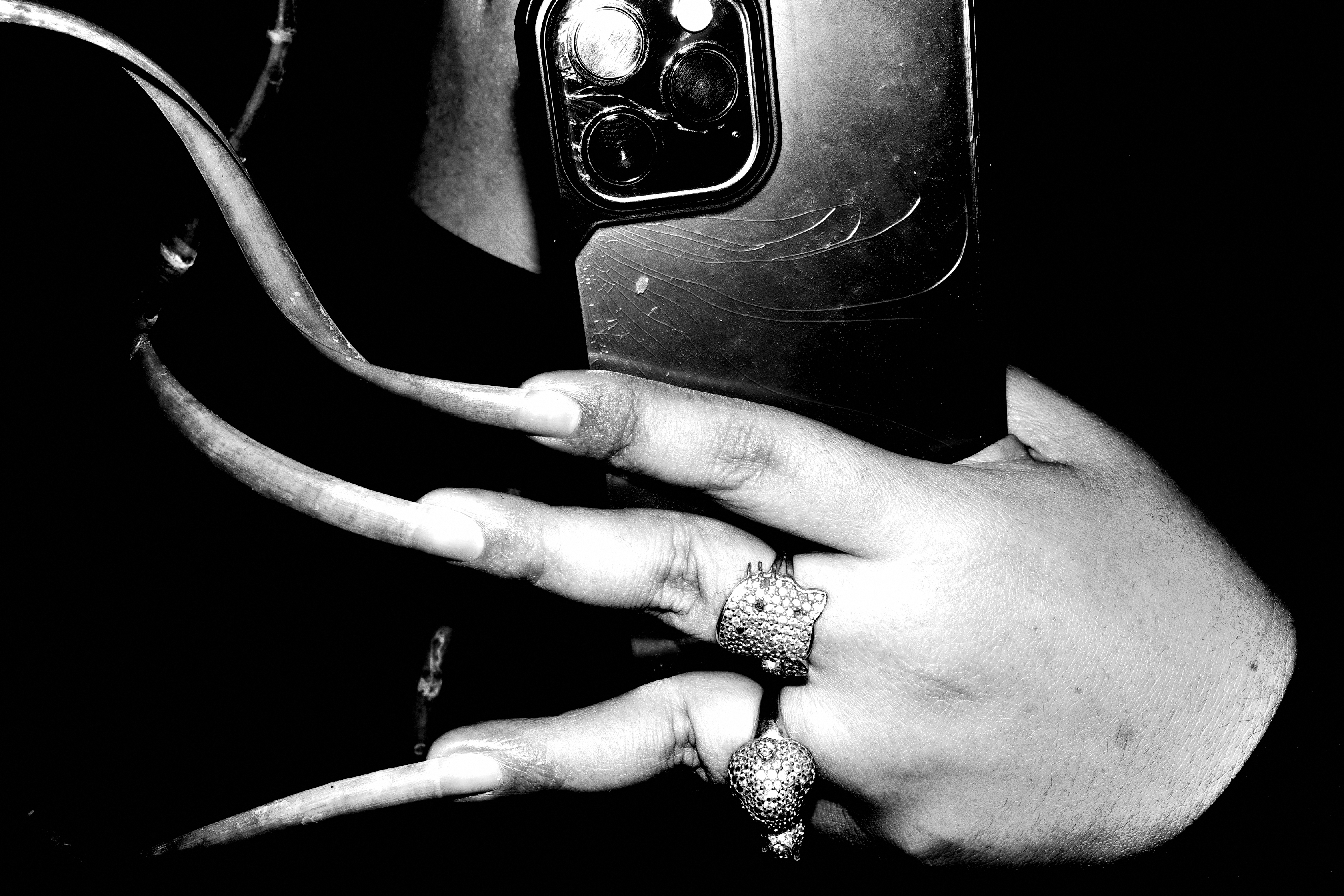
What’s poppin’, people? It’s Dante.
This morning I’m just waking up back home in Philadelphia after the long flight from Tokyo to New York City and then back to Philly. I flipped the iPad Pro on and wanted to sit with you, almost in real time, and just talk through my time in Tokyo:
I don’t want this to be some super serious, over-produced “final word” on the work. Think of it more as a raw debrief: a stream of becoming, right after the trip, while the photos are still fresh and I still smell Shibuya on my clothes.
First concrete thing: I was in Tokyo for 13 full days of shooting.
I came home with 17,800 photographs.
If you’ve ever wondered, “How many pictures does Dante make when he travels?”—there you go. Seventeen thousand eight hundred clicks of the shutter. That’s why my workflow has to be efficient and minimal. There’s no way I’m sitting in Lightroom massaging 17.8K RAW files.
From those 17,800 frames:
That’s just the math of this life. You shoot all day, every day, for 13 days straight, and you come back with a tiny handful of pictures that actually push you forward. And I’m totally okay with that.
On my site, I’ve already posted:
“Tokyo Street Photography Archive by Dante Sisofo”
It’s a big open folder — 659 images, about 2.5 GB — that you can download and flip through on your desktop. I want you to see:
I’m not interested in gatekeeping. The whole “we will reveal only the chosen 20 images in a book or gallery in ten years” thing feels so outdated when you can upload hundreds of photos instantly and let people dig.
Old model:
New model (for me):
I want everything to be free, accessible, and part of one long visual diary. Photography as a stream of becoming, not a closed-off museum box.
A big part of the Tokyo trip for me was really doubling down on this wabi-sabi mindset:
Not just aesthetically (high contrast, harsh blacks, clumpy grain), but philosophically. When I’m out photographing, my goal is to drop out of the rational, overthinking brain and shoot from:
I’m not out there carefully composing these pristine, symmetrically balanced images with a clear “statement” behind each one.
I’m out there:
The more I lean into that, the more the photos feel alive.
At the core of all this: I photograph because it affirms life.
I’m not really thinking:
“What do I want this project to say?”
I’m thinking:
“How can I say thank you for this day, this light, this moment?”
Photography becomes a way of:
I’m not trying to explain Tokyo. I’m not trying to explain the world.
I’m trying to use photography as a daily prayer of gratitude, a visual “amen” to whatever shows up.
The deeper I get into this, the more I realize my true subject isn’t people or buildings or cities.
It’s light.
The word “photography” literally breaks down into:
So, very literally: drawing with light.
On this trip, I set my camera up to honor that:
I’m not interested in babysitting RAW files. I want the photograph to be finished at the moment of exposure. The entire workflow is built to let light do the heavy lifting.
Day one, Shinjuku Station.
I found a patch of light where people moved from deep shadow into a sliver of sun. I stood with my back to the sun, watching faces drift into the glow against a dark background.
I wasn’t in control of:
All I controlled was:
Then, out of nowhere, this sliver of a face emerged—a mouth and lips revealed in the light while the rest of the face dissolved into darkness.
I didn’t see it clearly with my naked eye. It was a gift from the camera and the timing and the light working together.
That picture set the tone for the rest of the trip:
The reason this works for me is because the camera is set up to get out of the way.
My default setup:
Later, I added new modes to my toolkit:
The philosophy behind all of this:
Photography happens at the moment you press the shutter.
Not at the desk later. Not in Lightroom. Not in some endless “tweak this slider” loop.
My Tokyo routine quickly settled into a loop:
I like working the same locations over and over. Routine isn’t boring for me—routine is what increases the probability of making something.
One of the biggest breakthroughs on this trip was completely accidental.
On the Ricoh GR IIIx, you can crop in-camera:
I had set the crop function to the side button, and one day I accidentally triggered it. Suddenly my frame looked way tighter. At first I was confused:
“Why does everything look so zoomed in?”
Then I realized: I was in 71mm crop mode.
Instead of switching back, I decided to lean into it.
Where better to experiment with compression than Shibuya Crossing, one of the most photographed places on Earth?
Everyone has “done” Shibuya. Wide views. Overhead shots. Big crowds. Neon chaos.
I wanted to see:
I found this technique insanely addictive:
Some of the resulting images feel like:
This started as an accident. It turned into one of the core visual languages of the trip.
And honestly, I genuinely feel like this is one of the more original ways I’ve ever seen Shibuya Crossing photographed. Not because I’m trying to be “different for the sake of it,” but because I followed an instinct and stayed with it long enough to let it go somewhere.
The next breakthrough came from another “mistake.”
Shooting in Av mode at night, my shutter speed naturally dipped lower:
I started to notice that:
Instead of treating this as a problem, I leaned into it.
I shifted into Manual mode:
Then I started:
At Shibuya and outside Shinjuku Station at night, this created:
One of my favorite photos from the trip came from this:
It elevated an ordinary street scene into something more sublime and mysterious, which is exactly what I want from this phase of my work.
At some point, the gear setup evolved into:
I’m usually a “one camera, one lens” evangelist.
But in Tokyo, dual-wielding just made sense:
This combination opened up infinite possibilities:
This dual setup is something I’m definitely bringing back to Philadelphia.
Another big shift on this trip: I finally started to seriously use flash.
One night at Shibuya, I saw another street photographer using flash and thought:
“Why the hell don’t I have my flash with me?”
I almost never shoot flash, but that moment annoyed me enough that I went:
With flash, I usually went:
I started shooting:
And then some magic moments appeared.
One of my favorite flash moments:
I was in the Shibuya underground tunnel near the crossing and saw this woman with insanely long nails, scrolling on her phone.
Before going straight in, I did a test shot:
I made:
She told me she has some of the longest nails in Asia. We laughed, and I made more photos of her hands and feet as she showed them off.
The interesting thing?
This moment, for me, is a good example of a hybrid approach:
I also started using macro mode + flash for:
I’ve never really photographed nature with flash before. But on days with no sunlight, I realized:
“If there’s no light to follow, bring your own.”
So on gray, overcast days I:
This is something I’m definitely carrying into my Philadelphia workflow—flash and macro on plants and small details is a whole new visual language for me.
On this trip I wasn’t just chasing “classic” street photos of people.
I was also:
I’m trying to see if, in one lifetime, I can photograph everything:
The instinct is simple:
“I see something that intrigues me and I’m curious what it will look like photographed.”
That curiosity is enough. I don’t need a rational reason.
One small but important field technique I kept using:
Example: the guy standing outside the club early in the morning in Kabukichō.
Often that second or third attempt is where the keeper lives.
On the last night in Tokyo, I decided:
“Let me just go full force and screw around and see what happens.”
So I set:
I:
Some of these pictures feel more like fiction than fact, and that excites me.
These are images I never would’ve made in my old mode of working. It felt like a door opening that I now have to walk through here in Philadelphia.
I really do feel like there’s a:
Before Tokyo:
During and after Tokyo:
The most meaningful part of the trip was not just the city or the culture (though both are beautiful), but the creative breakthroughs:
What will I do with these photos?
Honestly, I don’t know yet.
My process from here looks like:
I’m not:
If something wants to exist as an object later, it’ll reveal itself.
Right now, I’m detached from the outcome and immersed in the process:
I photograph because I love life, not because I need a product.
One of the huge inspirations behind all of this is the Japanese philosophical approach to photography—especially the work and writings around the Provoke era.
On this trip, I picked up a book from Komiyama Bookstore titled:
“Abandon the World of Certainty”
The images are incredible, but what really intrigues me is the philosophy in the text. It’s all in Japanese, so one of my upcoming projects is to:
It’s not just about copying the aesthetics of Provoke. It’s about understanding the ideas behind the images:
That aligns perfectly with where my work is heading.
If you’re curious about the techniques, mindset, and process behind what I’ve been talking about here, you can head over to:
http://dantesisofo.com
On the Books tab you’ll find free guides like:
And on the blog you’ll find:
Coming home from Tokyo, I feel like I’ve added a new visual toolkit to my practice:
From here:
No grand conclusion. No fixed statement.
Just a simple promise:
I’m going to keep walking, keep seeing, keep experimenting, and keep sharing the journey with you.
Thanks for being here.
Peace.
Untapped, raw, real, gritty potential
The birthplace of the United States will be the birthplace of new photography culture
People that like to hoard their recipes, ideas, techniques, and knowledge are fools. Closed source philosophy is for Luddites


