2025
-
Economics
The word economics comes from the Ancient Greek term οἰκονομία (oikonomía). So, oikonomía originally meant “household management” or “management of the household and its resources.”
-
Saifedean Ammous – Principles of Economics
Dr. Saifedean Ammous, author of The Bitcoin Standard and The Fiat Standard, returns with his most ambitious work yet: Principles of Economics. Rather than focusing narrowly on money, this book…
-
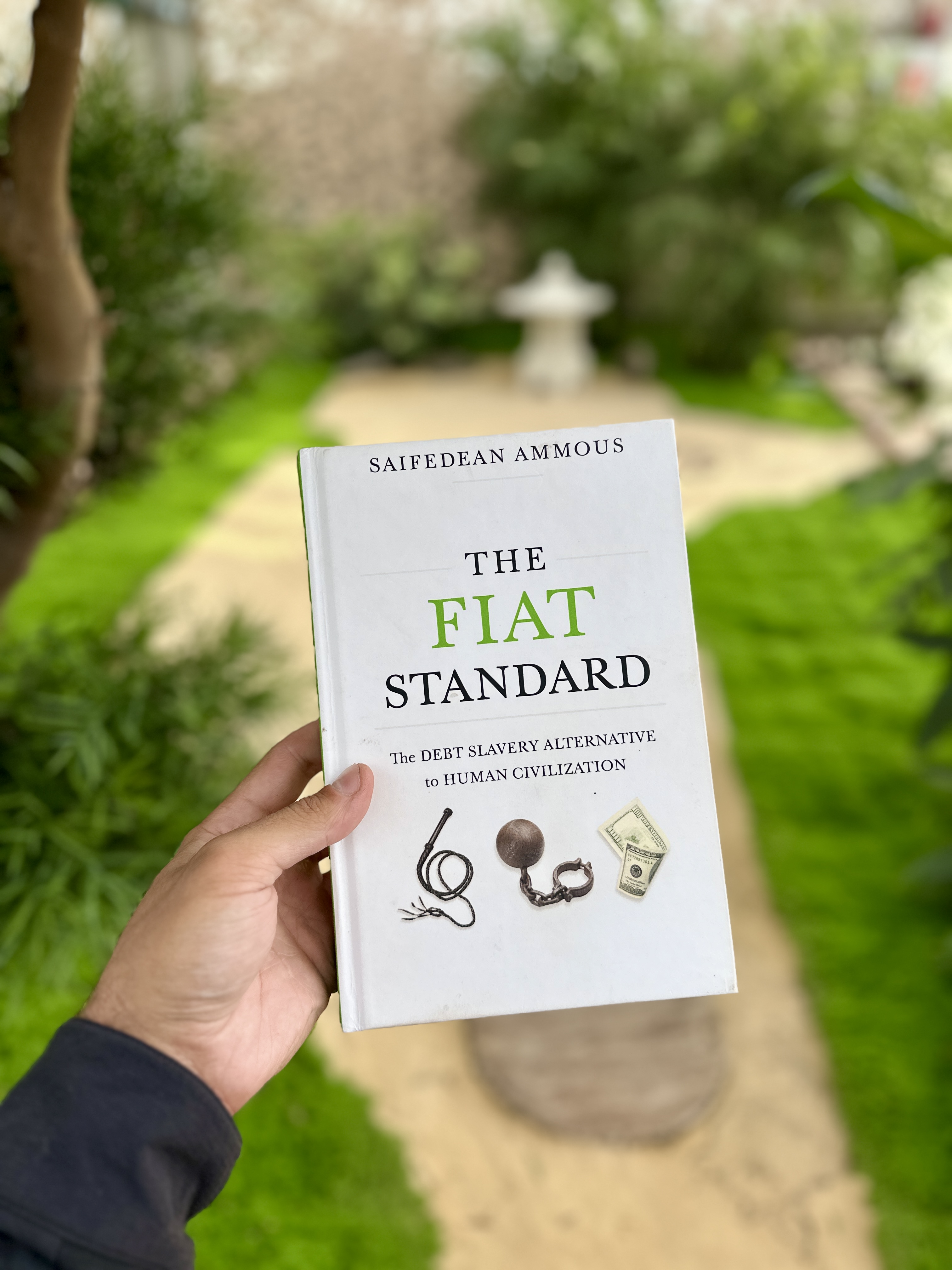
Saifedean Ammous – The Fiat Standard: The Debt Slavery Alternative to Human Civilization
Dr. Saifedean Ammous, author of The Bitcoin Standard, expands his analysis of money by examining the fiat system. He argues that fiat money is not a neutral tool but a…
-
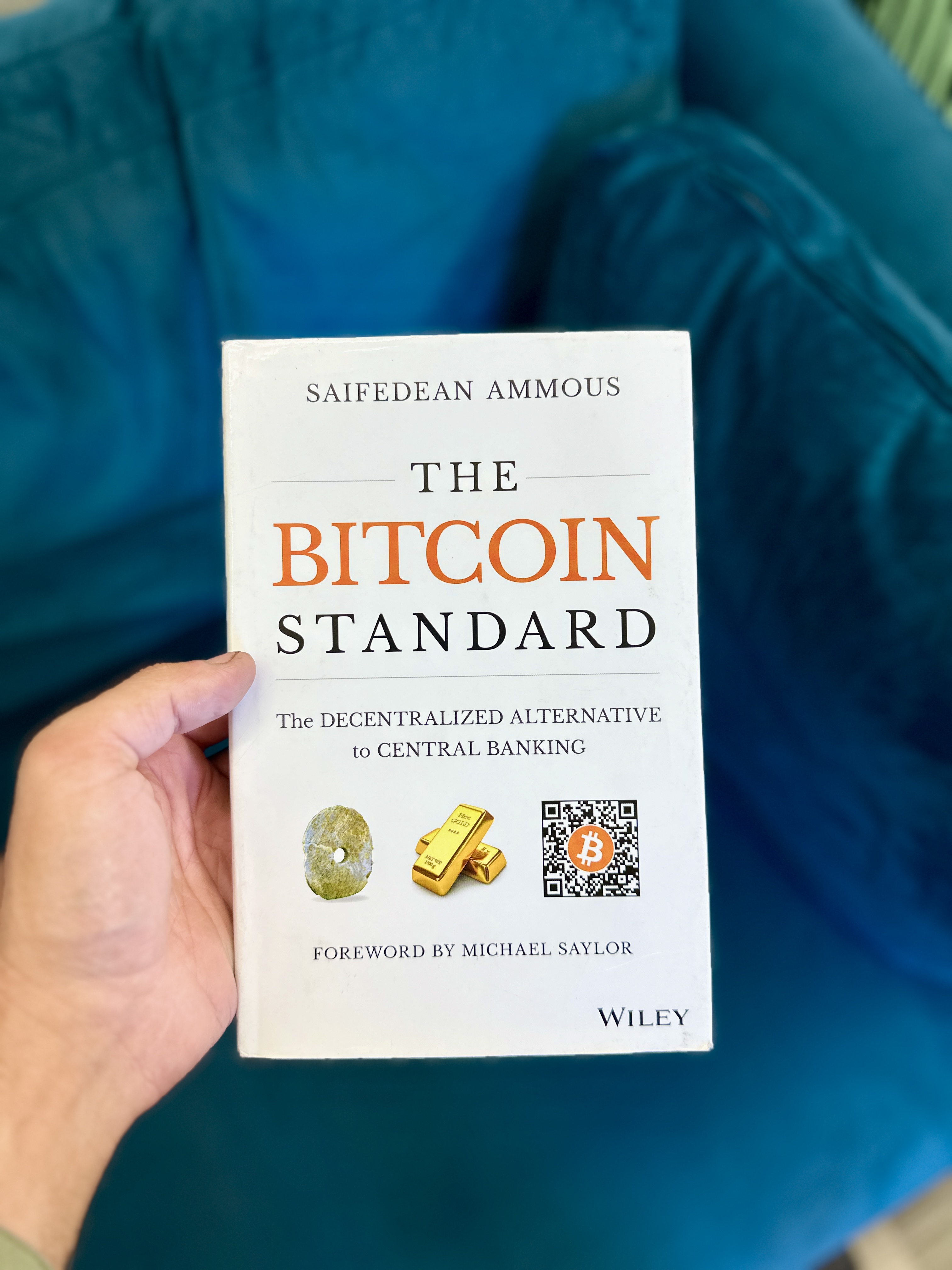
Saifedean Ammous – The Bitcoin Standard
Dr. Saifedean Ammous, author of Principles of Economics and The Fiat Standard, first made his name with his groundbreaking book The Bitcoin Standard. Here, Ammous tells the story of money…
-
An Open Letter to Mayor Cherelle Parker
Philadelphia is facing a metabolic health crisis that can no longer be ignored. The numbers speak for themselves: That means only 4 in 10 adults in our city are truly…
-
Cows, Beef, and the Gold Standard
When the U.S. left the gold standard in 1971, the dollar became fiat—backed only by confidence in the government and the Federal Reserve. To see the impact, look at something…
-
The Bitcoin Standard — Lecture 10 (Bitcoin Questions) • Study Notes
The final lecture reinforces Bitcoin’s role as apolitical, immutable, decentralized money. Its energy use is not waste but progress; its volatility does not prevent monetization; and its immutability is proven…
-
The Bitcoin Standard — Lecture 9 (What Is Bitcoin Good For?) • Study Notes
Bitcoin is the first and only strictly scarce asset in history. All other resources can be increased with more effort; Bitcoin cannot. This makes it the hardest money, uniquely suited…
-
The Bitcoin Standard — Lecture 8 (Digital Money) • Study Notes
Bitcoin introduces digital scarcity: money that is both digital and strictly limited in supply. By merging cash-like finality with digital transferability, Bitcoin disintermediates central banks and payment processors. Its breakthrough…
-
The Bitcoin Standard — Lecture 7 (Sound Money & Individual Freedom) • Study Notes
Governments abandoned gold not for economic progress but to fund wars. Keynesianism then provided intellectual cover, turning inflation and government spending into policy tools. Fiat money empowers states at the…
-
The Bitcoin Standard — Lecture 6 (Capitalism’s Information System) • Study Notes
Capitalism’s genius lies in prices, which transmit dispersed knowledge across society. Hayek showed why central planning fails; Mises demonstrated that without private capital markets, rational calculation is impossible. Sound money…
-
The Bitcoin Standard — Lecture 5 (Money and Time Preference) • Study Notes
Time preference is the key concept linking money, productivity, and civilization. Humans naturally value the present over the future, but the ability to lower time preference through reason and hard…
-
The Bitcoin Standard — Lecture 4 (Government Money) • Study Notes
Government money is not money by decree; it is always born as a redeemable claim on market money. The suspension of gold in 1914 birthed fiat, enabling governments to wage…
-
The Bitcoin Standard — Lecture 3 (Monetary Metals) • Study Notes
Metals became money because they were durable, divisible, and portable. Gold emerged as the hardest money due to its indestructibility and high stock-to-flow ratio, while silver fell behind once banking…
-
The Bitcoin Standard — Lecture 2 (Primitive Money) • Study Notes
Primitive monies like Yap stones and glass beads worked temporarily, but their low hardness made them vulnerable to supply inflation. Metals outcompeted them due to durability and uniformity, with gold…
-
The Bitcoin Standard — Lecture 1 (Money) • Study Notes
Money arises as a spontaneous market solution to the coincidence of wants. The most saleable goods — durable, divisible, portable, and hard to produce — emerge as money. Gold dominated…
-
Principles of Economics — Lecture 18 (Civilization) • Study Notes
Civilization is not a given — it is the emergent result of human beings using reason to lower time preference, specialize, and invent. It requires curbing destructive instincts and respecting…
-
Principles of Economics — Lecture 17 (Defense) • Study Notes
Defense is not a special case requiring state monopoly — it is simply another scarce good. Markets already provide more defense than governments, from security guards to arbitration courts. Aggression…
-
Principles of Economics — Lecture 16 (Violence) • Study Notes
Violence is the alternative to voluntary cooperation. It destroys property rights, trade, and civilization itself. Only when violence is restricted to defense — never initiation — can markets, capital accumulation,…
-
Principles of Economics — Lecture 15 (Monetary Expansion) • Study Notes
Monetary expansion through fiduciary media creates financial claims without real resources. While it initially fuels booms by lowering interest rates and encouraging long-term projects, these projects are unsustainable. Rising input…
-
Principles of Economics — Lecture 14 (Credit and Banking) • Study Notes
Credit and banking arise from declining time preference and saving. Banks specialize in safekeeping (deposits) and capital allocation (investment banking). The Austrian distinction between commodity credit (backed by real savings)…
-
Principles of Economics — Lecture 13 (Time Preference) • Study Notes
Time preference measures how much we value the present over the future. Humans always prefer present goods, but lower time preference fosters saving, investment, and civilization itself. Hard money (gold,…
-
Principles of Economics — Lecture 12 (Capitalism) • Study Notes
Capitalism is the system of private ownership of capital goods, where individuals freely allocate capital through markets. The stock market is its defining feature, enabling capital to be traded and…
-
Principles of Economics — Lecture 11 (Markets) • Study Notes
Markets are the emergent order of money, trade, and voluntary cooperation. They transform self-interest into peaceful service of others, making civilization possible. Supply and demand curves reveal how prices equilibrate…
-
Principles of Economics — Lecture 10 (Money) • Study Notes
Money emerges to solve the coincidence of wants problem in large societies. The most saleable goods — durable, divisible, portable, and resistant to debasement — outcompete others to become money.…
-
Principles of Economics — Lecture 9 (Trade) • Study Notes
Trade is the peaceful, voluntary exchange of goods that makes both parties better off. Unlike coercion, which destroys value, trade creates value through specialization, subjective valuation, and comparative advantage. The…