Proposition: The world is full of meaning, and meaning is inevitable in everything we do. The idea that the world is random or lacks meaning is a misconception.
Goal: To help the audience understand how meaning is intrinsic to life, from the smallest actions to the greatest plans.
The Problem of Meaning
Common Misconception: We often think of meaning as superimposed on a meaningless world.
Key Argument: Meaning is not arbitrary or imposed; it is woven into the fabric of experience.
Symbolism: The Gathering of Meaning
Definition: Symbolism comes from the Greek word “symbolon,” meaning “to throw together.”
Christian Example: The “Symbol of the Apostles” (the Creed) gathers the most important aspects of the faith.
Symbolism’s Role: It gathers disparate things into a unifying meaning or purpose.
Opposite of Symbolism: The word “diabolical” means to tear things apart, which is the antithesis of gathering meaning.
Phenomenology and the Experience of Meaning
Phenomenology: The study of structures of experience and consciousness. We don’t experience abstractions like “H₂O” but rather “wet,” “refreshing,” etc.
Scientific Reductionism: Descriptions of the world like “H₂O” or “the Earth rotates” are abstractions, not the core of our experience.
Quote: “Nobody here experiences H₂O… You experience wet, cold, refreshing.”
Attention and Care: The Basis of Meaning
Attention: The world is full of billions of details. The way we care about things determines what we focus on.
Heidegger’s Dasein: Heidegger described existence as “care.” Meaning unfolds in our lives through what we care about.
Relevance Realization: We notice things based on what is relevant to us (John Vervaeke’s term).
Nihilism: Fragmentation of Meaning
Nihilism’s Trick: Nihilism fragments meaning by reducing things to their parts. For example, “Human civilization is just apes,” or “Thoughts are just electric currents.”
Breaking Down Unity: By reducing everything to its components, nihilism undermines the inherent unity and purpose we perceive in life.
Symbolism in Stories and Time
Stories as Binders of Time: Stories synthesize events into coherent identities over time. The “hero’s journey” is a universal pattern of coherence.
Day as a Story: Our day-to-day life mirrors the hero’s journey: waking up (stasis), going out into the world (chaos), returning home (resolution).
Scientific Descriptions are Symbolic
Science Requires Purpose: Even scientific inquiries are guided by purpose. A scientist studying frog mating patterns does so with a goal in mind, selecting facts based on relevance.
Ladders of Meaning: Facts are connected to theories, which are symbolic “ladders” between the observable world and higher abstract concepts (heaven and earth metaphor).
Space and Place: Symbolism in Geography
Place vs. Space: Space becomes a “place” when we attach meaning to it. For example, Jacob’s dream in the Bible transforms a wilderness into a holy place by erecting a pillar and anointing it.
Markers of Identity: We need reference points like a flag, cross, or street sign to give identity to a space.
Unity and Diversity: The Core Pattern of Existence
Diversity and Unity: Diversity alone is decomposition (death), but diversity within unity brings meaning. A balance of both is essential.
Analogy of a House: Just as a house has layers of intimacy (porch, living room, bedroom), so does society and existence—multiplicity into unity.
Quote: “Diversity alone is decomposition… but diversity in unity is strength.”
Symbolism in Music and Stories
Bach’s Fugue: A Bach fugue starts with a melody, then variates into multiplicity, creating complexity before returning to the unity of the theme. This mirrors the balance between order and chaos.
Movies and Stories: Stories that ignore this balance (too formulaic or too chaotic) fail to engage us deeply. Great stories contain a “play between unity and multiplicity.”
The Reductionist Trap: “Just” as a Tripwire
Reductionism in Language: Phrases like “it’s just a sack of chemicals” are used to strip meaning from things by reducing them to their parts.
False Claims of Meaninglessness: When people say, “The sun is just a ball of gas,” they ignore its symbolic role in managing our rhythms of life.
The Inevitability of Meaning
Purpose in Everything: Meaning is unavoidable because it’s intrinsic to how we experience the world. Even in scientific inquiry or daily life, purpose is always present.
Quote: “Without purpose, you don’t even notice anything in the world.”
Conclusion: Reconnecting with Symbolism
Symbolism is not Metaphor: Symbolism is not just a poetic device but the actual structure of how things come together in meaning.
Next Steps: Future sessions will explore deeper the structures of heaven and earth, the coherence in culture, and how symbolism is inevitable in understanding human experience.
Key Quotes
“Meaning is inevitable.”
“Nobody here experiences H₂O… You experience wet, cold, refreshing.”
“Care is the manner in which meaning binds together.”
“Diversity alone is decomposition… but diversity in unity is strength.”
“Without purpose, you don’t even notice anything in the world.”
Key Concepts
Symbolism: The gathering of meaning, not merely representing but unifying disparate elements.
Nihilism: The breakdown of meaning through fragmentation, often using reductionism.
Phenomenology: Experience is primary; scientific abstraction comes second.
Relevance Realization: Attention focuses on what matters, foregrounding certain aspects of life while backgrounding others.
Hero’s Journey: A universal pattern that mirrors both mythological stories and daily life cycles.
Multiplicity and Unity: The balance between the many and the one, which creates meaningful coherence in life.
Place and Space: Meaning transforms “space” into a “place” with identity and purpose.
Reductionism: The flawed tendency to break down meaning by reducing things to their parts (e.g., “just a sack of chemicals”).
Additional Notes
Neil deGrasse Tyson’s Tweet: Example of reductionism, calling humans “sacks of chemicals.” This is a trick to make life seem meaningless by reducing it to its base components.
Scientific Reductionism’s Blind Spot: Reductionism fails to explain how unity emerges from multiplicity, often resorting to terms like “emergence” without explanation.
Heaven and Earth: Symbolism in religious and cultural structures reflects the dynamic relationship between higher purposes and the material world.
Learning Focus
Understand that meaning is not an add-on to life, but an inevitable part of how we engage with the world.
Recognize the dangers of nihilism and reductionism, which fragment meaning.
See how symbolism and care bring together the parts of our experience into coherent wholes.
Reflect on the hero’s journey not just as a storytelling device but as a pattern embedded in the way we live every day.
Aristotle’s The Metaphysics: A Study of Being and Reality
Aristotle’s The Metaphysics is one of the foundational texts in Western philosophy, dealing with questions of existence, substance, and the nature of reality. Written as a continuation of his earlier work on logic and ethics, The Metaphysics delves into the most abstract questions humans can ask: What does it mean to exist? What is the nature of reality? What are the first causes of things?
In this blog post, we will explore some of the key themes, subjects, and quotes from Aristotle’s The Metaphysics, breaking down the essential lessons to share with others and deepen our understanding of Aristotle’s thoughts.
The Nature of Being
One of the central ideas in The Metaphysics is Aristotle’s exploration of “being qua being”—the study of being in the most fundamental sense. This is the study of being as such, without considering specific qualities like material composition or human perspective.
Aristotle distinguishes between different kinds of beings:
• Substance (ousia): The primary kind of being. Substance is what exists independently and is the subject of predicates, meaning other things can be said about it. For Aristotle, substances are the most fundamental entities in the universe.
• Accidents: These are the properties or characteristics of substances that can change without altering the substance itself. For example, the color of an object can change without the object ceasing to exist.
Aristotle writes,
“Being is said in many ways, but always with reference to one principle.”
This principle refers to substance, which he sees as the foundation of all things.
The Four Causes
Aristotle’s famous theory of the four causes is crucial to understanding his approach to metaphysics. He posits that to truly understand why something exists or happens, we must look at it from four angles:
1. Material Cause: What is the object made of?
2. Formal Cause: What is the form or essence of the object?
3. Efficient Cause: Who or what brought the object into being?
4. Final Cause: What is the purpose or function of the object?
The idea of the final cause, or telos, is particularly important in Aristotle’s philosophy. He believes that everything in the universe has a purpose or end goal toward which it strives. This teleological view underpins much of his work, especially his ethics and natural philosophy.
Aristotle argues that understanding the final cause helps us grasp the purpose behind the existence of a thing:
“We do not have knowledge of a thing until we have grasped its why, that is to say, its cause.”
Potentiality and Actuality
A key distinction in The Metaphysics is between potentiality (dynamis) and actuality (energeia). Potentiality refers to the capacity for change or the ability of something to become something else. Actuality, on the other hand, is the fulfillment of that potential—it is the state of being fully realized.
For example, a seed has the potential to become a tree. When it grows into a tree, it has moved from potentiality to actuality. This concept is central to Aristotle’s explanation of how change occurs in the natural world.
Aristotle writes:
“The actuality of any being is more perfect than its potentiality.”
This highlights his belief that the actualization of a being is the fulfillment of its true essence.
The Unmoved Mover
One of the most influential ideas from The Metaphysics is Aristotle’s concept of the Unmoved Mover. According to Aristotle, everything in the universe is in motion, and motion requires a cause. However, if every cause itself needs a cause, this leads to an infinite regress. To avoid this, Aristotle posits the existence of a first cause, which is itself unmoved but causes motion in everything else.
This Unmoved Mover is pure actuality, without potentiality, and is the ultimate cause of all motion and change in the universe. Aristotle identifies this being with the divine, but unlike the gods of Greek religion, the Unmoved Mover is not a personal deity but rather an abstract principle.
“There must be a principle of such a kind that its substance is actuality.”
For Aristotle, the Unmoved Mover is the ultimate explanation for why there is something rather than nothing.
The Study of First Philosophy
The Metaphysics is often referred to as “first philosophy” because it deals with the most fundamental principles of all reality. While Aristotle’s other works are concerned with specific fields like biology or ethics, The Metaphysics deals with questions that underpin all other forms of knowledge.
Aristotle believes that first philosophy is a study of the first principles and causes, particularly the cause of existence itself. He writes:
“All men by nature desire to know.”
This innate desire for knowledge leads humans to seek explanations for the world around them, and metaphysics is the highest form of this inquiry.
Lessons from The Metaphysics
There are several key takeaways from Aristotle’s The Metaphysics that are still relevant today:
• Understanding the world requires understanding the causes behind things. Aristotle’s four causes offer a comprehensive way to think about why things exist or happen.
• Potentiality is an essential part of reality. Recognizing that things can become other things helps us understand the process of change and development.
• There must be a first cause. The Unmoved Mover remains a powerful concept in both philosophy and theology, as it addresses the need for a primary explanation of existence.
Aristotle’s work challenges us to think deeply about the nature of reality, being, and existence itself. In a world filled with constant change, his metaphysical framework offers a way to understand both the things that change and the things that remain constant.
By diving into The Metaphysics, we are not only exploring Aristotle’s vision of the universe but also engaging with some of the most profound questions of human thought: What is the nature of reality? What does it mean to exist? How can we explain the world around us?
Aristotle’s answers are as thought-provoking now as they were in ancient Greece, and his exploration of these ideas continues to inspire philosophical inquiry today.
The Intersection of Art and Science: Leonardo da Vinci’s Visionary Work
Few figures in history embody the merging of art and science as completely as Leonardo da Vinci (1452–1519). Often hailed as the quintessential “Renaissance man,” Leonardo’s genius spanned a variety of disciplines, from painting and sculpture to engineering, anatomy, and physics. His ability to synthesize artistic creativity with scientific inquiry set him apart from his contemporaries and allowed him to create works of lasting influence in both fields. Leonardo’s visionary work exemplifies the Renaissance ideal that art and science are not separate pursuits but interconnected means of exploring and understanding the world.
The Renaissance: A Time of Rebirth in Art and Science
The Renaissance was a period of cultural and intellectual revival in Europe, marked by a renewed interest in classical antiquity and an emphasis on human potential. It was during this time that art and science began to evolve together, with artists applying scientific principles to their work and scientists using art as a means of visualizing and exploring new concepts.
Humanism, the dominant intellectual movement of the time, encouraged the study of nature and the human body, both of which were central to the work of artists like Leonardo. This period saw a growing interest in anatomy, perspective, and the natural world, as well as an emphasis on observation and experimentation. For Leonardo, these interests were inseparable. He believed that in order to create true works of art, one had to understand the underlying principles of nature, and he approached his scientific studies with the same sense of wonder and curiosity that informed his art.
Leonardo’s Artistic Vision
As a painter, Leonardo da Vinci is best known for his mastery of light and shadow, his use of perspective, and his ability to capture the subtle emotions of his subjects. Works like The Last Supper and the Mona Lisa are renowned for their lifelike quality and their psychological depth, setting new standards for realism in art.
Leonardo’s use of sfumato, a technique of blending colors and tones to create soft transitions between light and shadow, allowed him to achieve an unprecedented level of realism in his paintings. This technique is especially evident in the Mona Lisa, where the delicate interplay of light and shadow gives the subject a mysterious, almost lifelike presence. Leonardo’s attention to detail, whether in the expression of his subjects or the natural landscapes in the background, demonstrates his deep understanding of both the human form and the natural world.
However, it was Leonardo’s scientific approach to art that truly set him apart. He meticulously studied anatomy, physiology, and the mechanics of the human body to inform his art. His anatomical studies, based on dissections of human cadavers, were some of the most accurate of his time, and his drawings of the human form remain some of the most detailed and influential in the history of both art and medicine.
Leonardo’s Scientific Pursuits
Leonardo’s curiosity extended far beyond painting. He was fascinated by the natural world and sought to understand its underlying principles through observation, experimentation, and sketching. His notebooks, filled with drawings and notes, cover a wide range of scientific topics, from anatomy and engineering to botany and hydrodynamics.
One of Leonardo’s most significant contributions to science was his work on anatomy. His detailed drawings of the human body, based on dissections he conducted himself, were far ahead of their time. His studies of the muscular system, skeletal structure, and internal organs were not only anatomically accurate but also beautifully rendered, showing his dual expertise in both science and art. His famous drawing, Vitruvian Man, exemplifies the Renaissance belief in the harmonious proportions of the human body and reflects Leonardo’s pursuit of understanding the relationship between anatomy and geometry.
In addition to anatomy, Leonardo explored the principles of physics and engineering. He was particularly interested in the mechanics of flight, studying the wings of birds and designing a variety of flying machines, including a helicopter-like device and a parachute. While many of his inventions were never built during his lifetime, Leonardo’s engineering sketches demonstrate his forward-thinking approach and his ability to combine artistic creativity with scientific rigor.
Leonardo also studied hydrodynamics, investigating the movement of water and its applications in engineering. His observations of the flow of water influenced not only his scientific studies but also his art, as seen in the fluidity and movement he captured in his paintings. His designs for water pumps, irrigation systems, and even military defenses highlight his broad vision for how science and technology could be applied to solve practical problems.
The Symbiosis of Art and Science
For Leonardo, art and science were not separate disciplines but two sides of the same coin. He believed that understanding the natural world was essential for creating true works of art, and conversely, that artistic techniques could be used to explore scientific ideas. His ability to merge these two fields allowed him to produce works that were not only beautiful but also intellectually profound.
One example of this symbiosis is Leonardo’s use of perspective. During the Renaissance, artists sought to create more realistic and three-dimensional representations of the world, and perspective was a key tool in achieving this. Leonardo’s meticulous study of geometry and optics informed his use of linear perspective in his paintings, allowing him to create works with a sense of depth and realism that had never been seen before. His understanding of light and shadow, informed by his scientific studies of optics, further enhanced the lifelike quality of his paintings.
Leonardo’s scientific inquiries also benefited from his artistic skills. His drawings of anatomical structures, mechanical devices, and natural phenomena are not only scientifically accurate but also artistically elegant, making complex ideas more accessible and visually compelling. His notebooks are filled with detailed illustrations that reveal his process of scientific discovery, showing how he used art as a tool for both observation and explanation.
Legacy and Influence
Leonardo da Vinci’s influence extends far beyond his lifetime, and his work continues to inspire artists, scientists, and engineers today. His interdisciplinary approach, which combined creativity with empirical observation, laid the groundwork for future generations of thinkers who sought to bridge the gap between art and science.
In the field of art, Leonardo’s techniques, particularly his use of sfumato and perspective, influenced countless painters during the Renaissance and beyond. His emphasis on naturalism and his study of human anatomy set new standards for realism in art, and his portraits, especially the Mona Lisa, continue to be some of the most celebrated works in the history of Western art.
In the realm of science, Leonardo’s notebooks have had a lasting impact on fields ranging from anatomy to engineering. His anatomical studies informed the work of later anatomists and medical professionals, and his designs for machines and inventions have been admired for their ingenuity and foresight. Although many of his scientific ideas were not fully realized during his lifetime, they foreshadowed future developments in fields such as aviation, mechanics, and hydraulics.
Leonardo’s ability to integrate art and science into a single, unified vision is perhaps his greatest legacy. He demonstrated that creativity and intellectual rigor are not mutually exclusive but can work together to expand human understanding. His work serves as a reminder that the pursuit of knowledge, whether through art or science, is driven by the same fundamental curiosity about the world and our place in it.
Conclusion
Leonardo da Vinci’s visionary work stands at the intersection of art and science, a testament to his unparalleled genius and his belief in the unity of knowledge. His contributions to both fields have left an indelible mark on history, shaping the course of art and science for centuries to come. Through his paintings, drawings, and scientific inquiries, Leonardo demonstrated that the beauty of art and the rigor of science can work in harmony to reveal the deeper truths of the natural world. His legacy continues to inspire and challenge us to see the world through both the eyes of an artist and the mind of a scientist.
The Renaissance was not only a period of extraordinary artistic and intellectual flourishing but also a time of profound political change. The political landscape of Europe, particularly in Italy, was marked by constant power struggles between city-states, the rise and fall of dynasties, and the influence of foreign powers. In this tumultuous context, the writings of Niccolò Machiavelli (1469–1527) emerged as some of the most influential in shaping modern political thought. Best known for his works The Prince and Discourses on Livy, Machiavelli is often seen as the father of modern political theory due to his realistic, sometimes ruthless approach to power, governance, and human nature. His ideas challenged the idealistic views of governance that had dominated the medieval period, marking a significant shift in Renaissance political thought.
The Political Context of Renaissance Italy
Machiavelli lived during a time of great political instability in Italy. The country was not a unified nation-state as we know it today but a collection of city-states such as Florence, Venice, and Milan, each vying for power and influence. Additionally, Italy was subject to constant interference from foreign powers like France, Spain, and the Holy Roman Empire, which sought to control parts of the Italian peninsula for strategic and economic reasons.
In Florence, Machiavelli witnessed firsthand the rise and fall of political regimes. The Medici family dominated Florentine politics for much of the Renaissance, but their power was temporarily interrupted in 1494 when the French invasion of Italy triggered a revolt, leading to the establishment of a more republican government. Machiavelli served in this republic as a diplomat and military official, gaining insight into the complexities of political leadership and the challenges of maintaining power. When the Medici returned to power in 1512, Machiavelli was dismissed from his post and later imprisoned. It was during his exile from political life that he wrote The Prince and Discourses on Livy, works that reflect his deep understanding of political realities.
The Prince: A Manual for Rulers
The Prince (1513) is arguably Machiavelli’s most famous work and one of the most influential political treatises in history. Written in the form of advice to a ruler, The Prince presents a pragmatic, often cynical view of power and leadership. Machiavelli’s central premise is that the ends justify the means—rulers must be willing to use deception, manipulation, and even cruelty to maintain their power and achieve political stability.
One of the key concepts in The Prince is the idea that a successful ruler must be both a fox (cunning and deceitful) and a lion (strong and forceful). Machiavelli believed that a ruler who relied solely on one type of leadership would fail; instead, a ruler must be adaptable, knowing when to be merciful and when to be ruthless. This pragmatic approach to governance was a departure from the moral and ethical considerations that had dominated medieval political thought, which emphasized the divine right of kings and the importance of ruling with justice and virtue.
Machiavelli’s view of human nature in The Prince is also starkly realistic. He argues that humans are inherently self-interested and that a ruler cannot rely on their loyalty or goodness. Instead, a ruler must be prepared to act immorally if necessary, using fear as a tool to maintain order and control. Machiavelli famously stated that it is “better to be feared than loved” because fear is a more reliable means of ensuring obedience and preventing rebellion.
While The Prince has often been interpreted as advocating tyranny and unscrupulous behavior, Machiavelli’s true intent is more nuanced. He was deeply concerned with the political instability of his time and sought to offer rulers practical advice on how to maintain power and achieve stability in a dangerous and unpredictable world. In this sense, The Princereflects the harsh political realities of Renaissance Italy, where rulers were frequently overthrown, and foreign invasions threatened the sovereignty of city-states.
Discourses on Livy: Republicanism and the Common Good
In contrast to the often cynical advice of The Prince, Machiavelli’s Discourses on Livy (written around 1517) presents a more idealistic view of political life, drawing inspiration from the ancient Roman Republic. In this work, Machiavelli explores the benefits of republican government, where power is shared among the people rather than concentrated in the hands of a single ruler. The Discourses reflects Machiavelli’s admiration for the Roman model of governance, which he believed fostered civic virtue, active citizenship, and a strong sense of the common good.
One of the central themes in the Discourses is the idea of checks and balances in government. Machiavelli argued that the success of the Roman Republic was due to its system of balanced power between the different branches of government, which prevented any one faction from becoming too dominant. This concept of power-sharing was revolutionary for its time and later influenced the development of modern democratic systems, particularly in the design of the U.S. Constitution.
While The Prince emphasizes the need for a ruler to act in his own interest to maintain power, the Discourses takes a broader view, suggesting that a well-functioning republic must prioritize the common good. Machiavelli believed that the active participation of citizens in political life was essential for the health of the state. He argued that when people are engaged in politics and have a stake in the success of the republic, they are more likely to act virtuously and in the best interests of the community.
Despite these more optimistic views, the Discourses also contains Machiavelli’s characteristic realism. He acknowledges that conflict and competition are inevitable in any political system, and he emphasizes the importance of virtù—a combination of strength, courage, and wisdom that leaders must possess to navigate the challenges of governance. For Machiavelli, virtù was not about moral virtue but about the practical qualities that enable a leader to achieve greatness and success in the political arena.
Machiavelli’s Influence on Renaissance Political Thought
Machiavelli’s writings were groundbreaking in their departure from the moral and ethical frameworks that had dominated medieval political thought. In contrast to the medieval idea of the “just ruler,” who was expected to govern according to divine law and uphold Christian virtues, Machiavelli argued that rulers must be pragmatic and willing to do whatever is necessary to maintain power and protect the state.
This shift in political thinking was reflective of the broader intellectual trends of the Renaissance, particularly Humanism, which emphasized the study of classical antiquity and the potential of individuals to shape their own destinies. Machiavelli’s admiration for ancient Roman models of government and his focus on the practical realities of power were in line with the Renaissance Humanist project of reviving classical ideals and applying them to contemporary life.
Machiavelli’s emphasis on realpolitik—the idea that politics should be governed by practical considerations rather than moral or ideological principles—had a profound influence on Renaissance political thought and beyond. His ideas challenged the idealistic notions of governance that had dominated the medieval period and offered a new, more pragmatic framework for understanding power and politics.
Machiavellian Politics: Reputation and Misinterpretation
The term “Machiavellian” has often been used as a synonym for political deceit, manipulation, and unscrupulous behavior. This reputation stems primarily from The Prince, which has been interpreted as advocating for ruthless, amoral leadership. However, this interpretation overlooks the complexities of Machiavelli’s thought and his broader political philosophy.
While Machiavelli did argue that rulers must be willing to use deception and force when necessary, his ultimate goal was to achieve political stability and security for the state. He believed that the harsh realities of political life required leaders to be flexible and pragmatic, adapting their methods to the circumstances they faced. In this sense, Machiavelli’s ideas were not inherently evil or immoral; rather, they reflected his belief that the pursuit of political stability sometimes required difficult and morally ambiguous decisions.
Moreover, Machiavelli’s writings are not limited to the cynical advice of The Prince. In the Discourses on Livy, he expresses a deep commitment to republicanism and the common good, showing that his political thought was not solely focused on power for its own sake but also on the broader principles of good governance and civic virtue.
The Legacy of Machiavelli
Machiavelli’s impact on political thought has been profound and far-reaching. His works influenced both contemporary thinkers and later political theorists, shaping the development of modern political philosophy. The ideas he articulated about power, leadership, and statecraft continue to be relevant in discussions of politics and governance today.
In particular, Machiavelli’s emphasis on the pragmatic use of power and the need for rulers to be adaptable and cunning has resonated with political leaders throughout history. Figures such as Thomas Hobbes, Jean-Jacques Rousseau, and Max Weber were influenced by Machiavelli’s insights into the nature of political authority and the complexities of human behavior.
In the 20th century, Machiavelli’s ideas were further explored in the context of totalitarian regimes and the use of propaganda, highlighting the darker aspects of his thought. However, his emphasis on republicanism and the common good in the Discourses on Livy also influenced democratic political theory, contributing to the development of modern ideas about citizenship, governance, and the rule of law.
Conclusion
Niccolò Machiavelli was one of the most important political thinkers of the Renaissance, and his works continue to shape our understanding of power, politics, and leadership. His pragmatic approach to governance, as articulated in The Prince, offered a stark contrast to the idealistic political theories of the medieval period, reflecting the complex and often brutal realities of Renaissance politics. At the same time, his Discourses on Livy provided a more optimistic vision of republican government, emphasizing the importance of civic virtue and the common good. Together, these works laid the foundation for modern political thought and solidified Machiavelli’s legacy as one of the most influential thinkers in the history of political philosophy.
The Art of War: Renaissance Military Innovations and Machiavellian Politics
The Renaissance was a period of profound transformation, not only in the arts, sciences, and philosophy but also in the realms of warfare and politics. As European powers vied for dominance, the methods and strategies of war evolved, shaped by both technological innovations and the changing political landscape. Military innovations during the Renaissance, including the widespread use of gunpowder, advancements in fortifications, and the development of professional armies, changed the way wars were fought. At the same time, the political philosophy of Niccolò Machiavelli (1469–1527) provided a pragmatic, sometimes ruthless, approach to power that reflected the realities of Renaissance statecraft. Machiavelli’s The Prince and The Art of War laid the intellectual groundwork for modern political theory and military strategy, offering insight into how power and warfare were interconnected in this era.
Military Innovations of the Renaissance
The Renaissance era witnessed significant advancements in military technology and strategy. Among the most important developments were the introduction of gunpowder, the rise of professional armies, and innovations in military fortifications.
The Introduction of Gunpowder and Firearms
One of the most transformative innovations in Renaissance warfare was the introduction of gunpowder and firearms. While gunpowder was first invented in China and introduced to Europe during the Middle Ages, it was during the Renaissance that it became a central element of European warfare. The use of cannons and handheld firearms, such as arquebuses and early muskets, revolutionized battlefield tactics. Armies that once relied on knights and heavily armored cavalry began to incorporate firearms, which could pierce armor and eliminate enemies from a distance.
Gunpowder weapons were particularly effective in siege warfare. Cannons could breach the thick walls of medieval castles and fortresses, rendering many traditional defenses obsolete. The rise of gunpowder artillery led to new approaches in fortification design, as military engineers developed more sophisticated defenses to withstand cannon fire.
Advancements in Fortifications
The growing use of artillery in warfare necessitated changes in how cities and fortresses were defended. Traditional medieval castles, with their high, vertical walls, were vulnerable to cannon fire, which could easily knock down walls. In response, military engineers began designing “star forts” or trace italienne, with low, thick walls that could better absorb the impact of cannon fire.
These new fortifications, pioneered in Italy, featured angled bastions that allowed defenders to cover every approach with gunfire, making it much harder for attackers to breach the walls. The star-shaped design also minimized the effects of cannonballs by dispersing their energy across the angled walls. Cities like Florence, Venice, and later cities across Europe adopted these designs, transforming urban defense systems and changing the nature of siege warfare.
The Rise of Professional Armies
During the Renaissance, European states shifted from relying on feudal levies and mercenary forces to establishing professional standing armies. In the Middle Ages, kings and nobles had typically relied on feudal obligations, where vassals would provide soldiers for military campaigns. However, as wars became more frequent and complex, rulers recognized the need for more permanent, disciplined forces.
The Swiss mercenaries, known for their disciplined formations and use of pike and halberd in battle, became famous across Europe during the Renaissance. Their tactical innovations, including the use of dense infantry squares, allowed them to hold off cavalry charges and dominate the battlefield. In response, other European states began to form their own professional armies, combining the use of firearms with traditional pike formations.
The shift toward professional armies also led to changes in military hierarchy and discipline. Renaissance commanders placed greater emphasis on training, coordination, and logistics, moving away from the more chaotic medieval warfare to a more organized and tactical approach.
Machiavelli and the Art of War
Alongside the technological and tactical innovations of Renaissance warfare, the period also saw significant developments in military and political thought. One of the most influential thinkers of the time was Niccolò Machiavelli, an Italian diplomat, historian, and philosopher. Machiavelli is best known for his political treatise The Prince, but his writings on warfare, particularly in The Art of War (1521), also had a lasting impact on military strategy.
Machiavelli believed that military strength was essential for maintaining political power and that rulers needed to be shrewd and pragmatic in their approach to war. His works reflect the harsh realities of Renaissance Italy, a region characterized by political fragmentation, foreign invasions, and constant conflict among city-states.
The Prince: Politics and War
In The Prince (1513), Machiavelli argues that a ruler must be willing to use any means necessary to maintain power, including deception, cruelty, and manipulation. Machiavelli famously contended that it was better for a prince to be feared than loved, as fear was a more reliable tool for maintaining control. While The Prince focuses primarily on political power, it is deeply connected to warfare, as Machiavelli saw military strength as the foundation of political authority.
Machiavelli stressed that a ruler must always be prepared for war, even during times of peace. He advised rulers to study the art of war, both in theory and practice, and to maintain strong military forces. In Renaissance Italy, where city-states like Florence, Milan, and Venice were constantly threatened by foreign powers like France and Spain, military preparedness was crucial for survival.
The Art of War: Classical Models and Renaissance Warfare
In The Art of War, Machiavelli presented a more detailed examination of military strategy, drawing heavily on the military practices of ancient Rome. He admired the discipline, organization, and tactics of the Roman legions and believed that Renaissance armies should adopt similar methods. Machiavelli’s vision of warfare was based on the idea that a well-trained and disciplined army, led by a capable commander, was the key to success in battle.
Machiavelli criticized the widespread use of mercenaries in Renaissance Italy, arguing that they were unreliable and prone to desertion. He advocated for the creation of citizen-soldier armies, similar to those of ancient Rome, in which citizens had a personal stake in defending their homeland. He believed that such armies would be more motivated and loyal than mercenary forces, which were often only interested in profit.
In addition to advocating for disciplined armies, Machiavelli emphasized the importance of flexibility in strategy. He argued that a good commander must be able to adapt to changing circumstances on the battlefield and use deception to outmaneuver opponents. He also stressed the importance of knowing when to strike decisively and when to retreat.
Machiavelli’s The Art of War had a significant influence on later military theorists, and his emphasis on discipline, adaptability, and strategic thinking remains relevant in modern military doctrine.
The Intersection of War and Politics
The Renaissance was a period of political instability and conflict, particularly in Italy, where rival city-states and foreign powers competed for control. The constant warfare of the time shaped not only military tactics but also the political strategies of Renaissance rulers. Machiavelli’s writings reflect the close relationship between war and politics during this period, as rulers used military force to achieve their political goals and consolidate their power.
The Italian Wars (1494–1559), a series of conflicts between the major European powers, including France, Spain, and the Holy Roman Empire, played a key role in shaping Renaissance warfare. Italy became a battleground for these rival powers, and the conflicts demonstrated the increasing importance of professional armies, gunpowder weapons, and innovative fortifications.
The political landscape of the Renaissance also led to the rise of diplomacy as an important tool for managing conflicts and alliances. Rulers recognized that war was not always the most effective means of achieving their objectives and that diplomacy could be used to prevent or end conflicts. However, even in diplomacy, the threat of military force remained a central factor in negotiations.
Machiavelli’s approach to politics and war reflected the pragmatism of Renaissance rulers. He argued that a ruler must be willing to act decisively, using both military force and political cunning to achieve their goals. His emphasis on realpolitik, the idea that politics should be governed by practical considerations rather than moral or ideological principles, has had a lasting impact on political thought.
The Legacy of Renaissance Military and Political Thought
The military innovations of the Renaissance, particularly the introduction of gunpowder and the rise of professional armies, transformed warfare in Europe. These changes laid the groundwork for the development of modern military tactics and strategies, as Renaissance commanders began to prioritize discipline, coordination, and the use of advanced technology.
Machiavelli’s political and military writings also left a lasting legacy. The Prince and The Art of War continue to be studied by political scientists, military strategists, and historians, and his ideas about power, warfare, and statecraft have influenced leaders and thinkers throughout history.
The Renaissance was a time of great change in both the art of war and the art of politics. The innovations in military technology and strategy, combined with Machiavelli’s insights into the nature of power, created a new approach to warfare that reflected the realities of the Renaissance world. The interplay between war and politics during this period set the stage for the development of modern states and the centralization of power, making the Renaissance a critical moment in the evolution of both military and political thought.
The Age of Exploration: Renaissance Curiosity Meets Global Expansion
The Age of Exploration, also known as the Age of Discovery, was a period in European history that lasted from the early 15th century to the 17th century. This era was defined by ambitious voyages and the expansion of European powers across the globe. It was directly influenced by the curiosity and spirit of discovery that characterized the Renaissance. The revival of classical learning, the advancements in science and technology, and the thirst for knowledge, all hallmarks of the Renaissance, propelled European explorers to venture beyond their known world. This period led to significant geopolitical, economic, and cultural shifts, laying the foundation for the modern globalized world. The intertwining of Renaissance intellectual curiosity and European expansion changed the course of history.
Renaissance Ideals and the Spirit of Discovery
The Renaissance was marked by a revived interest in classical knowledge and a growing emphasis on Humanism—a philosophy that focused on the potential and achievements of individuals. This intellectual environment encouraged exploration as Renaissance thinkers sought to understand the world in all its dimensions. Classical texts, such as those by Ptolemy and Strabo, sparked curiosity about the world’s geography, and Renaissance scholars sought to reconcile ancient ideas with new discoveries.
The spirit of inquiry that defined the Renaissance fueled a desire to learn more about the world beyond Europe. With advancements in cartography and navigation, Renaissance explorers were eager to discover new lands, trade routes, and resources. The invention of the printing press by Johannes Gutenberg in the mid-15th century also played a key role in the spread of knowledge, including maps, navigation techniques, and accounts of distant lands. As books became more widely available, interest in exploration grew.
Additionally, the Renaissance emphasis on individual achievement and glory motivated explorers. Figures like Christopher Columbus, Ferdinand Magellan, and Vasco da Gama embarked on dangerous journeys not only for material gain but also to secure their place in history. Renaissance ideals of fame and personal accomplishment drove many to seek out the unknown, transforming the Age of Exploration into a quest for both discovery and recognition.
Technological Advancements and Exploration
The technological advancements of the Renaissance were crucial to the success of European exploration. Innovations in shipbuilding, such as the development of the caravel, a fast and maneuverable ship, allowed explorers to sail longer distances and navigate challenging waters. The caravel’s lateen sails, which could catch wind from multiple directions, made it possible to sail against the wind, significantly increasing the range and flexibility of voyages.
Navigation tools, such as the magnetic compass and the astrolabe, enabled sailors to determine their position at sea with greater accuracy. The compass, which pointed north, was essential for direction, while the astrolabe allowed sailors to determine latitude by measuring the angle of the sun or stars. These innovations reduced the uncertainty of long sea voyages and opened up new possibilities for exploration.
The development of cartography was also critical during the Renaissance. Maps became more accurate and detailed as explorers charted new territories. Ptolemy’sGeographia, rediscovered in the 15th century, provided a basis for Renaissance mapmakers, although it contained many errors. Over time, cartographers corrected these inaccuracies, leading to more reliable maps that supported European expansion. The creation of portolan charts, which detailed coastlines and harbors, helped navigators traverse previously unknown waters.
Motivations for Exploration: Wealth, Religion, and Power
European powers were driven by several key motivations during the Age of Exploration. First and foremost was the pursuit of wealth. European nations, particularly Portugal and Spain, were eager to find new trade routes to access the wealth of Asia, particularly spices, silks, and precious metals. The Ottoman Empire’s control over land-based trade routes between Europe and Asia made it difficult and expensive for European merchants to access goods from the East. By finding a sea route to Asia, European powers hoped to bypass these intermediaries and secure more direct access to lucrative markets.
Religion also played a significant role in European expansion. The Catholic monarchs of Spain and Portugal, in particular, saw exploration as an opportunity to spread Christianity to non-Christian lands. Missionary work became intertwined with exploration, as European rulers sought not only to expand their empires but also to convert indigenous peoples to Christianity. The Reconquista, the centuries-long effort to reclaim Spain from Muslim rule, had just been completed in 1492, and the religious zeal from this period influenced the monarchs’ desire to spread Christianity to newly discovered lands.
Finally, the drive for political power and prestige was a major motivation. The competition between European nations to establish colonies and trade networks was fierce, and exploration became a way to project power and expand influence. Spain and Portugal, the first nations to embark on major overseas exploration, sought to outdo each other in claiming new territories. The signing of the Treaty of Tordesillas in 1494, which divided the newly discovered lands between Spain and Portugal, reflected this rivalry and demonstrated the political stakes involved in exploration.
Key Explorers and Expeditions
The Age of Exploration is synonymous with the achievements of several key explorers, each of whom made significant contributions to expanding European knowledge of the world.
Prince Henry the Navigator (1394–1460), a Portuguese prince, played a key role in the early days of exploration. While he did not personally embark on voyages, he sponsored numerous expeditions along the west coast of Africa, laying the groundwork for Portugal’s dominance in maritime exploration. Under his patronage, Portuguese explorers reached the Azores, Madeira, and eventually the coast of West Africa, establishing trade routes and paving the way for later explorers.
One of the most famous explorers of the Age of Exploration is Christopher Columbus (1451–1506), who, under the sponsorship of Queen Isabella and King Ferdinand of Spain, set sail in 1492 in search of a western route to Asia. Instead of reaching Asia, Columbus arrived in the Caribbean, mistakenly believing he had reached the outskirts of the Asian continent. Columbus’s voyages opened the door to European colonization of the Americas, and his legacy is a complex one, as his expeditions marked the beginning of European exploitation and domination of indigenous peoples.
Vasco da Gama (c. 1460–1524), another Portuguese explorer, successfully reached India by sailing around the southern tip of Africa in 1498. His journey opened up a sea route to Asia, which allowed Portugal to establish a foothold in the lucrative spice trade. Da Gama’s expeditions were a turning point in global commerce, as they connected Europe directly with Asian markets.
Ferdinand Magellan (1480–1521), a Portuguese explorer sailing for Spain, is best known for leading the first expedition to circumnavigate the globe. Although Magellan himself was killed in the Philippines during the journey, his fleet continued on, and the successful circumnavigation provided conclusive proof that the Earth was round and that it was possible to sail around the entire globe. Magellan’s expedition underscored the immense scale of the world and the potential for European nations to connect distant regions through maritime power.
The Impact of European Exploration
The impact of the Age of Exploration was profound and far-reaching, transforming not only Europe but also the lands and peoples who were encountered by European explorers. The establishment of trade routes and colonies brought enormous wealth to European nations, particularly through the exploitation of natural resources and the establishment of plantation economies in the Americas. European powers established vast colonial empires, with Spain and Portugal taking the lead, followed by other nations such as England, France, and the Netherlands.
One of the most significant consequences of exploration was the Columbian Exchange, the widespread transfer of plants, animals, and diseases between the Old World and the New World. This exchange had dramatic effects on both sides of the Atlantic. European diets were transformed by the introduction of crops like potatoes, tomatoes, and maize, while European animals such as horses and cattle were introduced to the Americas. However, the Columbian Exchange also brought devastating consequences, particularly in the form of diseases like smallpox, which decimated indigenous populations in the Americas.
The Age of Exploration also reshaped the world’s economic systems, leading to the rise of mercantilism and the Atlantic slave trade. European powers established plantation economies in the Americas that were dependent on the labor of enslaved Africans, creating a brutal and exploitative system that had lasting social and economic impacts on both Africa and the Americas.
Culturally, the encounters between Europeans and the peoples of Africa, Asia, and the Americas introduced new ideas, technologies, and knowledge to both sides. While European explorers brought back valuable information about the geography and cultures of distant lands, these encounters were often marked by violence, exploitation, and the subjugation of indigenous peoples. The imposition of European culture, religion, and political systems on the newly encountered lands would have lasting effects on global history.
Conclusion
The Age of Exploration was a pivotal period in world history, driven by the Renaissance ideals of curiosity, individual achievement, and the pursuit of knowledge. The technological advancements of the Renaissance, combined with the desire for wealth, power, and religious expansion, propelled European explorers to seek new routes and lands across the globe. The discoveries made during this time reshaped the political, economic, and cultural landscapes of the world, setting the stage for centuries of European dominance. However, the Age of Exploration also brought with it the exploitation of indigenous peoples, the spread of disease, and the rise of the Atlantic slave trade, revealing the darker side of global expansion.
Women in the Renaissance: The Role of Women in Art, Society, and Literature
The Renaissance, a period of profound cultural, artistic, and intellectual revival, saw significant developments in many areas of life. However, the roles and opportunities for women during this time were often shaped by patriarchal social norms, limiting their participation in public life, politics, and the arts. Despite these restrictions, women played essential roles in shaping the culture and intellectual achievements of the Renaissance, both as patrons of the arts, artists, writers, and muses. Through their contributions to literature, their influence on artistic endeavors, and their engagement in the intellectual currents of the time, women left an indelible mark on the Renaissance, even if they often operated within the constraints of societal expectations.
The Role of Women in Renaissance Society
In most parts of Renaissance Europe, women’s roles were largely defined by their familial responsibilities. They were often confined to domestic duties, expected to marry, bear children, and manage households. Social class played a significant role in determining a woman’s opportunities and freedoms. Wealthy women from noble families had access to education and could influence culture through their positions as patrons, while women from lower social classes had fewer rights and opportunities for intellectual or artistic pursuits.
Despite these limitations, there were exceptional women who made their mark during the Renaissance. Many of them emerged from wealthy or noble families that valued education and culture, allowing them to participate in the intellectual and artistic life of the period. These women often acted as patrons, commissioning works of art, funding literary projects, and supporting scholars and thinkers. Their patronage helped shape the cultural landscape of the Renaissance, even if they were rarely recognized for their intellectual contributions.
Women as Patrons of the Arts
One of the most significant ways women influenced the Renaissance was through patronage of the arts. Wealthy and powerful women from noble families used their social status and resources to support artists, architects, and writers, shaping the development of Renaissance culture. These women played a key role in the flourishing of artistic and intellectual achievements during the period.
One of the most prominent female patrons of the Renaissance was Isabella d’Este (1474–1539), the Marchioness of Mantua. Known as the “First Lady of the Renaissance,” Isabella d’Este was a highly educated woman who cultivated relationships with some of the leading artists and intellectuals of her time. She supported renowned artists such as Leonardo da Vinci, Titian, and Mantegna, and her patronage played a crucial role in shaping the artistic developments of the northern Italian courts. Isabella also collected rare manuscripts and works of art, creating one of the most impressive collections of the time. Her influence extended beyond her patronage, as she corresponded with other rulers and played a diplomatic role in the politics of Renaissance Italy.
Similarly, Catherine de’ Medici (1519–1589), the Queen of France, used her influence to support the arts during her reign. As a member of the powerful Medici family, Catherine brought her love of Italian art and culture to the French court, commissioning works of architecture, supporting musicians and artists, and promoting the development of French Renaissance culture. Her support for the arts had a lasting impact on French society, particularly in the fields of music, ballet, and the visual arts.
Women of the nobility, like Isabella d’Este and Catherine de’ Medici, were able to use their positions of power and wealth to become active participants in the cultural life of the Renaissance. Though they may not have been directly involved in creating art, their patronage and influence were essential to the flourishing of Renaissance culture.
Women as Artists
Although the opportunities for women to work as professional artists were limited during the Renaissance, a few remarkable women broke through societal barriers to make their mark in the art world. Women were generally excluded from formal artistic training, particularly in guilds and workshops, which were often dominated by men. Despite these challenges, some women were able to gain artistic training through family connections or private instruction.
One of the most famous female artists of the Renaissance was Sofonisba Anguissola (1532–1625), an Italian painter who achieved international fame for her portraits. Born into a noble family, Sofonisba received artistic training from local artists, and her talent soon attracted the attention of prominent patrons, including King Philip II of Spain. Her self-portraits, such as Self-Portrait at the Easel (1556), and portraits of Spanish royalty and aristocrats showcased her skill in capturing human expression and personality. Sofonisba’s success as an artist challenged the traditional view of women’s roles and demonstrated that women could achieve excellence in the visual arts.
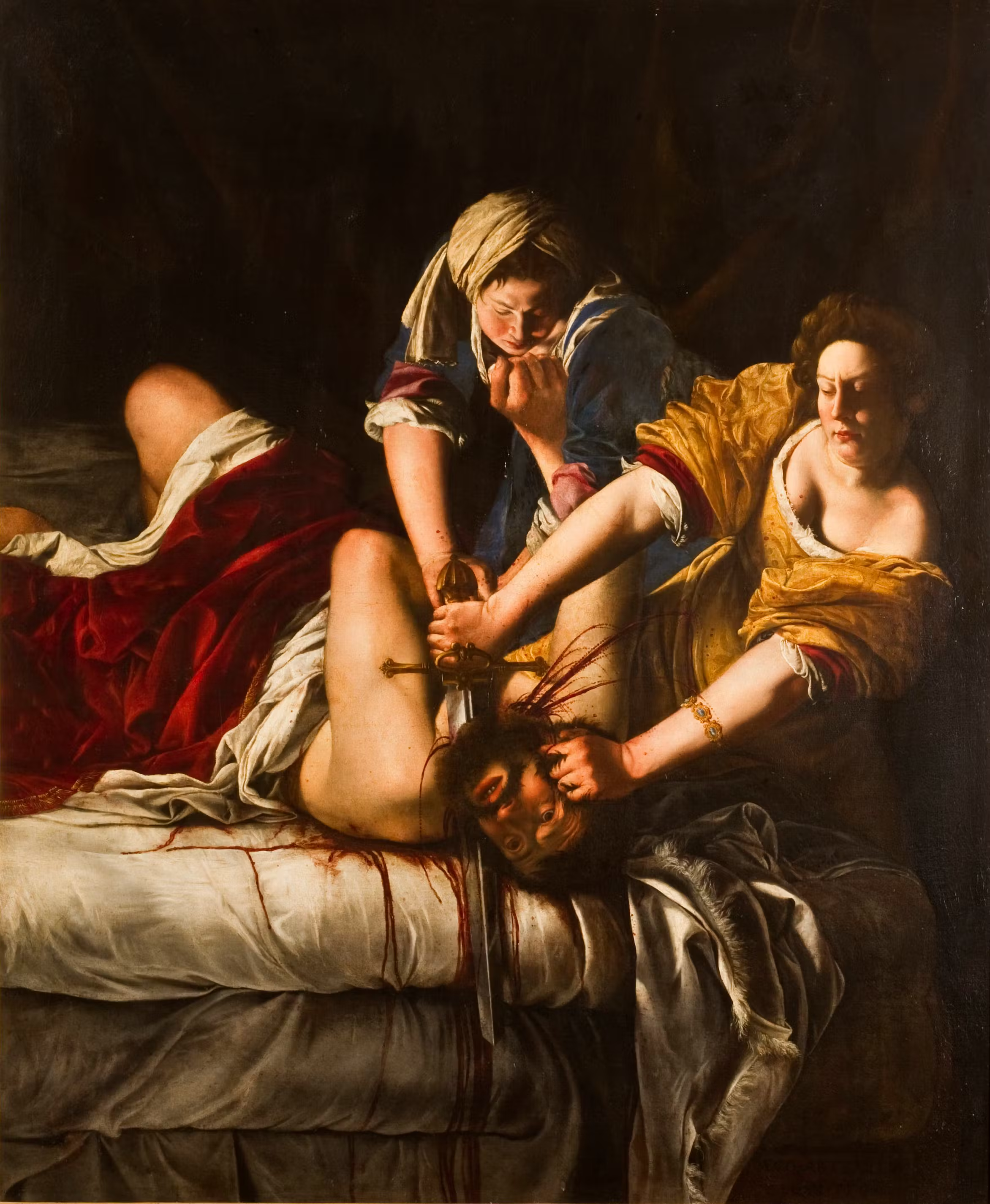
Another notable female artist was Artemisia Gentileschi (1593–c. 1656), an Italian Baroque painter whose dramatic, emotionally charged works have earned her a prominent place in art history. Artemisia’s training came from her father, the painter Orazio Gentileschi, and she went on to produce powerful works that often depicted strong, heroic women. Her painting Judith Slaying Holofernes (1614–1620) is a striking example of her ability to portray intense emotion and movement. Artemisia’s works, often characterized by their depictions of female strength and resilience, have been interpreted as reflections of her own experiences in a male-dominated society, where she faced significant challenges, including a public trial after she was raped by her art teacher.
While Sofonisba Anguissola and Artemisia Gentileschi are among the most famous female artists of the Renaissance, many other women contributed to the arts in more subtle or less recognized ways. Some women worked as illuminators, textile artists, and miniaturists, often producing religious works or commissioned pieces for private patrons. These women, though often anonymous or overlooked, were essential contributors to the artistic output of the Renaissance.
Women in Renaissance Literature
Women also played a role in shaping Renaissance literature, both as writers and as subjects of literary works. In a time when literacy rates for women were relatively low, especially among the lower classes, a few exceptional women emerged as significant figures in the world of letters, often writing in the genres of poetry, essays, and letters.
One of the earliest and most influential female writers of the Renaissance was Christine de Pizan (1364–c. 1430), a French-Italian author who is often considered one of Europe’s first professional female writers. Widowed at a young age, Christine turned to writing as a means of supporting her family. Her works, including The Book of the City of Ladies(1405), offered a strong defense of women’s intellectual and moral capabilities, challenging the misogyny of her time. In The Book of the City of Ladies, Christine created an allegorical city where women’s achievements were celebrated and defended, offering a powerful argument for the value of women’s contributions to society. Christine’s writings on women’s rights and gender equality were groundbreaking, and her work remains influential in the history of feminist thought.
In Italy, Veronica Franco (1546–1591), a poet and courtesan, became famous for her writings, which explored themes of love, desire, and the role of women in society. Franco’s poetry, particularly her Terze Rime, combined personal reflection with social commentary, highlighting the limitations placed on women and the double standards they faced. As a courtesan, Franco had access to intellectual circles that were typically closed to women, allowing her to engage with prominent writers, artists, and politicians. Her works provide valuable insight into the lives of women in Renaissance Venice and the ways in which they navigated social constraints.
Women were also often the subjects of literary works, though they were typically portrayed through the lens of male writers. Many male poets, such as Petrarch and Dante, idealized women as muses or symbols of beauty and virtue. The concept of courtly love, in which women were revered as unattainable objects of affection, dominated much of Renaissance poetry. While these depictions often limited women to passive roles, they also elevated their status as symbols of inspiration and purity.
Women and Education
While education for women was not widespread during the Renaissance, some women from wealthy or noble families had access to education, particularly in the fields of literature, music, and the arts. Humanist thinkers like Leonardo Bruniand Baldassare Castiglione advocated for the education of women, though their views on the subject were often limited to the belief that women should be educated to become better companions for men, rather than independent thinkers.
Isotta Nogarola (1418–1466), an Italian scholar, was one of the most educated women of the Renaissance. Trained in the classical tradition of Humanism, Nogarola engaged in scholarly debates with prominent male intellectuals of her time. Her writings, including Dialogue on the Equal or Unequal Sin of Adam and Eve, challenged traditional views on women’s moral and intellectual inferiority. Nogarola’s work represented a rare example of a woman participating in the intellectual life of the Renaissance on equal footing with her male counterparts.
Conclusion
Women played a complex and often underappreciated role in the Renaissance. Though they were largely confined to the domestic sphere and limited by societal expectations, many women found ways to engage with the cultural, artistic, and intellectual movements of the time. As patrons, artists, writers, and scholars, they contributed to the flourishing of Renaissance culture, often behind the scenes or under challenging circumstances. Their influence on art, literature, and society continues to be studied and appreciated, revealing the important and multifaceted roles women played during one of the most transformative periods in history.
The Renaissance was a period of great advancements in many fields, and one of the most transformative areas was medicine and anatomy. Spurred by the Humanist desire to rediscover and improve upon the knowledge of the classical world, Renaissance thinkers and physicians began to challenge medieval medical theories, turning instead to direct observation, dissection, and experimentation to understand the human body. The legacy of Renaissance medicine and anatomy is vast, laying the foundation for modern medical science and changing the way the body was understood and treated. Pioneers like Andreas Vesalius, Ambroise Paré, and William Harvey made groundbreaking discoveries that revolutionized medical practice and anatomical knowledge.
Challenging Galenic Medicine
Before the Renaissance, European medicine was heavily influenced by the works of the ancient Greek physician Galen(c. 129–216 CE). Galen’s theories, based on the four humors—blood, phlegm, black bile, and yellow bile—dominated medical thought for over a millennium. According to Galenic medicine, an imbalance in these humors was believed to cause illness, and treatments such as bloodletting or purging were used to restore balance.
During the Renaissance, however, physicians and anatomists began to question Galen’s teachings. They turned to direct observation and dissection of human bodies to gain a more accurate understanding of anatomy and physiology. This shift toward empirical investigation was a hallmark of Renaissance science, as scholars sought to test ancient ideas and update them with new discoveries.
Andreas Vesalius and the Study of Human Anatomy
One of the most significant figures in the history of anatomy is Andreas Vesalius (1514–1564), whose work revolutionized the study of the human body. Vesalius, a Flemish anatomist and physician, is best known for his monumental work De Humani Corporis Fabrica (On the Fabric of the Human Body), published in 1543. This illustrated anatomical text was groundbreaking because it was based on Vesalius’s own dissections of human cadavers, rather than relying on traditional descriptions from Galen.
De Humani Corporis Fabrica provided detailed and accurate descriptions of the human body’s structure, correcting many of Galen’s errors. For example, Vesalius demonstrated that the human jawbone was a single bone, not two, as Galen had claimed based on animal dissection. Vesalius’s work emphasized the importance of direct observation and dissection, which became key methods in anatomical research and medical education. His illustrations, created by skilled artists, provided clear and detailed representations of human anatomy that were widely used in medical schools for centuries.
Vesalius’s work marked a turning point in medical history, as it challenged the reliance on ancient authorities and placed greater emphasis on empirical research. His insistence on using human bodies for dissection led to a better understanding of human anatomy and set the stage for future medical discoveries.
Ambroise Paré and Advances in Surgery
While Vesalius transformed the field of anatomy, Ambroise Paré (1510–1590) revolutionized surgery. Paré, a French surgeon who served on the battlefields of Europe, made significant contributions to the treatment of wounds and surgical techniques. During a time when the treatment of gunshot wounds often involved pouring boiling oil into the wound to cauterize it, Paré discovered a more effective and less painful method by using a mixture of egg yolk, rose oil, and turpentine. This innovation greatly improved patient outcomes and reduced suffering.
Paré also advanced the practice of amputation by introducing the use of ligatures (tying off blood vessels) to control bleeding, rather than using cauterization, which was common practice at the time. His methods led to significant improvements in the survival rates of patients undergoing amputations and helped to establish surgery as a more effective and humane field of medicine.
Paré’s surgical innovations, along with his emphasis on compassionate patient care, earned him a reputation as one of the leading surgeons of the Renaissance. His writings, including The Method of Treating Wounds (1545), became standard texts for surgeons and contributed to the development of modern surgical techniques.
William Harvey and the Circulation of Blood
One of the most revolutionary discoveries of the Renaissance in the field of medicine was the discovery of the circulation of blood by William Harvey (1578–1657), an English physician. Prior to Harvey’s work, the prevailing theory of blood circulation was based on Galenic ideas, which held that blood was produced in the liver, consumed by the body’s organs, and replenished continually.
In his groundbreaking work De Motu Cordis (On the Motion of the Heart and Blood), published in 1628, Harvey demonstrated through careful observation and experimentation that blood circulates through the body in a closed system. He described the heart as a pump that moves blood through the arteries and veins in a continuous loop, overturning centuries of medical thought.
Harvey’s discovery of the circulatory system was one of the most significant medical breakthroughs of the Renaissance. It provided a new understanding of how the body functions and laid the groundwork for modern cardiovascular medicine. Harvey’s methodical approach, based on observation, dissection, and experimentation, became a model for scientific inquiry in medicine.
The Influence of Renaissance Anatomy on Art
The Renaissance fascination with the human body and anatomy was not limited to the field of medicine—it also had a profound impact on art. Renaissance artists, inspired by Humanism and the desire to accurately depict the human form, turned to anatomical study as a way to improve their craft. Artists like Leonardo da Vinci, Michelangelo, and Albrecht Dürer conducted dissections and studied anatomy in order to create more lifelike representations of the human body in their paintings and sculptures.
Leonardo da Vinci (1452–1519), in particular, is famous for his anatomical drawings, which combined his artistic skill with scientific observation. His studies of the muscles, bones, and internal organs of the human body are both beautiful works of art and highly detailed anatomical studies. Leonardo’s drawings, such as Vitruvian Man, reflect his belief that understanding the human body was essential for mastering the art of painting and sculpture.
This cross-pollination between art and science during the Renaissance contributed to both fields. Artists gained a deeper understanding of anatomy, while anatomists benefited from the detailed illustrations that artists could produce. The collaboration between these disciplines helped to advance both artistic and medical knowledge.
Renaissance Medicine and the Scientific Revolution
The advancements in anatomy and medicine during the Renaissance also helped to pave the way for the Scientific Revolution, which emerged in the 17th century. The Renaissance emphasis on empirical observation, direct study of the natural world, and challenging established authorities were all key components of the scientific method that would come to define modern science.
The works of Vesalius, Paré, and Harvey, among others, demonstrated the value of experimentation and empirical evidence in advancing medical knowledge. This approach contrasted with the medieval reliance on tradition and authoritative texts and helped to establish medicine as a scientific discipline grounded in observation and experimentation.
The discovery of the circulatory system by Harvey, in particular, exemplifies the shift toward a more scientific understanding of the body and its functions. Harvey’s work laid the foundation for the development of physiology and the study of how biological systems function, which became central to modern medicine.
The Legacy of Renaissance Medicine and Anatomy
The legacy of Renaissance medicine and anatomy is profound and far-reaching. The shift from relying on ancient texts to conducting direct observation and experimentation transformed the way the human body was understood and treated. This new approach laid the groundwork for modern medical science, which continues to rely on the principles of observation, experimentation, and evidence-based practice.
The discoveries made by figures like Andreas Vesalius, Ambroise Paré, and William Harvey revolutionized the fields of anatomy, surgery, and physiology. Vesalius’s detailed anatomical studies corrected centuries of errors, Paré’s innovations in surgery saved countless lives, and Harvey’s discovery of blood circulation fundamentally changed the understanding of human physiology.
Moreover, the interdisciplinary nature of Renaissance anatomy, with its connections to art and the broader Humanist movement, helped to foster a deeper appreciation for the complexity and beauty of the human body. The collaboration between artists and anatomists during the Renaissance continues to influence both fields today.
Conclusion
The Renaissance was a period of remarkable advancement in the fields of medicine and anatomy. By challenging the traditional teachings of Galen and turning to dissection, observation, and experimentation, Renaissance anatomists and physicians laid the foundation for modern medical science. Figures like Andreas Vesalius, Ambroise Paré, and William Harvey revolutionized the understanding of the human body and developed new techniques that continue to influence medical practice today. The legacy of Renaissance medicine is not only in the specific discoveries made but also in the shift toward a more scientific, evidence-based approach to understanding and treating the human body.
Renaissance Education: The Emergence of Liberal Arts and Classical Learning
The Renaissance was a time of profound cultural, intellectual, and artistic renewal that brought sweeping changes to the way people thought about the world. One of the most significant developments during this period was in the field of education. The Renaissance saw the rise of Humanism, which emphasized the value of classical learning and the development of the individual. As a result, a new system of education emerged, focusing on the liberal arts and the study of ancient Greek and Roman texts. This educational shift profoundly influenced European society, shaping the intellectual elite and laying the groundwork for modern education systems.
The Influence of Humanism on Renaissance Education
At the heart of Renaissance education was the intellectual movement known as Humanism. Humanism focused on the study of the humanities—literature, philosophy, history, and the arts—as a means of understanding human nature and achieving individual potential. Humanists believed that the revival of classical learning, particularly the works of ancient Greek and Roman authors, would lead to the moral and intellectual improvement of society.
Petrarch (1304–1374), often called the “Father of Humanism,” was one of the earliest figures to advocate for a return to the classical texts of antiquity. He believed that studying the works of great thinkers like Cicero, Plato, and Virgil would provide moral guidance and intellectual enrichment. Petrarch’s admiration for classical antiquity inspired a new generation of scholars to seek out and study ancient manuscripts, leading to the recovery and dissemination of many classical works that had been lost or neglected during the Middle Ages.
Humanism shifted the focus of education from the scholasticism of the medieval period, which was centered on theology and logic, to a broader curriculum that included history, rhetoric, poetry, and moral philosophy. This new emphasis on the liberal arts sought to cultivate well-rounded individuals who were capable of critical thinking, effective communication, and virtuous action.
The Liberal Arts Curriculum
The Renaissance model of education was based on the study of the liberal arts, which were considered essential for developing a free and enlightened individual. The term “liberal arts” comes from the Latin word liber, meaning “free,” and referred to the education that was deemed appropriate for free citizens who were expected to participate in public life.
The traditional seven liberal arts were divided into two categories: the trivium and the quadrivium. The trivium consisted of grammar, rhetoric, and logic—skills that were essential for effective communication and reasoning. The quadrivium included arithmetic, geometry, music, and astronomy—subjects that focused on the mathematical and scientific understanding of the world.
During the Renaissance, the study of the trivium was particularly emphasized, as rhetoric and eloquence were considered crucial for public speaking, political participation, and intellectual debate. Humanist educators such as Leon Battista Alberti and Leonardo Bruni argued that the ability to speak and write persuasively was a mark of a well-educated individual and a vital skill for civic life.
While the quadrivium continued to be part of the curriculum, the study of mathematics and science was increasingly influenced by the discoveries of the Scientific Revolution, which overlapped with the later stages of the Renaissance. Figures like Copernicus, Galileo, and Kepler transformed the study of astronomy, making it an integral part of the Renaissance intellectual landscape.
The Role of Classical Texts in Renaissance Education
The revival of classical learning was a defining feature of Renaissance education. Humanists sought out and studied ancient manuscripts, many of which had been preserved in monastic libraries or rediscovered during the Crusades. The works of Homer, Plato, Aristotle, Cicero, Virgil, and others became central to the education of the Renaissance elite.
The study of these classical texts was not merely an academic exercise but was seen as a way to cultivate virtue and wisdom. Humanists believed that the moral lessons contained in classical literature could help individuals lead virtuous lives and contribute to the common good. For example, Cicero’s writings on civic duty and the responsibilities of citizenship were widely read and admired by Renaissance thinkers.
One of the most influential classical works rediscovered during the Renaissance was Plato’s dialogues, which had a profound impact on Renaissance philosophy. The study of Plato’s works, along with the teachings of his followers in the Platonic Academy of Florence, encouraged a new way of thinking about the relationship between the material and spiritual worlds. This philosophical shift helped to inspire Renaissance artists, scientists, and thinkers to explore new ideas and push the boundaries of knowledge.
Aristotle also remained a central figure in Renaissance education, particularly in the study of logic and natural philosophy. However, Renaissance scholars often sought to reconcile Aristotle’s teachings with the insights of other classical and contemporary thinkers, creating a more dynamic and open intellectual environment.
Humanist Educators and Schools
The rise of Humanist educators during the Renaissance played a key role in transforming the educational system. Humanist scholars like Vittorino da Feltre, Guarino da Verona, and Johannes Sturm established schools that focused on the liberal arts and classical learning, rejecting the rigid scholasticism of the medieval universities.
Vittorino da Feltre’s school in Mantua, known as the Casa Giocosa (The Happy House), was one of the most famous Humanist schools of the time. Vittorino combined the study of classical texts with physical education and moral instruction, believing that a well-rounded education should nurture both the body and the mind. His school attracted students from across Europe, including many members of the nobility, and became a model for Renaissance education.
Similarly, Guarino da Verona’s school in Ferrara emphasized the study of Latin and Greek as the foundation of a Humanist education. Guarino believed that mastering classical languages was essential for understanding the wisdom of the ancient world and for cultivating the intellectual and moral virtues necessary for leadership.
The spread of Humanist education also influenced the development of universities during the Renaissance. While medieval universities had been primarily focused on theology and scholasticism, Renaissance universities began to incorporate Humanist subjects into their curricula. The University of Padua, for example, became a center of Humanist scholarship and scientific inquiry, attracting scholars from across Europe.
Education and the Role of Women
While education during the Renaissance was primarily aimed at men, there were notable exceptions that demonstrated the intellectual potential of women. Some women from noble or wealthy families were able to receive a Humanist education, often through private tutors. These women became influential figures in the intellectual and cultural life of the Renaissance.
Isabella d’Este, the Marchioness of Mantua, was one of the most prominent female patrons of the arts and an intellectual leader in Renaissance Italy. She received a classical education and was known for her extensive library, her correspondence with leading Humanist scholars, and her patronage of artists such as Leonardo da Vinci and Titian.
Similarly, Laura Cereta (1469–1499) was an Italian Humanist and scholar who advocated for women’s education and intellectual equality. In her writings, she argued that women were just as capable of intellectual achievement as men and that education should be available to all individuals, regardless of gender.
Although these examples were rare, they reflect the growing awareness of the importance of education for all individuals during the Renaissance. The intellectual climate of the period laid the groundwork for later movements advocating for the education and empowerment of women.
The Legacy of Renaissance Education
The educational innovations of the Renaissance had a lasting impact on European society and culture. The emphasis on the liberal arts, classical learning, and the development of the individual became central to the education of the elite, influencing the curricula of universities and schools for centuries to come. The Humanist focus on rhetoric, moral philosophy, and the study of ancient texts shaped the intellectual climate of the Renaissance and contributed to the broader cultural and scientific achievements of the period.
Moreover, the Renaissance model of education laid the foundation for the development of modern education systems, particularly in its focus on critical thinking, individual potential, and the cultivation of a well-rounded intellect. The liberal arts curriculum, with its emphasis on the humanities, continues to be a key component of university education today.
The revival of classical learning during the Renaissance also helped to inspire the Enlightenment, a period of intellectual and cultural growth in the 18th century that built upon the Renaissance ideals of reason, knowledge, and individual freedom. The Renaissance emphasis on education as a means of personal and societal improvement continues to resonate in contemporary debates about the purpose and value of education.
Conclusion
Renaissance education represented a profound shift in the way knowledge was acquired, understood, and disseminated. Through the revival of classical learning and the development of the liberal arts curriculum, Humanist scholars transformed the intellectual landscape of Europe, promoting the values of individualism, critical inquiry, and moral philosophy. This new model of education not only shaped the intellectual elite of the Renaissance but also laid the groundwork for the development of modern education systems. The legacy of Renaissance education, with its focus on the humanities and the potential of the individual, continues to influence the way we think about education and knowledge today.
The Scientific Revolution: How Renaissance Thinkers Changed the World
The Scientific Revolution, which took place from the 16th to the 18th century, marked a radical transformation in humanity’s understanding of the natural world. It was a period of groundbreaking discoveries, new methods of inquiry, and the rejection of long-held beliefs rooted in ancient and medieval philosophy. The roots of the Scientific Revolution can be traced back to the Renaissance, when thinkers, inspired by Humanism and the rediscovery of classical texts, began to challenge traditional knowledge and explore new ways of understanding the universe. This intellectual shift laid the foundation for the modern scientific method, leading to remarkable achievements in fields like astronomy, physics, mathematics, biology, and chemistry. The contributions of Renaissance thinkers not only revolutionized science but also transformed the way people viewed the world and humanity’s place in it.
Italian astronomer and physicist, Galileo Galilei (1564 – 1642) using a telescope, circa 1620. (Photo by Hulton Archive/Getty Images)
The Renaissance as a Catalyst for Scientific Inquiry
The Renaissance, beginning in the 14th century, saw a revival of interest in the classical knowledge of ancient Greece and Rome. Humanist scholars sought to return to the original sources of knowledge, leading to the rediscovery of works by philosophers such as Aristotle, Ptolemy, Plato, and Archimedes. While much of medieval science had been dominated by the teachings of Aristotle and the scholastic tradition, Renaissance thinkers began to question these ideas and explore new methods of understanding the natural world.
Humanism, a central intellectual movement of the Renaissance, placed emphasis on individual inquiry and the potential of human reason. This shift in thinking encouraged Renaissance scholars to rely on observation, experimentation, and critical analysis rather than simply accepting received wisdom. The result was a renewed focus on empirical evidence and the search for natural explanations for the phenomena of the universe, setting the stage for the Scientific Revolution.
The invention of the printing press by Johannes Gutenberg in the mid-15th century also played a crucial role in the spread of scientific knowledge. The printing press allowed for the rapid dissemination of ideas, making scientific texts and discoveries more accessible to scholars across Europe. This technological innovation facilitated collaboration and debate, which were essential for the progress of science.
Nicolaus Copernicus and the Heliocentric Model
One of the most revolutionary ideas to emerge from the Renaissance was the heliocentric theory proposed by the Polish astronomer Nicolaus Copernicus (1473–1543). In his seminal work, De Revolutionibus Orbium Coelestium (On the Revolutions of the Heavenly Spheres), published in 1543, Copernicus challenged the long-accepted geocentric model of the universe, which placed the Earth at the center of all celestial motion. This model, based on the teachings of Ptolemy, had been accepted by the Catholic Church and scholars for centuries.
Copernicus, drawing on both ancient Greek sources and his own observations, argued that the Sun, not the Earth, was the center of the solar system. This heliocentric model was a radical departure from the Ptolemaic system and posed a direct challenge to the religious and scientific establishment of the time. While Copernicus’ theory was initially met with resistance, it laid the groundwork for future astronomers to refine and confirm his ideas.
The implications of Copernicus’ heliocentric theory extended far beyond astronomy. It fundamentally altered humanity’s understanding of the universe and its place within it. By suggesting that the Earth was not the center of the cosmos, Copernicus opened the door to a new worldview—one that saw humanity as part of a larger, dynamic system governed by natural laws rather than divine intervention.
Galileo Galilei: Observations that Changed the Cosmos
Building on Copernicus’ heliocentric model, Galileo Galilei (1564–1642) made significant contributions to the Scientific Revolution through his use of observation and experimentation. Galileo was one of the first astronomers to use a telescope to study the night sky, and his discoveries provided strong evidence in support of the heliocentric theory. In 1609, Galileo published his observations of the moons of Jupiter, showing that they orbited a planet other than the Earth—further undermining the geocentric model.
Galileo’s observations also revealed the phases of Venus, the rough surface of the Moon, and the vast number of stars in the Milky Way, all of which challenged the traditional Ptolemaic system. His work, published in The Starry Messenger(1610) and Dialogue Concerning the Two Chief World Systems (1632), not only supported Copernicus’ ideas but also demonstrated the power of empirical observation and mathematical analysis in understanding the natural world.
Despite the groundbreaking nature of his discoveries, Galileo faced opposition from the Catholic Church, which saw his heliocentric views as a challenge to religious doctrine. In 1633, Galileo was tried by the Roman Inquisition and forced to recant his support for the heliocentric model. Nevertheless, his contributions to the Scientific Revolution had already set in motion a shift toward a more scientific, evidence-based approach to understanding the universe.
Johannes Kepler and Planetary Motion
Another key figure in the Scientific Revolution was Johannes Kepler (1571–1630), a German mathematician and astronomer who refined and expanded upon Copernican theory. Kepler is best known for his three laws of planetary motion, which described the orbits of planets around the Sun. Unlike Copernicus, who had envisioned circular orbits, Kepler demonstrated that planetary orbits were elliptical, with the Sun at one focus of the ellipse.
Kepler’s laws, which he published in works like Astronomia Nova (1609) and Harmonices Mundi (1619), were based on precise mathematical calculations and careful observations of the planet Mars. His work provided a mathematical foundation for understanding the motion of celestial bodies, bridging the gap between Copernican theory and later developments in physics.
Kepler’s contributions were not limited to astronomy. His work also influenced the development of optics and mathematics, and he was one of the first scientists to explore the relationship between music and planetary motion, proposing a “music of the spheres” that reflected the harmony of the cosmos.
Isaac Newton: The Laws of Motion and Universal Gravitation
Perhaps the most important figure of the Scientific Revolution was Isaac Newton (1642–1727), whose discoveries in physics, mathematics, and astronomy fundamentally transformed the scientific understanding of the universe. Newton’s work synthesized the contributions of Copernicus, Galileo, and Kepler into a unified theory of universal gravitation and the laws of motion.
In his landmark work, Philosophiæ Naturalis Principia Mathematica (1687), Newton formulated his three laws of motion, which described the relationship between an object’s motion and the forces acting upon it. He also developed the law of universal gravitation, which explained how all objects in the universe are attracted to one another by the force of gravity. This theory provided a mathematical explanation for both planetary motion and everyday phenomena on Earth.
Newton’s laws of motion and gravitation not only provided a framework for understanding the behavior of objects in space but also established the foundation for classical mechanics. His work represented the culmination of the Scientific Revolution, offering a comprehensive system of natural laws that governed the physical world.
Newton’s contributions extended beyond physics. He made significant advancements in mathematics, particularly in the development of calculus, and his work in optics, including the discovery that white light is composed of different colors, revolutionized the study of light and vision.
The Scientific Method: A New Way of Thinking
One of the most enduring legacies of the Scientific Revolution was the development of the scientific method—a systematic approach to inquiry that emphasized observation, experimentation, and the use of evidence to draw conclusions. This method, which became the foundation of modern science, was influenced by thinkers like Francis Bacon (1561–1626) and René Descartes (1596–1650).
Bacon, an English philosopher, advocated for the use of empirical observation and inductive reasoning in scientific inquiry. In his work Novum Organum (1620), Bacon argued that knowledge should be derived from careful observation and experimentation rather than relying on established authorities or abstract reasoning. His approach laid the groundwork for the modern scientific method, which emphasizes the importance of gathering data and testing hypotheses through controlled experiments.
Descartes, a French philosopher and mathematician, also played a key role in shaping the scientific method. In his Discourse on the Method (1637), Descartes emphasized the use of deductive reasoning and mathematical principles to arrive at certain knowledge. His famous statement, “Cogito, ergo sum” (“I think, therefore I am”), reflects his belief in the power of reason and doubt as tools for understanding the world.
The development of the scientific method represented a significant departure from the medieval approach to knowledge, which was often based on religious doctrine or the authority of ancient texts. The emphasis on observation, experimentation, and reason became the defining characteristics of modern science, leading to a more systematic and reliable understanding of the natural world.
The Impact of the Scientific Revolution
The Scientific Revolution had a profound impact on European society and culture, shaping not only the development of modern science but also changing the way people viewed the world and their place within it. The discoveries of Copernicus, Galileo, Kepler, and Newton challenged traditional views of the universe, moving away from a geocentric model in which humanity was at the center, and toward a heliocentric view that saw the Earth as one small part of a vast, mechanistic universe governed by natural laws.
These shifts in thinking had significant philosophical and religious implications, leading to conflicts between scientists and the Church, particularly in Catholic countries. The growing acceptance of reason, evidence, and scientific inquiry also contributed to the intellectual movement known as the Enlightenment, which sought to apply the principles of the Scientific Revolution to politics, ethics, and society.
The Scientific Revolution laid the foundation for the Industrial Revolution, the development of modern technology, and advancements in medicine, astronomy, physics, and chemistry. It represented a turning point in human history, where science emerged as a dominant force for understanding and shaping the world.
Conclusion
The Scientific Revolution was a period of immense intellectual achievement that transformed humanity’s understanding of the natural world. Building on the foundations laid by Renaissance Humanism and classical knowledge, thinkers like Copernicus, Galileo, Kepler, and Newton challenged traditional views and introduced new methods of inquiry based on observation, experimentation, and mathematical reasoning. Their discoveries not only revolutionized science but also reshaped the way people viewed the universe and their place within it. The Scientific Revolution’s legacy continues to influence modern science, technology, and philosophy, marking one of the most important turning points in human history.
Northern Renaissance: Artistic and Intellectual Achievements Beyond Italy
While the Renaissance is often associated with Italy, where cities like Florence, Rome, and Venice gave birth to some of the most iconic artists and thinkers, the cultural revival of the period extended far beyond Italy’s borders. In Northern Europe, the Northern Renaissance blossomed, characterized by its unique artistic styles, intellectual achievements, and focus on detailed realism. The movement drew heavily from the innovations of the Italian Renaissance but adapted them to the distinct cultural, social, and religious conditions of countries like the Netherlands, Germany, France, and England. The Northern Renaissance was a period of remarkable achievements in art, literature, science, and philosophy, producing figures like Albrecht Dürer, Jan van Eyck, and Erasmus.
Distinct Characteristics of the Northern Renaissance
While the Italian Renaissance was heavily influenced by the rediscovery of classical antiquity and Greco-Roman ideals, the Northern Renaissance had its own unique character. The Northern artists were deeply focused on realism and minute detail in their work. Unlike the Italians, who often idealized the human form and used linear perspective to create grandeur, Northern artists concentrated on the natural world, everyday life, and the depiction of textures, light, and atmosphere.
The intellectual culture of the Northern Renaissance also differed from that of Italy. While Italian Humanism centered on the revival of classical literature and philosophy, Northern Humanism, often called Christian Humanism, placed greater emphasis on religious reform, moral philosophy, and personal piety. Thinkers such as Erasmus of Rotterdam and Thomas More were central figures in this intellectual movement, advocating for a return to the simplicity and ethical teachings of early Christianity.
The Rise of Northern Renaissance Art
One of the most significant contributions of the Northern Renaissance was in the field of painting, where artists developed new techniques and styles that greatly differed from their Italian counterparts. Northern Renaissance art is known for its meticulous attention to detail, the use of oil paints, and the focus on realism. While Italian painters concentrated on anatomy, proportion, and idealized beauty, Northern artists were renowned for their careful observation of nature, their use of color, and their ability to capture the textures and emotions of their subjects.
Jan van Eyck (c. 1390–1441) was one of the pioneers of Northern Renaissance painting, famous for his mastery of oil painting. Oil paints allowed for richer colors, finer details, and a greater ability to layer and blend than the tempera paints used in Italy. Van Eyck’s The Arnolfini Portrait (1434) is a perfect example of Northern Renaissance realism. The painting is filled with intricate details, from the texture of the fabrics to the reflections in the mirror, capturing both the domestic setting and the personalities of the figures with incredible precision. His use of light and shadow also set new standards for naturalism in painting.
Another notable artist was Rogier van der Weyden (1399–1464), whose emotionally charged works often focused on religious themes. His Deposition (c. 1435) exemplifies the Northern Renaissance’s emphasis on human emotion and religious devotion, with a highly detailed rendering of Christ’s body and the expressions of grief on the surrounding figures.
Hieronymus Bosch (c. 1450–1516) stands out as a unique figure in Northern Renaissance art. His works, such as The Garden of Earthly Delights (c. 1490–1510), are filled with fantastical and surreal imagery, reflecting both the religious anxieties and moral concerns of the period. Bosch’s works can be seen as a commentary on human folly, sin, and the consequences of moral corruption, blending realism with an almost dreamlike imagination.
Albrecht Dürer (1471–1528), a German painter, printmaker, and theorist, was perhaps the most influential artist of the Northern Renaissance. Dürer traveled to Italy, where he was exposed to the techniques of the Italian masters, but he developed his own distinct style that combined the precision and realism of Northern art with the classical ideals of the Italian Renaissance. His engravings, such as Melencolia I (1514) and his woodcut series The Apocalypse (1498), demonstrated his technical skill and deep intellectual engagement with issues of philosophy, religion, and the human condition. Dürer’s self-portraits are also notable for their introspective quality and the way they reflect the Renaissance’s new focus on the individual.
Northern Renaissance Intellectual Achievements
In addition to its artistic achievements, the Northern Renaissance was a period of significant intellectual and literary development. One of the most important intellectual movements of the time was Christian Humanism, which sought to reconcile the values of classical Humanism with the teachings of Christianity. Christian Humanists believed that by returning to the original texts of the Bible and the writings of the early Church Fathers, they could reform the Church and society, promoting a more personal and ethical Christianity.
Erasmus of Rotterdam (1466–1536) was the leading figure of Christian Humanism. In works like The Praise of Folly(1509) and Education of a Christian Prince (1516), Erasmus critiqued the corruption and excesses of the Catholic Church while advocating for a return to the simple, ethical teachings of Christ. Erasmus believed that education and the study of classical texts could lead to moral improvement, and he championed the use of reason and scholarly inquiry in both religious and secular life. His translations of the Bible into Latin and Greek helped lay the groundwork for the Protestant Reformation, even though Erasmus himself remained a committed Catholic.
Thomas More (1478–1535), another key figure of the Northern Renaissance, is best known for his work Utopia (1516), in which he imagined an ideal society based on communal ownership, religious tolerance, and the pursuit of knowledge. More’s Utopia reflects the Renaissance belief in human potential and the ability to create a better world through reason and ethical behavior. His vision of an ideal society was deeply influenced by both classical philosophy and Christian teachings, blending the intellectual currents of the Renaissance with the moral concerns of the Reformation.
The printing press, invented by Johannes Gutenberg around 1440, played a crucial role in the spread of Northern Renaissance ideas. The press allowed for the mass production of books and pamphlets, making knowledge more accessible than ever before. The spread of printed materials helped disseminate the works of Erasmus, More, and other thinkers, as well as religious texts like Luther’s Bible, which played a key role in the Protestant Reformation.
Science and Mathematics in the Northern Renaissance
The Northern Renaissance was also a period of significant advancements in science and mathematics, influenced by both the intellectual currents of Humanism and the new technologies of the time. Nicolaus Copernicus (1473–1543), a Polish mathematician and astronomer, revolutionized the field of astronomy with his heliocentric theory, which placed the Sun, rather than the Earth, at the center of the universe. His groundbreaking work, On the Revolutions of the Heavenly Spheres(1543), challenged the traditional Ptolemaic model and laid the foundation for the Scientific Revolution.
In anatomy, Andreas Vesalius (1514–1564) made significant contributions to the study of the human body. His work De Humani Corporis Fabrica (1543), based on dissections of human cadavers, provided detailed and accurate descriptions of human anatomy, challenging the long-held ideas of the ancient Greek physician Galen. Vesalius’s work reflected the Renaissance emphasis on observation, empirical evidence, and the direct study of nature.
The Protestant Reformation and the Northern Renaissance
The intellectual achievements of the Northern Renaissance were deeply intertwined with the Protestant Reformation, which began in the early 16th century. Figures like Martin Luther (1483–1546) and John Calvin (1509–1564) were influenced by the Humanist ideals of personal faith, individual reading of the Bible, and the return to the original texts of Christianity. Luther’s translation of the Bible into German, made possible by the printing press, allowed for greater access to religious texts and empowered individuals to interpret the scriptures for themselves.
The Reformation’s emphasis on personal faith and the rejection of Church authority mirrored the intellectual independence of Northern Renaissance thinkers, who challenged traditional beliefs and promoted the use of reason and inquiry in religious matters. The close relationship between the Reformation and the Northern Renaissance helped shape the religious, political, and cultural landscape of Northern Europe for centuries to come.
Conclusion
The Northern Renaissance was a period of extraordinary artistic, intellectual, and scientific achievement, distinct from but deeply connected to the Italian Renaissance. Through their focus on realism, minute detail, and the natural world, Northern Renaissance artists like Jan van Eyck, Albrecht Dürer, and Hieronymus Bosch created works that continue to captivate viewers today. Meanwhile, thinkers like Erasmus and Thomas More, influenced by Humanist ideals, called for religious and social reform, laying the groundwork for the Protestant Reformation. The Northern Renaissance’s unique contributions to art, science, and philosophy had a lasting impact on European culture, shaping the modern world in profound ways.
The Protestant Reformation: A Religious Revolution Rooted in Renaissance Ideals
The Protestant Reformation, which began in the early 16th century, was one of the most significant religious and political upheavals in European history. Sparked by the actions of figures like Martin Luther, the Reformation led to a dramatic shift in the religious landscape of Europe, challenging the authority of the Catholic Church and giving rise to new forms of Christian worship. At its core, the Reformation was a religious revolution, but it was deeply rooted in the Renaissance ideals of individualism, critical inquiry, and the questioning of established authority. The same intellectual currents that fueled the Renaissance’s artistic, philosophical, and scientific achievements also played a central role in shaping the Reformation, as thinkers and reformers sought to return to the original teachings of the Bible and reform the Church’s perceived excesses.
The Renaissance as a Catalyst for Reform
The Renaissance, beginning in the 14th century, was a time of renewed interest in classical antiquity and Humanism. Renaissance thinkers, such as Petrarch, Erasmus, and Thomas More, emphasized the importance of returning to the original sources of knowledge, whether in philosophy, literature, or religion. This focus on the ad fontes (“to the sources”) mentality encouraged a more direct engagement with ancient texts, including the Bible. Renaissance scholars sought to study the scriptures in their original languages, leading to a greater understanding of the Bible and exposing inconsistencies in the Church’s interpretations.
Humanism, a key intellectual movement of the Renaissance, emphasized the dignity and potential of the individual. This idea was central to the Reformation as well, as reformers like Martin Luther emphasized the importance of personal faith and direct access to the scriptures. The Renaissance belief in the individual’s capacity to reason and interpret knowledge for themselves encouraged a questioning of Church authority and the role of tradition in religious life.
The printing press, invented by Johannes Gutenberg in the mid-15th century, also played a crucial role in both the Renaissance and the Reformation. The press allowed for the mass production of books and pamphlets, making it easier for new ideas to spread rapidly across Europe. This technological innovation democratized knowledge, giving people access to religious texts, such as the Bible, in their own languages for the first time. The printing press was instrumental in spreading Martin Luther’s ideas, allowing his writings to reach a wide audience and sparking debate across Europe.
Martin Luther and the Ninety-Five Theses
The catalyst for the Protestant Reformation came in 1517, when Martin Luther, a German monk and theologian, nailed his Ninety-Five Theses to the door of the All Saints’ Church in Wittenberg, Germany. In this document, Luther criticized the Catholic Church for its practice of selling indulgences, which were said to reduce the time a soul spent in purgatory. Luther viewed the selling of indulgences as a corrupt practice that exploited the faithful, and he called for a return to the true teachings of the Bible.
Luther’s Ninety-Five Theses were rooted in Renaissance ideals in several ways. First, Luther emphasized the individual’s direct relationship with God, arguing that faith alone (sola fide) was the means to salvation, not the purchasing of indulgences or the mediation of priests. This emphasis on personal faith mirrored the Renaissance focus on the individual and the power of reason and self-determination. Second, Luther sought to return to the original sources of Christian belief—the Bible—encouraging individuals to read and interpret the scriptures for themselves, much as Renaissance Humanists had returned to classical texts to seek knowledge.
Luther’s criticism of the Church went beyond indulgences. He questioned the authority of the Pope, the role of the clergy, and the use of Latin in religious services, arguing that people should be able to worship in their own languages. His translation of the Bible into German in 1522 was a revolutionary act that allowed ordinary people to access and interpret the scriptures without relying on priests or Church doctrine.
The Spread of Reformation Ideas
Luther’s ideas spread rapidly throughout Europe, thanks in large part to the printing press. Pamphlets, sermons, and translations of the Bible were printed in large quantities and distributed widely, reaching both the educated elite and the common people. This new accessibility of religious texts empowered individuals to question Church practices and think critically about their own faith.
The Reformation quickly spread beyond Germany to other parts of Europe, where different reformers adapted Luther’s ideas to their own contexts. In Switzerland, John Calvin developed his own branch of Protestantism, known as Calvinism, which emphasized predestination and the absolute sovereignty of God. In England, the Reformation took a political turn under Henry VIII, who broke from the Catholic Church and established the Church of England in 1534 after the Pope refused to grant him an annulment.
The Reformation’s emphasis on the vernacular and the accessibility of religious texts resonated with the Renaissance focus on linguistic revival and the use of native languages. Just as Renaissance writers and poets like Dante Alighieri and Geoffrey Chaucer had promoted the use of the vernacular in literature, the Protestant reformers argued that worship and religious study should take place in languages that ordinary people could understand. This shift helped to strengthen national identities and gave rise to vernacular literature and scholarship across Europe.
Humanism and the Reformers
The intellectual movement of Christian Humanism, which combined the classical ideals of the Renaissance with a focus on religious reform, was central to the Reformation. Erasmus of Rotterdam (1466–1536), one of the most influential Christian Humanists, advocated for a return to the simple teachings of Christ and the early Church. In his famous work, In Praise of Folly (1509), Erasmus criticized the corruption and excesses of the clergy, echoing many of the concerns that would later fuel the Protestant Reformation.
Erasmus believed that by studying the Bible and the writings of the Church Fathers, Christians could rediscover the original purity of the faith. His call for reform was grounded in Humanist principles, particularly the belief that individuals had the capacity to reason and make moral decisions for themselves. Although Erasmus remained a committed Catholic, his ideas about reform and personal piety influenced Luther and other Protestant reformers.
Similarly, Thomas More, another Renaissance Humanist, also advocated for reform within the Church, though he ultimately remained loyal to Catholicism. More’s work, Utopia (1516), reflects the Humanist belief in the potential for human society to improve through reason and moral integrity. Both Erasmus and More represent the complex relationship between Renaissance Humanism and the Reformation—while they sought to reform the Church, they did so within the framework of Catholicism, unlike Luther, who broke away entirely.
Political and Social Consequences
The Protestant Reformation was not only a religious movement but also had profound political and social consequences. The questioning of religious authority that began with Luther’s Ninety-Five Theses soon extended to political authority as well. In many parts of Europe, rulers saw the Reformation as an opportunity to assert their independence from the Catholic Church and increase their own power.
In Germany, the Reformation led to a series of conflicts known as the Peasants’ War (1524–1525), in which peasants, inspired by Reformation ideals of individual freedom, demanded social and economic reforms. Luther, however, did not support the peasants’ revolt, fearing that it would lead to chaos and undermine the authority of the ruling class. This tension between religious reform and political order would continue to shape the course of the Reformation.
In England, the Reformation was as much a political movement as a religious one. Henry VIII’s break from the Catholic Church and the establishment of the Church of England allowed the monarchy to consolidate its power and control over religious matters. The English Reformation also had lasting effects on English society, contributing to the rise of a national identity and influencing later political developments, such as the English Civil War.
The Reformation also had significant cultural and intellectual impacts. The emphasis on personal reading of the Bible encouraged literacy, and the spread of religious ideas through printed texts helped lay the foundation for the Enlightenment. The questioning of Church authority, along with the Renaissance spirit of critical inquiry, created an intellectual climate that fostered scientific and philosophical advancements in the centuries to come.
Conclusion
The Protestant Reformation was a religious revolution deeply intertwined with the ideals of the Renaissance. The Renaissance focus on individualism, the return to classical sources, and the critical examination of established authority provided the intellectual framework for the Reformation’s challenge to the Catholic Church. Figures like Martin Luther and John Calvin drew on Humanist principles to argue for a return to the original teachings of the Bible, emphasizing personal faith and direct access to scripture. The Reformation’s lasting legacy can be seen not only in the religious changes it brought about but also in its influence on politics, society, and the broader intellectual currents of modern Europe.
The Role of Patronage in the Renaissance: Art, Politics, and Power
The Renaissance, a period of extraordinary artistic and intellectual flourishing, was driven in large part by the system of patronage. Wealthy individuals, ruling families, religious institutions, and civic leaders provided financial support and commissions to artists, architects, and scholars, ensuring that creativity could thrive in Europe from the 14th to the 17th centuries. Patronage was not just an expression of personal taste or devotion—it was a political tool and a means of solidifying power. By commissioning works of art and architecture, patrons could enhance their prestige, demonstrate their piety, and assert their dominance in the social and political arenas.
From the Medici family in Florence to the Papacy in Rome, Renaissance patrons played a pivotal role in shaping the cultural landscape of the era, influencing the careers of some of the greatest artists in history, including Leonardo da Vinci, Michelangelo, and Raphael.
The Medici Family: Florence’s Leading Patrons
No discussion of Renaissance patronage is complete without mention of the Medici family, who rose to power in Florence in the 15th century. The Medici were bankers and merchants, and their wealth allowed them to become prominent patrons of the arts. Through their support of painters, sculptors, and architects, they helped transform Florence into the cradle of the Renaissance.
Cosimo de’ Medici (1389–1464), known as “Pater Patriae” (Father of the Fatherland), was one of the earliest and most influential Medici patrons. He commissioned a wide range of artistic and architectural projects, including Brunelleschi’sdome for the Florence Cathedral and Donatello’s bronze David. These works not only beautified the city but also served as symbols of Medici power and civic pride.
Under Cosimo’s grandson, Lorenzo de’ Medici, known as Lorenzo the Magnificent (1449–1492), Florence became a center of Renaissance culture. Lorenzo was an avid supporter of both art and scholarship, and his patronage extended to artists like Sandro Botticelli, whose masterpieces The Birth of Venus and Primavera were created under Medici patronage. Lorenzo also supported Michelangelo, nurturing his talent from a young age and providing him with opportunities to study and develop his craft.
For the Medici, patronage was not just about fostering culture—it was also a way to consolidate power and assert dominance over their rivals. By funding public works, religious commissions, and monumental architecture, they demonstrated their wealth, piety, and influence over Florence. Their patronage allowed them to position themselves as cultural leaders, while their art commissions served as a form of political propaganda, reinforcing their status and legitimacy.
The Role of the Church: Papal Patronage and the Vatican
While Florence was a hub of civic patronage, Rome became a center of religious patronage, particularly under the leadership of the Papacy. Throughout the Renaissance, popes used art and architecture as a way to demonstrate the power of the Catholic Church and reinforce its central role in European life.
Pope Julius II (1503–1513) was one of the most influential patrons of the arts during the High Renaissance. Known as the “Warrior Pope,” Julius sought to enhance the grandeur of the Church through monumental artistic projects. He commissioned Michelangelo to paint the ceiling of the Sistine Chapel, one of the most iconic works of the Renaissance, and oversaw the construction of St. Peter’s Basilica, designed by Donato Bramante. These projects were meant to display the glory of God and the authority of the Church, while also solidifying Julius’s legacy as a powerful and visionary leader.
Pope Leo X (1513–1521), a member of the Medici family, continued this tradition of patronage. He supported artists such as Raphael, who was responsible for decorating the Vatican Palace with frescoes that celebrated both religious and humanistic themes. Through their patronage, the popes of the Renaissance not only shaped the cultural landscape of Rome but also used art as a means of spiritual and political expression.
Papal patronage, like that of the Medici, was deeply intertwined with politics. By commissioning large-scale projects, the popes reinforced the Church’s central authority at a time when it faced challenges from within, such as the Protestant Reformation. The grandiosity of these projects was a way to reaffirm the Church’s spiritual and temporal power.
Civic Patronage and the Public Sphere
Patronage was not limited to wealthy families and the Church—civic leaders and city governments also played a crucial role in shaping the artistic identity of Renaissance cities. In republics like Florence and Venice, civic pride and competition between city-states drove public commissions, particularly for large-scale projects that showcased the wealth and sophistication of the community.
In Venice, for example, the government played a key role in supporting the arts. The Venetian Republic, known for its maritime power and commercial wealth, commissioned monumental works to adorn the city’s public spaces. Artists like Titian, Tintoretto, and Veronese were commissioned to create paintings that celebrated Venice’s military victories, religious devotion, and cultural superiority. These works were often displayed in churches, public buildings, and the Doge’s Palace, reinforcing Venice’s status as a powerful and prosperous state.
Public patronage in cities like Florence and Siena also extended to monumental sculpture. The commissioning of Michelangelo’s David by the Florentine government was a statement of the city’s Republican values, with David symbolizing the strength and independence of Florence in the face of external threats. Similarly, Donatello’sGattamelatain Padua was one of the first Renaissance equestrian statues, celebrating a military leader and serving as a testament to the city’s civic pride.
Through public art commissions, city-states were able to project their power and identity, creating a shared cultural heritage that strengthened their communities and enhanced their political standing in Renaissance Italy.
The Artist-Patron Relationship
The relationship between artists and their patrons was complex and multifaceted. Artists depended on patrons for financial support and commissions, while patrons relied on artists to bring their visions to life, whether they were religious, political, or personal.
Some patrons, like Isabella d’Este, the Marchioness of Mantua, were directly involved in the creative process, advising artists and even influencing the subject matter of their works. Isabella was one of the most significant female patrons of the Renaissance, commissioning works from artists like Titian and Leonardo da Vinci. Her patronage was not only a reflection of her status and wealth but also an expression of her intellectual and artistic interests. As a member of the ruling elite, Isabella used her collection of art to enhance her political influence and to create a personal legacy.
At times, the relationship between artist and patron could be contentious. Artists were often expected to meet the specific demands of their patrons, which could limit their creative freedom. However, some artists, like Michelangelo, gained enough fame and recognition that they were able to negotiate more independence. Michelangelo’s relationship with Pope Julius II, while often fraught with tension, allowed him to undertake monumental projects like the Sistine Chapel, which became a defining work of his career.
The Power of Art as Propaganda
Throughout the Renaissance, art was not just a reflection of beauty or devotion—it was also a powerful tool for propaganda. Patrons used art to convey messages about their power, piety, and place in the world. Whether through religious altarpieces, civic monuments, or private portraits, the art of the Renaissance was often a statement of authority and prestige.
Portraiture became a popular way for patrons to assert their identity and influence. Wealthy individuals, including members of the Medici family and European royalty, commissioned artists like Titian, Raphael, and Hans Holbein to create portraits that emphasized their status, wealth, and intellectual sophistication. These portraits were often filled with symbolic elements, such as books, armor, or religious icons, that conveyed the patron’s virtues and achievements.
Similarly, religious commissions often served dual purposes. Altarpieces, frescoes, and sculptures commissioned by wealthy patrons were designed to enhance the spiritual experience of worshipers, but they also reflected the patron’s personal piety and devotion. In many cases, patrons had their likenesses included in religious works, such as in Masaccio’sThe Holy Trinity, where the donors are depicted alongside biblical figures.
Conclusion
Patronage was the lifeblood of the Renaissance, providing artists with the financial and social support necessary to create their masterpieces. Whether through the wealth of the Medici family in Florence, the religious commissions of the Papacy in Rome, or the civic pride of Venice, patronage shaped the art, architecture, and intellectual life of the period. It allowed patrons to assert their power, promote their values, and create lasting legacies through the works of great artists. The relationship between patrons and artists was not merely transactional—it was a collaboration that fueled the Renaissance’s greatest achievements, ensuring that art, politics, and power were intertwined in ways that would resonate for centuries to come.
Renaissance Music: The Birth of Polyphony and Secular Music
The Renaissance was not only a time of great artistic and literary achievements but also a period of significant transformation in the world of music. As Humanism began to take hold in Europe, music shifted away from the strict religious forms of the Middle Ages, embracing new styles that reflected both the complexity of human emotion and the beauty of the natural world. The Renaissance saw the rise of polyphony—a musical texture consisting of multiple independent voices—and a growing emphasis on secular music, which celebrated human life, love, and the joys of nature. These innovations laid the foundation for the development of Western music as we know it today.
The Transition from Medieval to Renaissance Music
Medieval music was largely dominated by religious forms, particularly Gregorian chant, a monophonic style where all voices sing the same melody in unison, creating a simple, solemn sound. The focus was on worship and devotion, with little room for personal expression or variation. However, as the Renaissance began to take shape in the 15th century, music, like other art forms, started to reflect the changing attitudes toward individualism, human experience, and the rediscovery of classical antiquity.
This period saw a gradual transition from the monophonic texture of medieval music to the more complex and layered polyphonic texture that would define Renaissance music. Polyphony, with its intricate interweaving of independent melodic lines, allowed composers to create richer, more emotionally expressive works that resonated with the humanist spirit of the age.
The Rise of Polyphony
One of the most important developments in Renaissance music was the rise of polyphony, a style where multiple independent voices sing simultaneously, each with its own melody and rhythm, yet harmonizing with one another. This complex, layered texture marked a significant departure from the simpler, monophonic chants of the Middle Ages.
The pioneers of polyphony in the early Renaissance were composers such as Guillaume Dufay (1397–1474) and John Dunstaple (1390–1453). Dufay, a Franco-Flemish composer, played a key role in developing the motet, a sacred polyphonic composition that would become one of the defining genres of Renaissance music. His motets, such as Nuper Rosarum Flores (1436), composed for the consecration of Florence’s Cathedral, showcased the intricate interplay of multiple voices, creating a rich and harmonious sound that reflected the architectural beauty of the time.
As polyphony developed, composers began to experiment with more complex forms, including the mass and the madrigal. The mass, a large-scale sacred work for voices, was a key genre for composers like Josquin des Prez (c. 1450–1521), whose polyphonic settings of the Catholic mass, such as the Missa Pange Lingua, are masterpieces of Renaissance music. Josquin’s use of imitation—a technique where a melodic theme is repeated in different voices—was groundbreaking and became a hallmark of Renaissance polyphony. His works were admired for their clarity, emotional depth, and balanced structure.
In addition to Josquin, the music of Giovanni Pierluigi da Palestrina (1525–1594) epitomized the height of polyphonic composition. Palestrina’s sacred music, especially his masses and motets, such as the famous Missa Papae Marcelli, exemplified the perfect balance between text and music, with each voice working in harmony to create a sense of spiritual transcendence. Palestrina’s ability to maintain clarity within complex polyphonic structures earned him recognition as one of the greatest composers of the Renaissance and helped preserve polyphony during the Catholic Church’s Counter-Reformation.
Secular Music and the Renaissance Madrigal
While sacred music dominated much of the Renaissance period, there was also a flourishing of secular music, particularly in the form of the madrigal. The madrigal was a polyphonic vocal composition that set secular poetry to music, often exploring themes of love, nature, and human experience. Madrigals were typically performed in informal, social settings, making them a popular form of entertainment among the educated classes.
The madrigal developed first in Italy during the early 16th century and later spread across Europe. Composers like Jacques Arcadelt (c. 1507–1568) and Cipriano de Rore (1515–1565) were among the early masters of the form, writing madrigals that were both musically sophisticated and emotionally expressive. Arcadelt’s madrigal Il bianco e dolce cigno(The White and Sweet Swan) is one of the most famous examples, using subtle word painting and harmonic beauty to evoke the sensuality and sweetness of the text.
As the madrigal evolved, it became more complex, both musically and emotionally. Carlo Gesualdo (1566–1613) was known for his daring use of dissonance and chromaticism, which gave his madrigals an intense emotional quality that was ahead of its time. Gesualdo’s music was marked by its dramatic contrasts in mood and harmony, reflecting the more introspective and darker side of human experience.
The madrigal also took hold in England, where it became a central part of Elizabethan musical culture. Composers such as Thomas Morley (1557–1602) and John Dowland (1563–1626) helped popularize the form in England, creating madrigals that were light, joyful, and often playful. Morley’s Now is the Month of Maying and Dowland’s Flow My Tearsare quintessential examples of English Renaissance secular music, blending intricate polyphony with expressive lyricism.
Instrumental Music and the Rise of Instruments
While vocal music dominated much of the Renaissance, the period also saw the development of instrumental music, which began to gain importance as a genre in its own right. Previously, instruments had primarily been used to accompany vocal music, but by the late Renaissance, composers started writing music specifically for instruments, reflecting a growing interest in instrumental sound and texture.
The lute was one of the most popular instruments of the Renaissance, and composers like John Dowland became famous for their lute songs, which were often introspective and melancholic. The lute’s soft, resonant sound made it ideal for both solo performance and accompaniment, and it became a symbol of Renaissance music’s refinement and emotional depth.
Other important instruments of the Renaissance included the harpsichord, viol, recorder, and sackbut (an early form of the trombone). These instruments were often used in consorts, where groups of instruments played together, creating rich and varied textures. Composers like William Byrd and Orlando Gibbons wrote complex instrumental works for consorts, showcasing the range and versatility of Renaissance instruments.
Music and the Printing Press
The invention of the printing press in the mid-15th century had a profound impact on the spread of Renaissance music. Before the printing press, music was copied by hand, making it difficult and expensive to disseminate. However, with the advent of music printing, composers’ works could be published and distributed more widely, allowing their music to reach new audiences across Europe.
Composers like Josquin des Prez, Palestrina, and Orlando di Lasso benefited from the printing press, which helped establish their reputations beyond their immediate geographic regions. The wider dissemination of music also allowed for the standardization of musical notation, making it easier for musicians to perform and interpret complex polyphonic works.
The Legacy of Renaissance Music
Renaissance music, with its emphasis on polyphony, harmony, and emotional expression, laid the foundation for the development of Baroque and Classical music. Composers of the Renaissance created works that explored the full range of human emotion, from the spiritual and sacred to the secular and profane. The innovations in polyphony, word painting, and the use of instruments transformed music from a simple accompaniment to a powerful medium for artistic expression.
Renaissance music also reflected the broader cultural and intellectual currents of the time, with its focus on Humanism, the individual, and the natural world. By embracing the complexities of harmony, texture, and form, Renaissance composers pushed the boundaries of music and created works that continue to inspire and influence musicians to this day.
Conclusion
The Renaissance was a period of great innovation in music, marked by the rise of polyphony and the flourishing of secular music. Composers like Josquin des Prez, Palestrina, and Carlo Gesualdo created intricate, emotionally rich works that reflected the humanist spirit of the time. The development of new musical forms, such as the madrigal, and the rise of instrumental music broadened the scope of Renaissance music, making it one of the most dynamic and influential periods in Western musical history. Through these innovations, Renaissance music celebrated the beauty of the human experience, creating a lasting legacy that resonates across the centuries.